Warwick Castle
Warwickshire England England
castle, chateau
Warwick Castle is a medieval castle developed from an original built by William the Conqueror in 1068
Previous names
Warwick Castle
Description
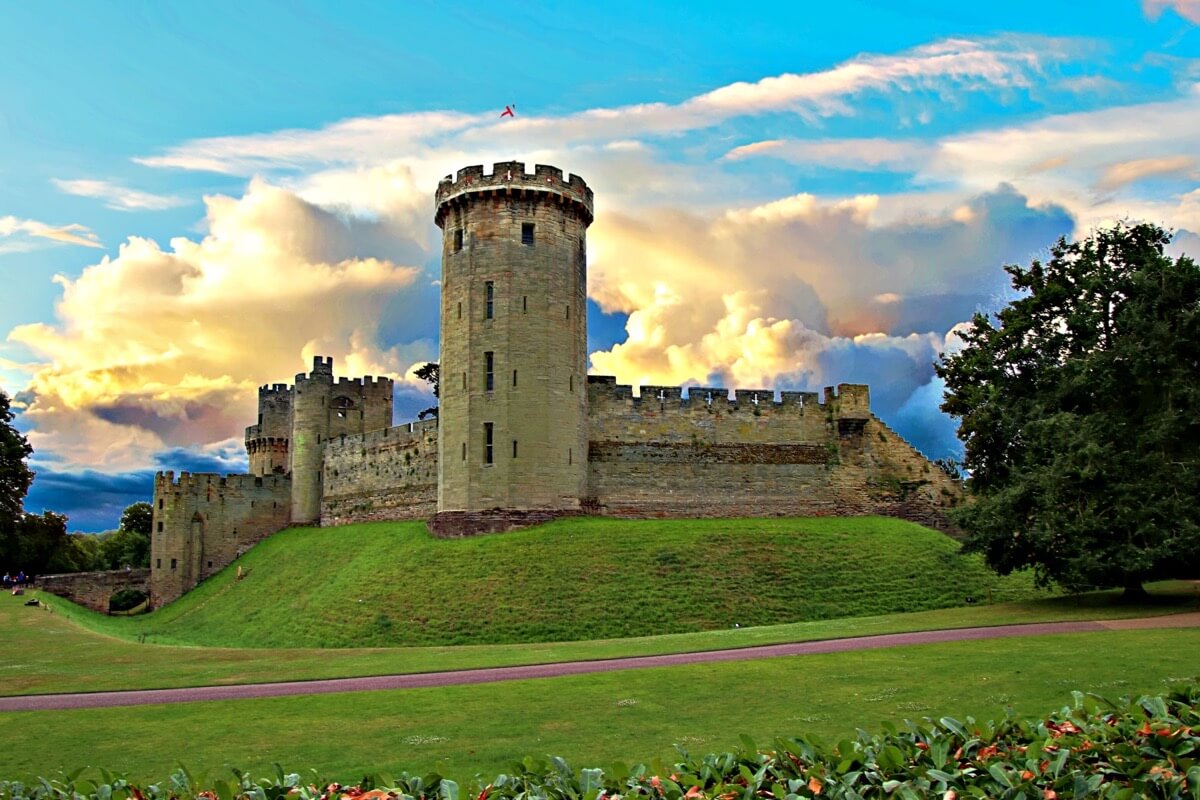
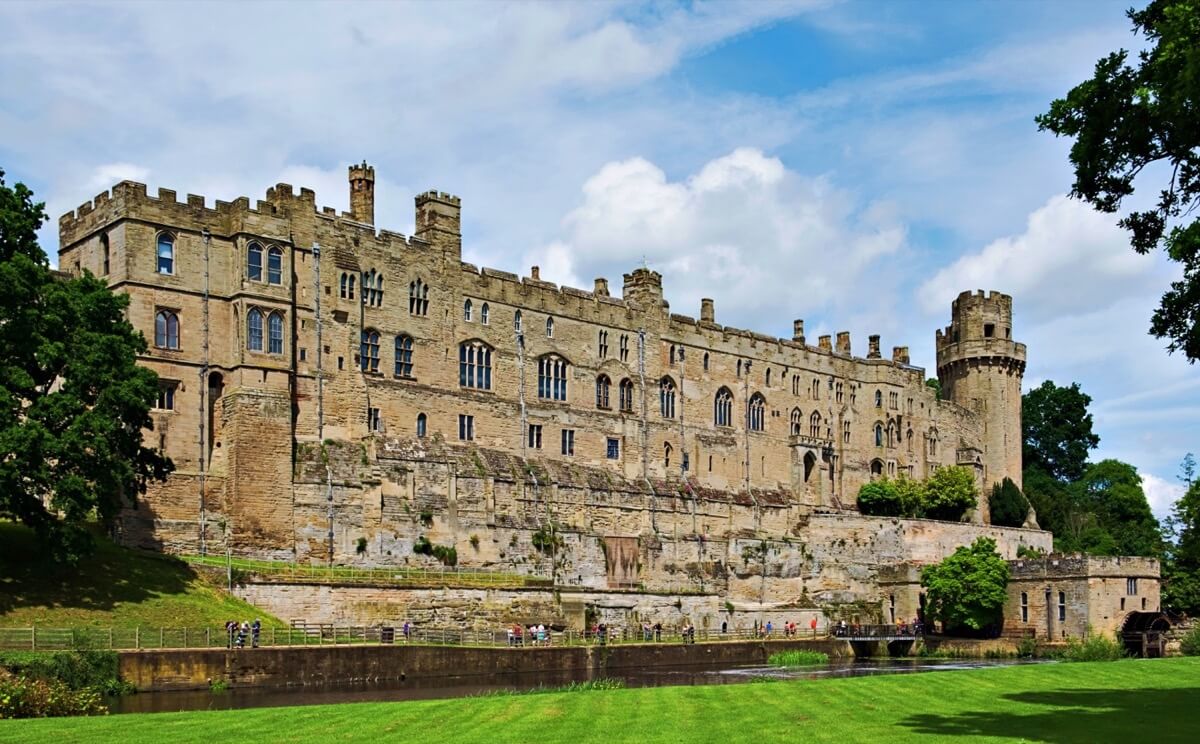
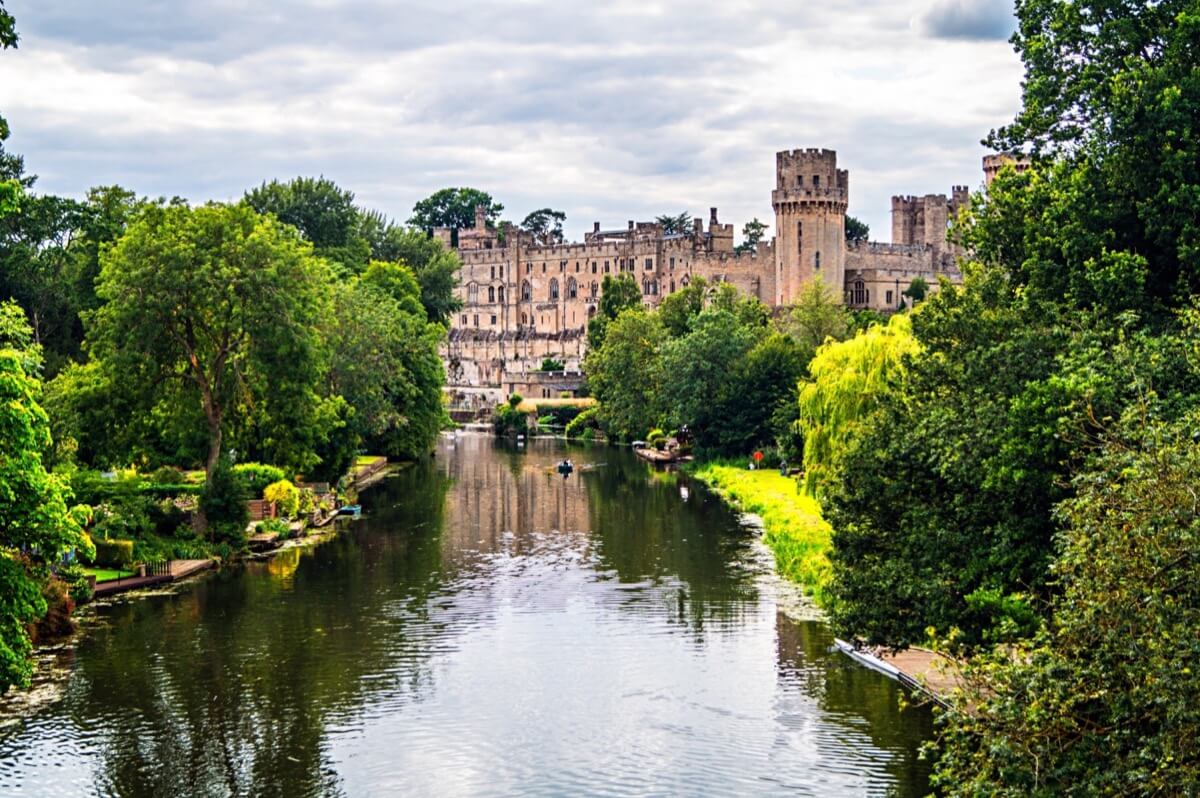
Warwick Castle is a medieval castle developed from an original built by William the Conqueror in 1068. Warwick is the county town of Warwickshire, England, situated on a bend of the River Avon. The original wooden motte-and-bailey castle was rebuilt in stone in the 12th century. During the Hundred Years War, the facade opposite the town was refortified, resulting in one of the most recognisable examples of 14th-century military architecture. It was used as a stronghold until the early 17th century, when it was granted to Sir Fulke Greville by James I in 1604. Greville converted it to a country house and it was owned by the Greville family, who became Earls of Warwick in 1759, until 1978 when it was bought by the Tussauds Group.
In 2007, the Tussauds Group was purchased by The Blackstone Group which merged it with Merlin Entertainments; Warwick Castle was then sold to Nick Leslau's investment firm Prestbury Group under a sale and leaseback agreement. Merlin continues to operate the site under a renewable 35-year lease.
Location
Warwick Castle is situated in the town of Warwick, on a sandstone bluff at a bend of the River Avon. The river, which runs below the castle on the east side, has eroded the rock the castle stands on, forming a cliff. The river and cliff form natural defences. When construction began in 1068, four houses belonging to the Abbot of Coventry were demolished to provide room. The castle's position made it strategically important in safeguarding the Midlands against rebellion. During the 12th century, King Henry I was suspicious of Roger de Beaumont, 2nd Earl of Warwick. To counter the earl's influence, Henry bestowed Geoffrey de Clinton with a position of power rivalling that of the earl. The lands he was given included Kenilworth – a castle of comparable size, cost, and importance,founded by Clinton – which is about 8 kilometres (5 mi) to the north. Warwick Castle is about 1.6 kilometres (1 mi) from Warwick railway station and less than 3.2 kilometres (2.0 mi) from junction 15 of the M40 motorway; it is also close to Birmingham Airport.
Layout
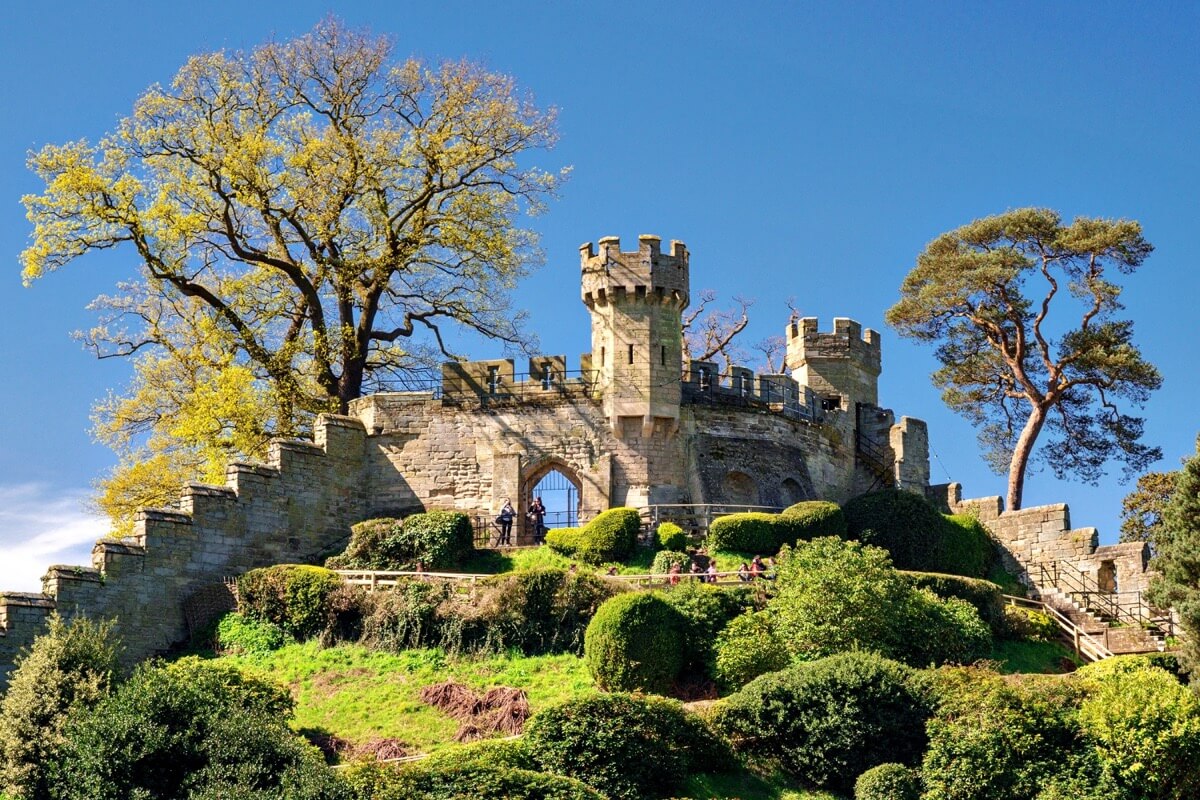
The current castle, built in stone during the reign of King Henry II, is on the same site as the earlier Norman motte-and-bailey castle. A keep used to stand on the motte which is on the south west of the site, although most of the structure now dates from the post-medieval period. In the 17th century the motte was landscaped with the addition of a path. The bailey was incorporated into the new castle and is surrounded by stone curtain walls.
When Warwick Castle was rebuilt in the reign of King Henry II it had a new layout with the buildings against the curtain walls. The castle is surrounded by a dry moat on the northern side where there is no protection from the river or the old motte; the perimeter of the walls is 130 metres (140 yd) long by 82 metres (90 yd) wide. The two entrances to castle are in the north and west walls. There was originally a drawbridge over the moat in the north east. In the centre of the north west wall is a gateway with Clarence and Bears towers on either side; this is a 15th-century addition to the fortifications of the castle. The residential buildings line the eastern side of the castle, facing the River Avon. These buildings include the great hall, the library, bedrooms, and the chapel.
Owners
Main article: List of owners of Warwick Castle
Over its 950 years of history Warwick Castle has been owned by 36 different individuals, plus four periods as crown property under seven different monarchs. It was the family seat of three separate creations of the Earls of Warwick, and has been a family home for members of the Beaumont, Beauchamp, Neville, Plantagenet, Dudley and Greville families. The first creation of the Earldom specifically included the right of inheritance through the female line, so the castle three times had a woman (or girl) as the owner. Eleven of the owners were under 20 when they inherited, including a girl aged two and a boy aged three. At least three owners died in battle, two were executed and one murdered. Every century except the 21st has seen major building work or adaptations at the castle.
Grounds and park
Formal gardens belonging to Warwick Castle were first recorded in 1534. Landscaping in the 17th century added spiral paths to the castle motte during Fulke Greville's programme of restoration. Francis Greville commissioned Lancelot Brown to re-landscape the castle grounds; he began working on the grounds and park in 1749 and had completed his work by 1757, having spent about £2,293 (£280 thousand as of 2018). on the project. The gardens cover 2.8 square kilometres (690 acres). Robert Marnock created formal gardens in the castle's grounds in 1868–69. Started in 1743 and originally known as Temple Park, Castle Park is located to the south of the castle. Its original name derived from the Knights Templar, who used to own a manor in Warwick. Houses around the perimeter of the park were demolished and the land they stood on incorporated into the park. Attempts to make profits from the park in the late 18th century included leasing it for grazing, growing wheat, and keeping sheep.
A water-powered mill in the castle grounds was probably built under Henry de Beaumont, 1st Earl of Warwick. By 1398 the mill had been relocated to just outside the eastern castle walls, on the west bank of the River Avon. Both mills were subject to flooding. By 1644, an engine house had been added to the mill. The mill was reused as an electricity generating plant after it had stopped being used to grind, but once Warwick Castle was fitted with mains electricity in 1940, the mill was no longer required and was dismantled in 1954. Adjacent to the mill is The Mill Garden which is privately owned but open to the public. Interesting views of the castle can be seen from this garden.
Useful information
This is a coach turning bay so please ensure this area is only used to drop-off and pick-up visitors with limited mobility.
- Adult £27.00
- Senior £24.00
Child £24.00
customer.information@warwick-castle.com
External links
Nearby castles