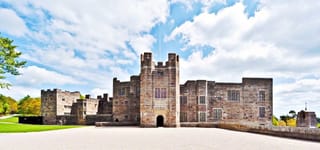
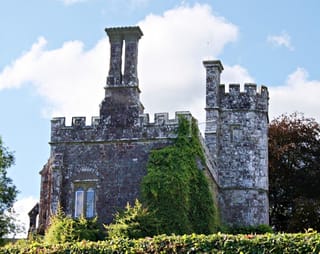
Okehampton Castle
Devon England England
castle, chateau
Okehampton Castle is a medieval motte and bailey castle in Devon, England
Previous names
Okehampton Castle
Description
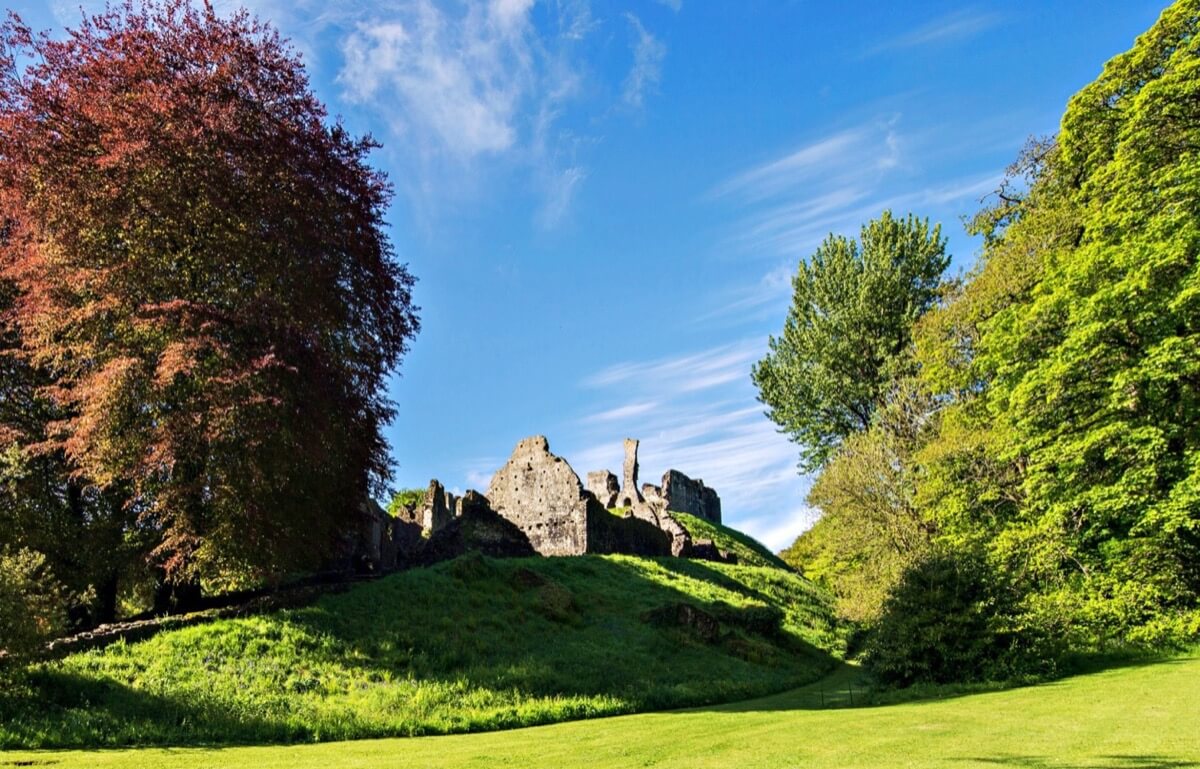
Okehampton Castle is a medieval motte and bailey castle in Devon, England. It was built between 1068 and 1086 by Baldwin FitzGilbert following a revolt in Devon against Norman rule, and formed the centre of the Honour of Okehampton, guarding a crossing point across the West Okement River. It continued in use as a fortification until the late 13th century, when its owners, the de Courtenays, became the Earls of Devon. With their new wealth, they redeveloped the castle as a luxurious hunting lodge, building a new deer park that stretched out south from the castle, and constructing fashionable lodgings that exploited the views across the landscape. The de Courtenays prospered and the castle was further expanded to accommodate their growing household.
The de Courtenays were heavily involved in the 15th century Wars of the Roses and Okehampton Castle was frequently confiscated. By the early 16th century the castle was still in good condition, but after Henry Courtenay was executed by Henry VIII the property was abandoned and left to decay, while the park was rented out by the Crown. Parts of the castle were reused as a bakery in the 17th century, but by the 19th century it was completely ruined and became popular with Picturesque painters, including J. M. W. Turner. Renovation work began properly in the 20th century, first under private ownership and then, more extensively, after the castle was acquired by the state. In the 21st century it is controlled by English Heritage and operated as a tourist attraction.
Architecture
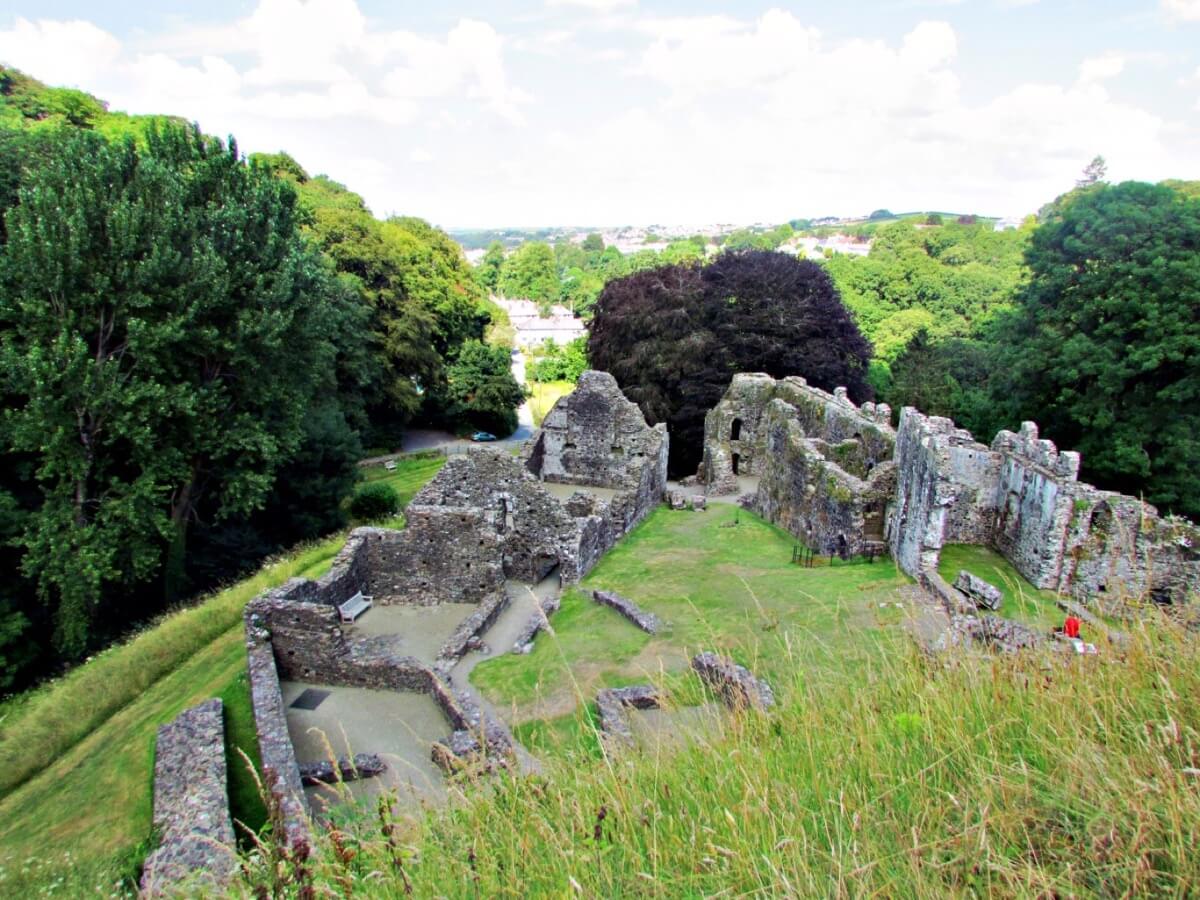
Okehampton Castle was built along a long, thin rocky outcrop, rising up from the surrounding countryside.The stream that runs around the north side of the castle would have been more substantial in the medieval period and provided additional protection on that side, while the south side of the castle would have probably overlooked water-logged fields. The castle was mostly built from local stone, with aplite from nearby Meldon and some beerstone from south-east Devon; the interior and exterior stonework would have originally been rendered with lime plaster. The castle's final design involved a visitor entering from the barbican in the north-east, along a long passageway up the hill, into the bailey. On the south-west side of the bailey lay the motte, mounted by the keep.
The castle's structure shows the results of its redesign at the start of the 14th century, using two very different forms of architecture. Seen from the north, where the main road carrying the general public made its way past, the castle had what Oliver Creighton terms a "martial facade" of traditional military defences, with narrow windows and towering defences. Seen from the deer park on the south of the property, however, the castle's lodgings and accommodation were on full display, with low walls and large windows. A similar architectural dichotomy can be seen at Ludlow and Warkworth Castles. The park was effectively fused with the south side of the castle, with the chase running right up to the property.From the two large windows of the eastern lodgings, it would have been possible to gaze out across the parklands and appreciate the extensive views without seeing any trace of rural settlements or the nearby town. The result, as historian Stephen Mileson describes, would have been "stunning".
The barbican was built at the beginning of the 14th century and contained a guard-room on the first floor.The barbican contains numerous putlog holes from its construction, although these would have been masked by exterior plasterwork in the medieval period. A passageway led up from the barbican to the gatehouse, probably originally guarded by a drawbridge and containing the accommodation for the castle's constable.
The castle bailey contained a number of buildings by the 14th century. On the north side were the Great Hall, the buttery and the castle kitchens, the former lit by a large decorative window and partitionedfrom the kitchen and buttery by a wooden screen. Above the buttery was a luxurious solar, or apartment. On the south side of the bailey were the western lodgings, well-equipped accommodation for guests, built by in-filling part of the ditch between the motte and the bailey, and later converted into a bakery. A chapel and accommodation for the castle's chaplain lay alongside, and the chapel has remaining plaster work, which shows that the walls were painted with red lines to resemble ashlar cut stone. On the far side of the chapel were the eastern lodgings, whose detailing mirrored those at Tiverton Castle, another de Courtenay property built in the same period.
The motte, on the far side of the bailey, is predominantly made up of a natural rock outcrop, strengthened further with earth from the construction of the rest of the castle ditches. It stands up to 32 metres (105 ft) high and measures 29.5 metres (97 ft) by 15.5 metres (51 ft) at the top. The motte is separated from the main castle by ditches in a similar way to the motte at Windsor Castle. On top of the motte is the castle keep, originally built in the 11th century, with massive stone walls at least one storey high and possibly as high as three storeys, and then redeveloped as a two-storey structure with a rectangular addition on the western side in the early 14th century. The 11th century parts of the keep make use of granite stone, probably taken from the river bed of the West Okement.The 14th century keep had two sets of lodgings on the upper floor, similar in style to those in the bailey, and a turret containing a staircase, some of which still survives.
The keep is unusual both for the period and for Devon as a whole, being a very strong defensive structure, albeit without any independent source of water or facilities to support a garrison in the event of a siege.Other rectangular 11th century keeps in Devon existed, including at Exter and Lydford, and were typically associated with the king or major nobles. Few were built on top of fresh mottes, as at Okehampton, and this may have been made possible in this case because the motte was largely natural and therefore able to support the heavy weight.
Useful information
Parking FREE
http://www.english-heritage.org.uk/visit/places/okehampton-castle/prices-and-opening-times
http://www.english-heritage.org.uk/visit/places/okehampton-castle/prices-and-opening-times
http://www.english-heritage.org.uk/visit/places/okehampton-castle/prices-and-opening-times
External links
Nearby castles