Lullingstone Castle
Kent England England
castle, chateau
Lullingstone Castle is an historic manor house, set in an estate in the village of Lullingstone and the civil parish of Eynsford in the English county of Kent
Previous names
Lullingstone Castle
Description
Lullingstone Castle is an historic manor house, set in an estate in the village of Lullingstone and the civil parish of Eynsford in the English county of Kent. It has been inhabited by members of the Hart Dyke family for twenty generations including current owner Guy Hart Dyke.
History
Mentioned in the Domesday Book, the present house was started in 1497. Henry VIII and Queen Anne were regular visitors to the Manor House.
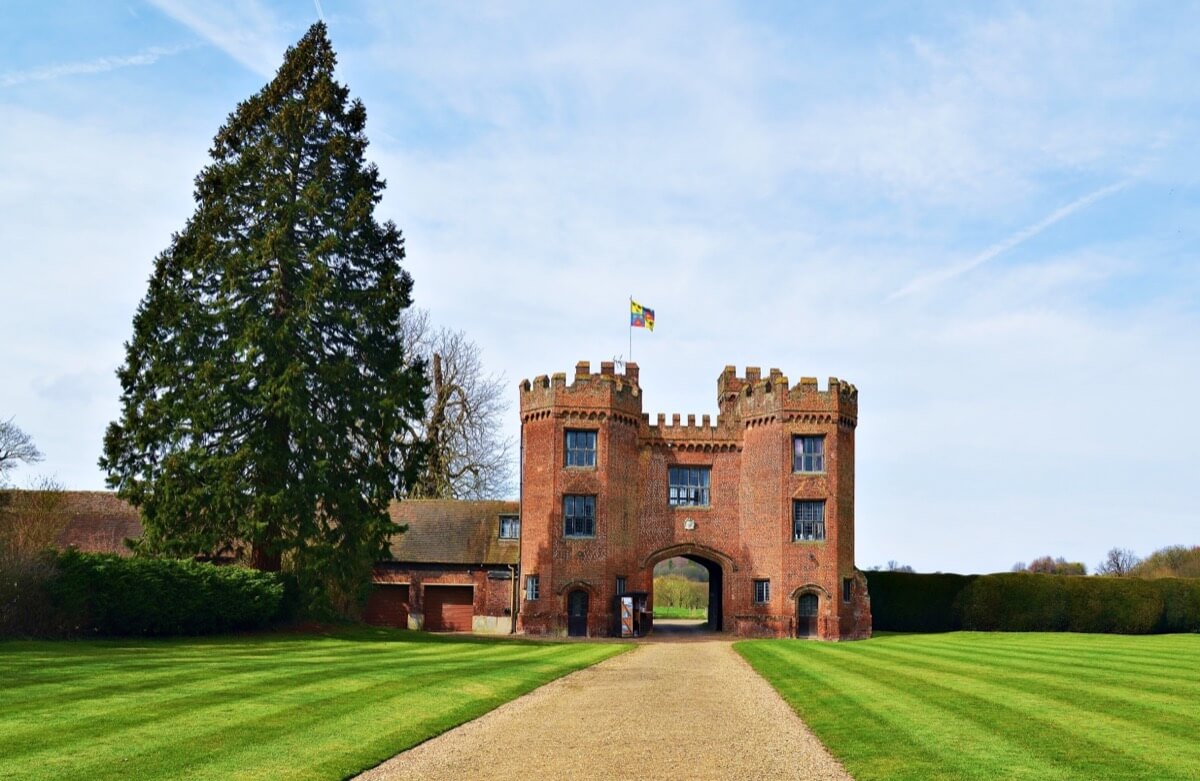
The Tudor gatehouse, built by Sir John Peche, who became Sheriff of Kent in 1495, is believed to be one of the first in England entirely of brick. What survives of the house is largely of the Queen Anne era.
Castle and gardens
The surrounding 120-acre (0.49 km2) park was previously a fenced deer park, with the castle serving as a hunting lodge. The grounds are located on the River Darent and hidden within are Queen Anne's bathhouse and an icehouse dating from the 18th century. Most of the grounds of the former estate now constitute Lullingstone Country Park.
It also contains some of the oldest oak trees in Britain, wildflowers, a church (St Botolph's) of Norman and possibly earlier foundation but much later restoration and rebuilding, and a walled garden, and used to contain Lullingstone Roman Villa.
Zoe Dyke created the Lullingstone Silk Farm here which was visited by Queen Mary and as a result it created silk for the coronation robe of King George VI. The farm has since moved away but still creates silk for important Royal events including the Wedding dress of Princess Elizabeth and the Wedding dress of Lady Diana Spencer.
In 2011, the Castle was the location for the Comparethemarket.com advert 'Tough decision', featuring meerkats Sergei and Aleksandr.
The walled garden - previously a herb garden designed by Eleanour Sinclair Rohde - has recently been converted into the World Garden of Plants by the Castle's current heir (and 20th generation of the Hart Dyke's), plant hunter Tom Hart Dyke. That conversion was the subject of the BBC2 series Save Lullingstone Castle. Tom Hart Dyke and the World Garden were again featured in Spring 2007 on the BBC2 series, Return to Lullingstone Castle. The garden and the castle are open to the public from April through to September.
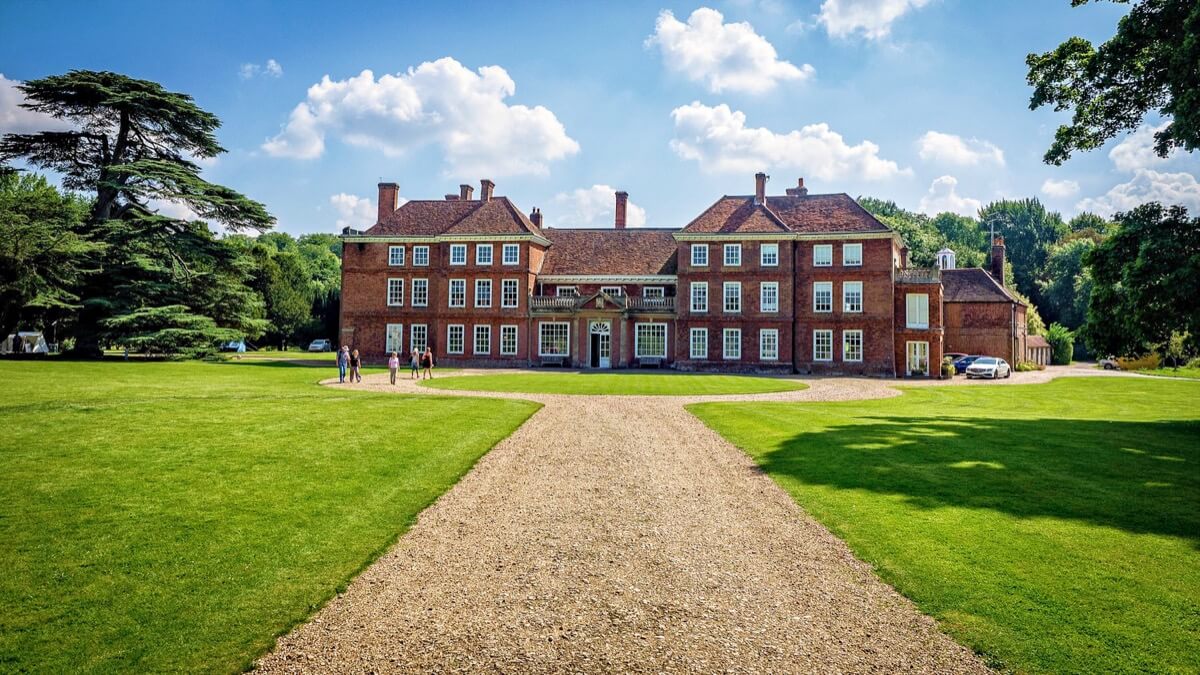
the Lullingstone estate was recorded in the Domesday Book of 1086, making it one of the oldest family estates in England. Since 1497 it has been home to the Peche family, who built the attractive mansion, now fronted by a Queen Anne facade of red brick. The house looks out across a 15-acre lake and is accessed through a very large gatehouse built during the reign of Henry VII.
The young king Henry VIII came to Lullingstone, where he was entertained by John Peche, a wealthy alderman of London. Peche set up a jousting ground outside the gatehouse, and Henry so much enjoyed the sport that Peche became a favourite courtier.
The gatehouse now gives access to a large lawned area, enclosed by a high wall. The lawn was originally bounded on all sides by the Tudor mansion, but the wings of that mansion are long gone, leaving only the grand gatehouse behind. The core of the Peche mansion still stands, however, behind its attractive facade of brick, illuminated by large 17th-century windows.
THE MEDIEVAL CHURCH
On one side of a wide lawn is the attractive church of St Botolph, built in the 14th century and featuring a marvellous early 16th-century wooden screen. In the north chapel are wonderful family tombs, but perhaps the finest monument is that of Percyvall Hart (d. 1580), which dominates the tiny chancel and stretches almost to the ceiling.
The Hart family succeeded the Peches as owners, and they later married into the Dyke family, becoming Hart-Dykes, and Hart-Dykes still own the estate at Lullingstone.
THE HISTORIC HOUSE
The front elevation of Lullingstone Castle suggests a Queen Anne house; indeed, what we see today was built for a visit by Queen Anne. However, the 18th-century facade only hides the Tudor core of the building. The entrance hall gives access to a great hall, with a grand staircase to one side. Beyond are a dining room and library, decorated in Queen Anne elegance but redolent of Tudor charm.
You ascend the stair to the first floor over treads intentionally made shallow to allow the visiting queen an easy passage. And is well worth the ascent, for at the top of the stair is the state drawing room, a superb barrel-vaulted chamber with an exquisitely detailed plaster ceiling, featuring traditional strapwork designs and classical medallions. The state bedroom lies beyond, with the bed in which Anne was reputed to have slept.
Also on the first floor, at the top of the stairs, is a display on the history of lawn tennis, for it was here that Sir William Hart Dyke and Edward, Prince of Wales (later Edward VII) drew up the first rules of the game.
The house interiors are not opulent in the style of, say, Chatsworth or Blenheim, but rather, comfortable and genteel. This is a family home, not a museum showpiece, and the family aspect shines through. That said, the state drawing room, with its wonderfully ornate ceiling, would grace any 'treasure house' in England.
THE WORLD GARDEN
The house is set in 120 acres of parkland and offers superb gardens, including the award-winning World Garden of Plants, with over 10,000 species of plants from across the globe. The garden had its origins in 2000, when Tom Hart Dyke, on a plant hunting expedition in the jungles of Panama and Columbia, was taken hostage by guerrillas and threatened with execution.
For nine months Hart Dyke was held hostage, and during his time in captivity he developed the idea for a garden to celebrate the 'plant hunter' and gather together in one British location a variety of plants from across the globe. He wanted to show a British audience where the plants we grow today originated. The result is the World Garden, where in one walled site you can see an amazingly varied collection of plants from around the world, some familiar, and some very unusual.
World Garden
We came to Lullingstone to see the historic house, thinking of the garden as a nice extra feature, but in truth, the garden deserves a visit for its own sake. There is so much of interest here, loosely arranged by geographic region. One very nice touch was a 'map' of the continents, made of plant beds and coloured stones. This helped really bring home just how much this truly is a 'world' garden.
SUMMING UP LULLINGSTONE
There really is a lot to see here. The Tudor gatehouse is superb, and the view from the gatehouse entrance across the wide lawn, with the lake on one side, the tiny medieval church on the other, and the elegant facade of the house facing us, is a sight that will live long in my memory.
The castle is open regularly, and offers free access to Historic House Association members. You can reach it from Lullingstone Roman Villa (up a narrow lane from Eynsford village) or off the A225.
https://www.britainexpress.com
Useful information
- Adult £9.00
- Senior citizen £7.50
Season tickets:
- 1 year £30
- 2 years £40
Child £4.50 (5-15 yrs old)
Family £20.00 (2 adults & 2 children or 1 adult & 3 children)
House, Garden & Church:
Prices: Minimum 20 people, £9 per person, plus £65 for a dedicated guide.
info@lullingstonecastle.co.uk
- Wheelchairs are available upon request and there are concessions available for those with a disability.
- Guide dogs only.
- With regret, we do not currently have guide books available in large print.
External links
Nearby castles
Eynsford Castle
Kent
1.8km
castle, chateau
Tonbridge Castle
Kent
18.7km
castle, chateau
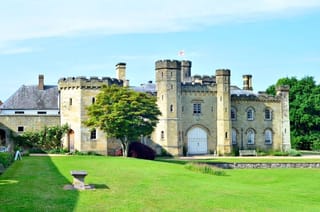
Chiddingstone Castle
Kent
19.6km
castle, chateau
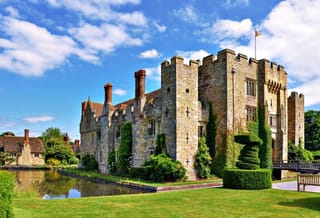
Hever Castle
Kent
19.9km
castle, chateau
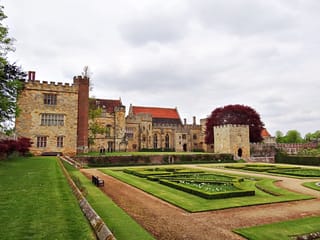
Penshurst Place
Kent
20.5km
castle, chateau
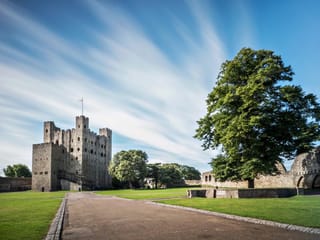
Rochester Castle
Rochester
21.5km
castle, chateau
Allington Castle
Kent
23.1km
castle, chateau