Leasowe Castle
Merseyside England England
castle, chateau
Leasowe (/ˈliːsoʊ/) is an area on the north coast of the Wirral Peninsula, in North West England, near Moreton and between Wallasey and Meols
Previous names
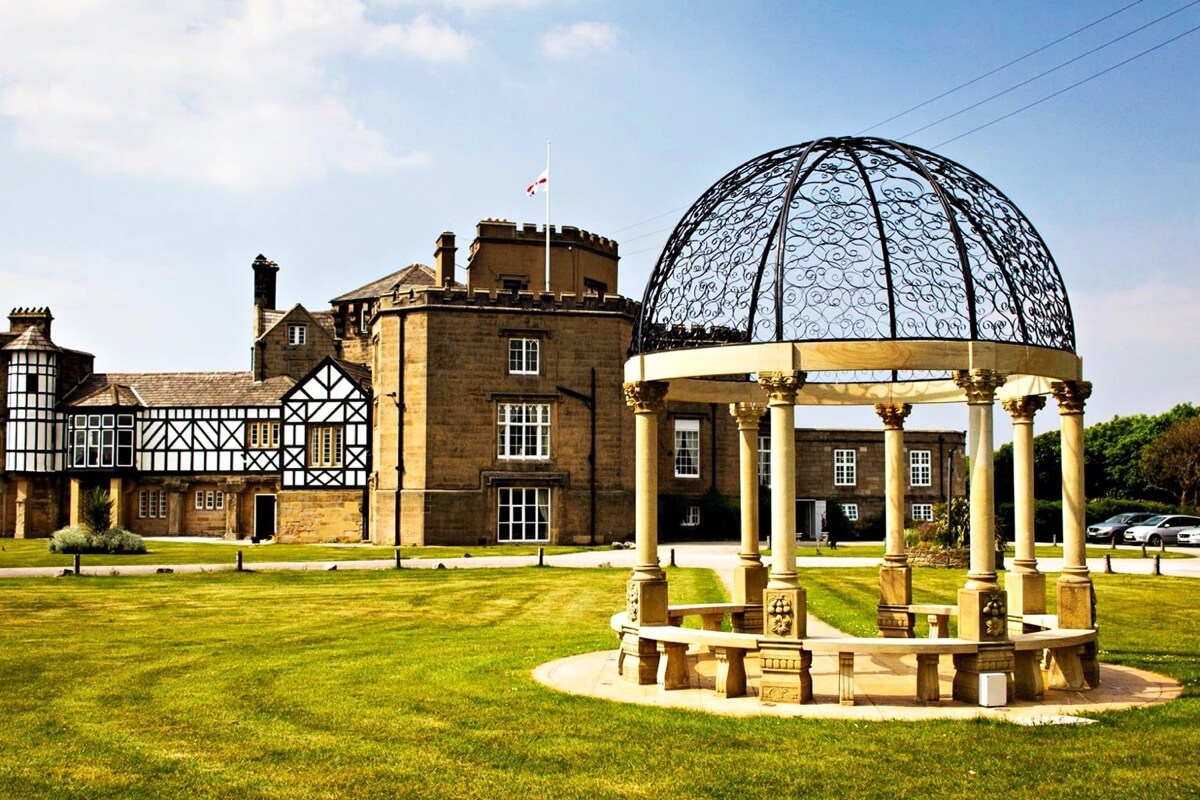
Leasowe Castle
Description
Leasowe (/ˈliːsoʊ/) is an area on the north coast of the Wirral Peninsula, in North West England, near Moreton and between Wallasey and Meols. Historically within Cheshire, Leasowe was part of the old County Borough of Wallasey, and is now within the Metropolitan Borough of Wirral, the Wallasey parliamentary constituency and the New Wallasey Regeneration programme. However, it also has its own characteristics and is often regarded as a separate town. At the 2001 Census, Leasowe had a population of 6,180 (2,890 males, 3,290 females). By the time of the 2011 Census figures for Leasowe were no longer maintained. However, there was an electoral ward called Leasowe and Moreton East. The population of the ward at this Census was 14,640.
History
The name 'Leasowe' comes from the Anglo-Saxon Leasowes or 'Meadow Pastures'. Its sand dunes are the largest such system on the Wirral. Much of the area is at or below sea level and is protected by the coastal embankment. Houses built in the early 20th century were often flooded and unsanitary, but after about 1926 new roads and drainage were put in by the Borough Council, and much new housing was developed. Along the embankment between Leasowe and Moreton are the remains of fortifications built during the Second World War.
The world's first passenger hovercraft service operated in 1961–62. The service travelled from Moreton Common, and was advertised as between Wallasey and Rhyl in North Wales. However, the service was not profitable and soon ceased.
Geography
The River Fender merges with the Birket at Leasowe. The Birket then continues towards West Float at the site of the former Wallasey Pool.
High on Breck Road, chipped and charred and covered with the dust of passing traffic, as well as obscured from view by overgrown branches from trees, stands a memorial to a remarkable woman, to a character famous in the Wallasey of the early 1800s. They called her ‘kind old lady of Leasowe Castle’. She was the local lady bountiful, the town’s do-gooder-in-chief. Mrs. Margaret Boode, the friend of the ship-wrecked, the fine lady with a heart to match.
It was in 1802 that Margaret Boode took up residence at Leasowe Castle. The widow of Lewis W. Boode, a West Indian planter, and daughter of the rev. Thomas Dannett, a Liverpool clergyman, she made considerable additions and alterations to the old place.
A description of her gardens in 1816 ran: “Disposed in terraces and alcoves, surrounded with a large fosse and mound...”
During her occupancy of the castle it was often turned into a receiving house and hospital for the survivors of shipwrecks, which were then frequent along the local coast.
Half-drowned mariners, who received scant consideration from the wreckers of the area, who would rob them and then kick them back into the sea, found a good friend in Margaret Boode.
Just how much she did for those who staggered ashore near her home is indicated in this description of the wreck of the schooner Mary Betsy, which sailed from Wexford on October 24th, 1820:
“On Wednesday the 26th they picked up a Liverpool pilot, and by 4 p.m., a dreadful gale had sprung up. Two hours later the vessel struck on a bank, beat off, and drifted ashore.
“The crew endeavoured to launch the boat but failed, so took to the rigging, where they remained about 5½ hours, drenched by every sea.
“Cullen, one of the crew, said: ‘I don’t know how I held on as I was quite unconscious. Hearing a noise below, I looked down and saw a large crowd of 100 or more people with horses and carts.
“‘It was just at break of day at a place called Mockbeggar (Leasowe)’, Cullen went on to say.
“He then describes how two carpenters working at Mrs. Boode’s, Leasowe Castle took him in a cart to the lodge, where restoratives were applied and he received every kindness”.
The old description says that no humanity was shown by anyone on the shore but Mrs. Boode and her servants.
The wreckers completely stripped the vessel, leaving nothing but the standing rigging and the masts.
Such wrecks were common. The local wreckers earned a reputation for inhumanity.
There is not much doubt that many committed murder to gain a few gold pieces of small items of jewellery from the hands of luckless mariners.
Opposed to them, ever ready to run to the help of seamen cast up on the Leasowe coast, was Margaret Boode.
She feared no one. Her practical kindness became a byword.
Margaret Boode’s daughter and heir, Mary Anne, married Colonel Edward Cust in January, 1821.
In 1818 Cust became M.P. For Grantham, and sat for Lostwithiel from 1826 till the suppression of that borough in the Reform Bill of 1832.
He was created a baronet in 1876, His wife was a lady of the bedchamber to H.T.H. the Duchess of Kent, mother of Queen Victoria. Cust was for a time Master of Ceremonies to the Queen.
Mrs. Boode was killed in a carriage accident on April 21st, 1826. She was thrown into Breck Road.
A gothic monument was erected to commemorate the accident and placed near the spot where it occurred. Owing to the widening of the road at this point it no longer occupies its original site.
The monument was damaged by a bomb during the Second World War and was repaired and re-erected by the Corporation.
On a stone in the wall which surrounds the monument is the following inscription:
“Near this spot Mrs. Boode, of Leasowe Castle was killed by a fall from her pont carriage on April 21st, 1826.
“May ye who pass by respect this memorial of an awful dispensation and the affectionate tribute of an only only child to perpetuate her dear mother’s memory beyond the existence of that breast which will never cease to cherish it ...”
“Ah, may the sad remembrance which attaches to this spot impress on everyone this salutary warning: In the midst of life we are in death.”
Sir Edward Cust and his wife lived at the castle until the 1870s. In 1828 he converted the place into a commodious hotel, but the venture was unsuccessful and he decided to make it his country seat.
Cust fitted up some of the rooms with oak timber from the old submerged forest at Leasowe and Meols, and on special occasions adorned the tower with flags presented to him by the Duke of Wellington and other military friends,
Members of his family remained in residence until 1895, when the castle was sold and opened as a fully licensed hotel.
It changed hands in 1910, when it was acquired by the trustees of the Railway Convalescent Homes.
Legends surround the old place. It is said to have ghosts.
Gone its proud flag-flying days. Gone the gentlemen in their finery, the ladies in silks and jewellery. Gone the carriages drawn up alongside the trim lawns, the footmen in attendance.
Forgotten, except for a bare memorial off a busy main raod, is Margaret Boode, the castle’s most remarkable tenant.
She stood alone against the violence and greed of the plunderers who would do a half-drowned mariner to death for the clothes he had on him.
She brought kindness to a cruel era. She deserves to be remembered.
http://www.historyofwallasey.co.uk
Useful information
Parking FREE
FOR RESERVATIONS
reservations@leasowecastle.com
FOR EVENTS
sales@leasowecastle.com
External links