Kirtling Tower
Cambridgeshire England England
castle, chateau
Kirtling Tower was a medieval castle and Tudor country house in Cambridgeshire, England, of which the gatehouse still remains
Previous names
Kirtling Tower
Description
Kirtling Tower was a medieval castle and Tudor country house in Cambridgeshire, England, of which the gatehouse still remains.
History
The first documentary records for Kirtling Tower date from 1219, and the 13th century Kirtling Castle was described as having a moat, a ditch and a palisade. In 1424 there was a substantial rebuilding of the castle by Richard de Beauchamp, the Earl of Warwick, with a hundred oak trees used to create a complex with a parlour, a solar and chambers.
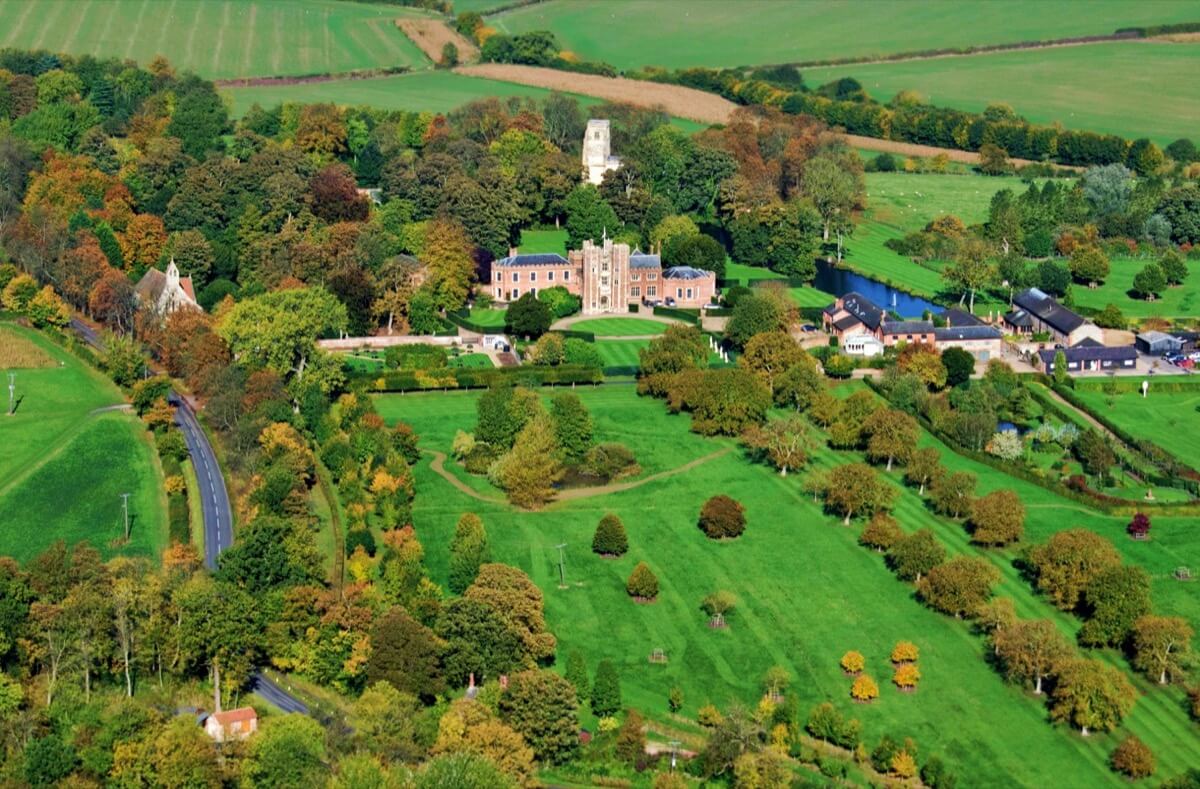
Edward North, a successful lawyer, rebuilt the castle in the 1540s and between 1556 and 1558 using the architect Francis Adams, renaming it Kirtling Hall. The earthworks around the castle were considerably altered to provide for a raised platform for the new house, which included contemporary Tudor features such as a gatehouse, gallery, lodgings, a banqueting house and a garden, complete with grand water features and ponds. Queen Elizabeth I stayed at the castle in 1578 during her state procession across Cambridgeshire. The castle continued to develop, and by the 1660s was the largest country house in Cambridgeshire, centered on a symmetrical two-storeyed south-facing range, with east and west wings providing additional accommodation and facilities.
The castle went into decline after 1691 and by 1735 the Victoria County History of the castle describes the property as being "in disorder". Much of the castle was pulled down in 1748 in order to make the remainder habitable for Lord Elibank, but the property went into decline again after his death in 1762. By the 1770s it was unhabitable and most of the castle was pulled down in 1801. In the 1830s the gatehouse was turned into a residential property and was renamed Kirtling Tower; an extension was built in 1872 and the house remained in use under a sequence of tenants.
Today
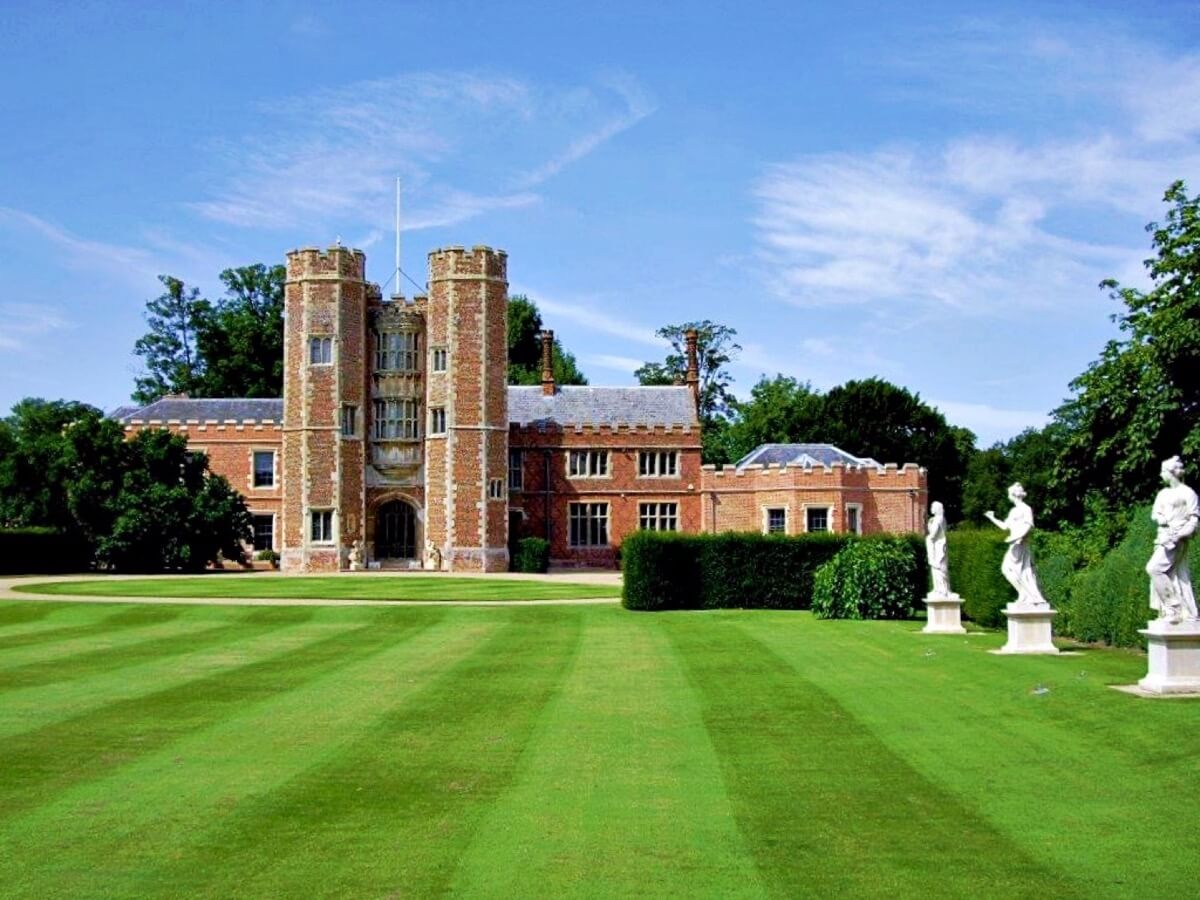
The main feature of the castle today is the three-storeyed Tudor gatehouse, which closely resembles the gatehouse at Leez Priory, built by North's friend and fellow lawyer Richard Rich. Built of brick, it has octagonal turrets and an oriel window of Italian design. It is a scheduled monument and a Grade I listed building.
KIRTLING is a parish and village 5½ miles south-east from Newmarket which is the nearest railway station, in the hundred of Cheveley, union, petty sessional division arid county court district of Newmarket, rural deanery of Cheveley and archdeaconry and diocese of Ely. The church of All Saints is an ancient building of flint with stone dressings, chiefly in the Norman style, and consists of chancel, clerestoried nave, aisles, north and south porches and a western towel supported by immense buttresses and containing 5 bells: in the church are the tombs of several of the North family, including Sir Edward North M.P. for Cambridgeshire, 1st Baron North. ob. 31 Dec, 1564, and his son, Sir Roger North de Kirtling, knight banneret and 2nd Baron, ob. 3 Dec 1600; the tomb of the latter bears his recumbent effigy in armour with gold spurs, the head resting on a baron's helmet and a couchant lion at the feet, the whole being surmounted by a canopy supported on six carved pillars; a third tomb commemorates Dudley, 4th baron, K.B. ob. 1677; and there are memorials to others of the family, dated 1665-6; there is also an ancient brass: the church affords 372 sittings. The register dates from the year 1585. The living is a vicarage, net yearly value £359, with residence, in the gift of the Earl of Harrowby, and held since 1927 by the Rev. Samuel Verner Wylie, of Glasgow University. There is a Primitive Methodist chapel here. seating 80 persons. A cross of Dartmoor granite was erected in 1921 at the junction of Kirtling with the hamlet of Upend, as a memorial to the men of this parish who fell in the Great War, 1914-18. Kirtling Towers, the seat of Lord North T.D., J.P. is all that now remains of the ancient Kirtling Hall, originally built about the reign of Henry VI but the main part of the building was pulled down in 1801 by George, 3rd Earl of Guilford and 9th Baron North; Princess Elizabeth, afterwards Queen, was a state prisoner at Kirtling Hall, under the charge of Edward, 1st Lord North: attached to the house is a Roman Catholic chapel, built in 1877 and dedicated to Mary Immaculate and St. Philip, and there is a house for the priest near the chapel; the public are admitted to mass at 9 a.m. Lord North T.D.. J.P. who is lord of the manor, and Stephen Goodwin Howard esq. C.B.E., D.L., J.P. are the principal landowners. The soil is heavy loam; subsoil, clay; whilst to the north-east of the parish there is an outcrop of upper chalk. The chief crops are wheat, barley, beans and oats, The area is 3,126 acres; the population in 1921 was 553.
http://www.cambridgeshirehistory.com
Useful information
Adult: £5.00
Child: Free
Child: FREE
External links
Nearby castles