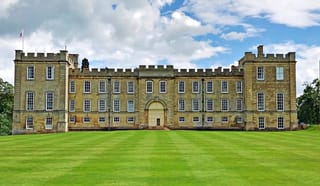
Buckden Towers
Cambridgeshire England England
castle, chateau
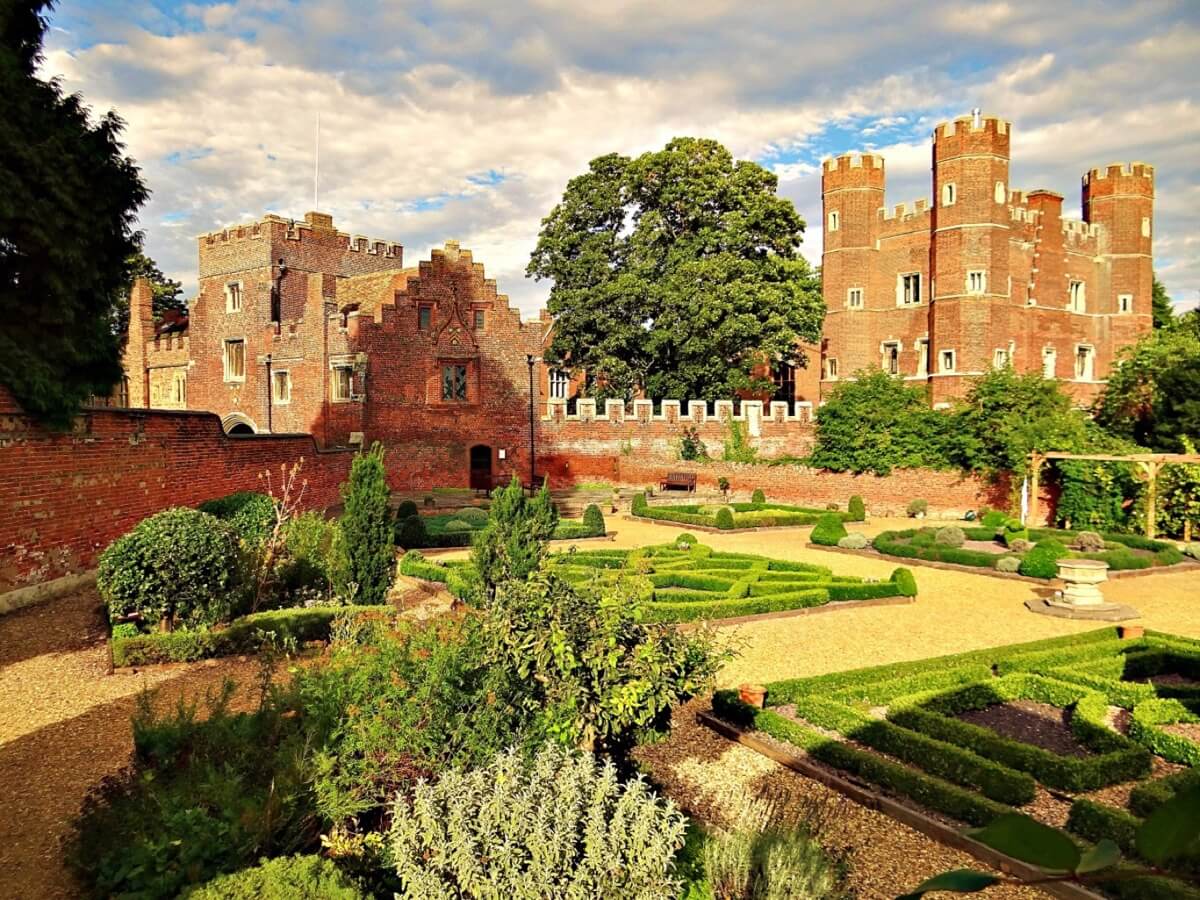
Buckden Towers, formerly known as Buckden Palace, is a 12th-century fortified manor house, located on High Street, Buckden, Cambridgeshire, England
Previous names
Buckden Towers
Description
Buckden Towers, formerly known as Buckden Palace, is a 12th-century fortified manor house, located on High Street, Buckden, Cambridgeshire, England.
History
Although it is often stated as being built in the 15th century, the first (wooden) Palace was actually built in the late 12th century, when records show it as being used to house the Bishops of Lincoln. Subsequently, the wooden structure was replaced by more substantial buildings and a tall brick tower was added in 1475, protected by walls and a moat, and surrounded by an outer bailey. Parts of the complex were demolished in 1832 on the orders of the Ecclesiastical Commissioners. The Victorian House now present on the site was built in 1872.
The Claretian Missionaries were given the site by the Roman Catholic Bishop of Northampton in 1956. Initially it was used a Junior Seminary carrying out the preliminary training of 11- to 18-year-olds aspiring to become Claretian Missionary priests or brothers. The Junior Seminary closed in July 1965. Since then the Towers complex has been developed by the Claretians as a Retreat and Conference Centre. Also located on the site is the Catholic Parish Church of St Hugh of Lincoln, which stands on the site of the great chamber of the medieval palace and was originally built as the chapel for the Junior Seminary. The grounds, but not the buildings, of the Towers are open to visitors at all reasonable times but dogs are not permitted.
It is a scheduled monument and a Grade I listed building.
Little now remains of the bishops' moated palace except the great tower, the inner gatehouse, part of the battlemented wall, which used to surround the inner court within the moat, and the outer gate and wall. On 16 July 1551, Henry, Duke of Suffolk and his brother Lord Charles died here from the sweating sickness. They had come to Buckden to avoid the sickness at Cambridge.
In the 1630s Bishop Williams held state at Buckden, entertaining his neighbours with lavish displays of hospitality.
The antiquary Edward John Rudge published a history, Illustrated and Historical Account of Buckden Palace, in 1839.
Buckden Towers, lies in the village of the same name in the county of Cambridgeshire in England.
The first mention of the site was in 1086 as a manor belonging to the Bishop of Lincoln. A Hugh de Wells built a new house out of stone at Buckden, in around 1225, to replace the earlier one which had been made of timber. Robert Grosseteste, Bishop of Lincoln from 1235 to 1253, was responsible for adding a Great Hall. In 1291 a fire destroyed most of the buildings constructed by Hugh de Wells and Robert Grosseteste.
Construction of the Tower itself was completed by Bishop Rotherham in 1480. However, Bishop John Russell was responsible for the majority of the extensive rebuilding on the site, between 1480 and 1494. At that time it would have been encircled by a moat. The site was then known as Buckden Palace and visited by King Richard III in 1483.
Between 1533 and 1534 Katherine of Aragon resided here, after the annulment of her marriage with King Henry VIII.
In 1595 Bishop Chaderton had decided that he could no longer afford to run the Palace and moved out. His successor, however, returned to Buckden despite it having started to fall into disrepair. In 1619 King James I visited Buckden.
During the episcopacy of John Williams (1625-1642) the cloisters were repaired and refurbished and the stables and barns in the outer courtyard were rebuilt. However, Williams lived lavishly and fell into disfavor with the King. In 1637 he was arrested and incarcerated in the Tower of London. A solicitor, Kilvert, was sent to administer the estate. During the 3 years of his administration Buckden Palace was despoiled; its interior was sold and the trees on the grounds were cut down.
During the Civil War in the 17th century, Buckden Palace was taken from the See of Lincoln and sold. In 1660 it was returned and Bishop Sanderson restored the dilapidated Palace.
In 1838, with the importance of the Palace diminished, the Ecclesiastical Commissioners decided that about half of the main buildings and part of the Gatehouse were to be demolished. The free coming materials and furnishings were to removed and sold. In 1870 the complex was sold by the Church to a James Marshall who made it habitable again. A Victorian house was built on the site during which the moat was completely filled in. During the 19th century the complex became known as Buckden Towers.
After 1919 the then owner rebuilt part of the Inner Gatehouse. After WW 2 the estate was again donated to the Church. In 1956 it was passed on to the Claretian Missionaries who embarked upon a restoration campaign.
At present Buckden Towers is still owned by the missionaries. The grounds can be visited freely. So this may be more a castellated mansion than a castle but I like its appearance a lot. http://www.castles.nl
Nearby castles