Schloss Kochberg
Landkreis Saalfeld-Rudolstadt Thüringen Germany
castle, chateau
Schloss Kochberg
Landkreis Saalfeld-Rudolstadt Thüringen Germany
castle, chateau
While in Trier on a month long group study program through my university, we took a week and went on a road trip to Weimar, Jena, Rudolstadt, and the surrounding area visiting some of Germany's most significant literary museums, archives, as well as countless museums or houses dedicated to Goethe and Schiller
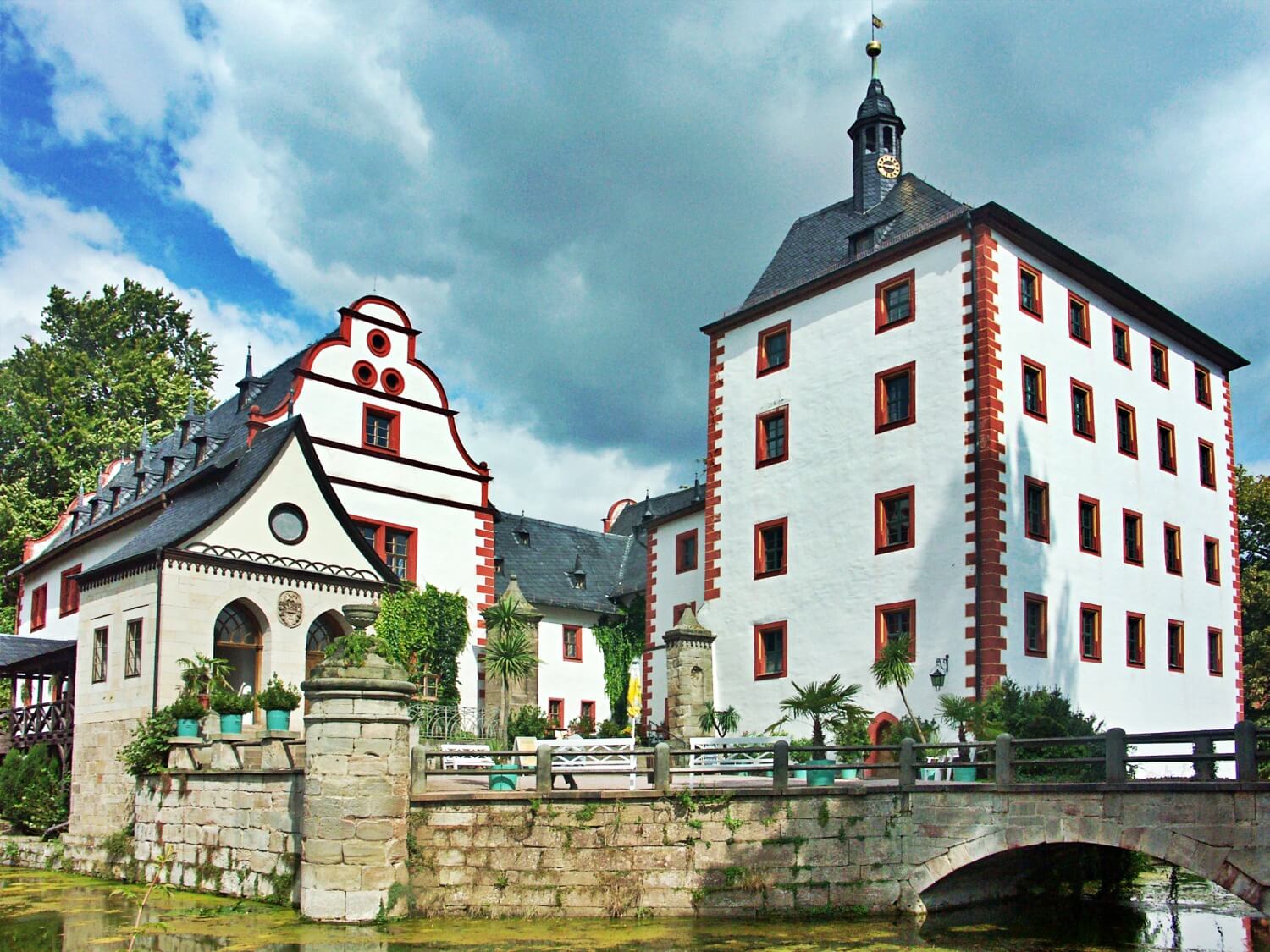
Das ehemalige Rittergut mit Schloss Kochberg liegt in Zentralthüringen in Großkochberg in der Nähe von Rudolstadt und ist vor allem durch mehrere Besuche Goethes bekannt
Previous names
Schloss Kochberg, Schloss Kochberg
Description
While in Trier on a month long group study program through my university, we took a week and went on a road trip to Weimar, Jena, Rudolstadt, and the surrounding area visiting some of Germany's most significant literary museums, archives, as well as countless museums or houses dedicated to Goethe and Schiller. One morning we took off to visit Kochberg Castle, deep in the Thuringia forest.
Goethe's love for Charlotte von Stein is what led him to frequently visit this castle, which at the time in the late 18th century belonged to the von Stein's large estate. This was a well lived-in castle, and it's use as a home is evident throughout. Portraits of family members and evidence of frequent gatherings hang throughout the home.
While visiting this castle, which was built in the 1600's, I rushed as fast as I could through the interior because the castle grounds and estate are large and filled with lots to explore. Walking out through the moated castle, I took an audio guide and enjoyed wandering around the estate while learning all about the history of the gardens, theatre, Roman ruins, and farmland that I was exploring. Thinking back on this day, exploring the castle grounds is definitely what stands out to me as the highlight. Inside the castle, seeing Goethe's writing desk was another highlight. You can still see marks from little notes that he left on the desk, such as the dates of some of his visits there as well as a signature. Something else that really captivated my attention in this castle was the hand painted wallpaper. I just love the colours used and the patterns...something about it seems slightly more modern and I quite like it.
While exploring the castle we were constantly tempted with a delicious savoury smell rising up through the floors from the kitchen on the ground level. We went down to see if we could perhaps have an early lunch and enjoy some of the incredible German cooking that was taking place but alas, it was reserved for a private function. Peeking into the elaborately decorated dining room I couldn't help but feel a slight bit of envy for the lucky group having a fantastic lunch in that castle. Of course on the flip side the good news is that the at least parts of the castle can be rented for private functions, and their kitchen seemed to be an excellent one at that.
The Liebhabertheatre on the grounds of the castle was built by Carl von Stein, Charlotte's brother, who wanted a classic Weimar style theatre at his own estate. This theatre is still in use during the summer months and is kept historically accurate with decor and in performance style however I unfortunately do not have a photo of it.
The castle grounds have undergone several large renovations and include charming winding pathways through wooded areas that lead visitors to linen cottage, extensive flower gardens, tower ruins, a grotto, a bathing pond, and lovely stone fountains amongst a countryside park like setting. Exploring these grounds was the highlight of my visit to Schloss Kochberg.
As you can see below, I really didn't take very many photos of the interior of the castle or the grounds even, and the ones I did take do not do it justice. In reality, this castle and grounds makes for an incredible day trip or afternoon excursion and the entire surrounding area really captured my interest. It was my first time in Thuringia and I really fell in love with the countryside and charming little old towns all over. You can really tell that you are in the former East Germany because the countryside isn't full of industry as it is in the South-West, which makes for a sleepy atmosphere and charming picturesque landscapes.
http://hiddeningermany.blogspot.com
Das ehemalige Rittergut mit Schloss Kochberg liegt in Zentralthüringen in Großkochberg in der Nähe von Rudolstadt und ist vor allem durch mehrere Besuche Goethes bekannt.
Geschichte und Besitzer
Die Anlage ist um einen zentralen Platz, den „Plattenhof“, gruppiert. Ältester Gebäudeteil ist das „Hohe Haus“ im Südosten, ein mittelalterlicher Wohnturm, das auf die erstmals 1380 erwähnte Wasserburg zurückgeht. Die früheste ausführliche Beschreibung des Schlosses stammt aus dem Jahr 1659. Darin ist von einer Quelle im Schlosspark die Rede sowie von einer Röhrenleitung, die den viereckigen Burggraben aus dem so genannten Bergteich speiste. Der vermutlich einzige Zugang zum Schloss war in dieser Zeit eine Zugbrücke im Osten. Das heute dominierende Bauwerk, das „Hohe Haus“ im Westen der Anlage, stammt aus dem 17. Jahrhundert und ist im Stil der Renaissance errichtet. Später wurde im Westen und Norden des Schlosses ein Park angelegt, den eine Brücke mit dem zentralen Gebäudeensemble verbindet. Eine weitere Brücke führt nach Süden zum Wirtschaftshof.
Ein gleichnamiges Adelsgeschlecht, das vermutlich auf diese Burg zurückgeht, ist bereits für das 13. Jahrhundert nachgewiesen. 1506 starb Hartmann von Kochberg. Seine Witwe heiratete Siegfried von Schönberg, der dadurch auch das Schloss erhielt. Dessen Erbe Georg von Schönberg verkaufte das Schloss an Balthasar von Kochberg. 1733 kamen die Freiherren von Stein-Kochberg in den Besitz des Schlosses. Durch die Freundschaft zu Charlotte von Stein war Johann Wolfgang von Goethe mehrfach zu Besuch auf Schloss Kochberg, erstmals am 6. Dezember 1775 und zum letzten Mal am 5. September 1788. Goethe fertigte vom Schloss auch mehrfach Zeichnungen an. 1938 starb der letzte Erbe Charlottes, Felix von Stein. Der heutige Besitzer der Liegenschaften ist die Klassik Stiftung Weimar. In Dänemark leben Nachfahren der Stein-Familie mit Restitutionsansprüchen auf Teile der Ausstattung. In Verhandlungen soll für einen Teil die Dauerleihgabe, für andere Stücke der Erwerb erreicht werden.
Nutzung
Am 27. August 1949 wurde eine Goethe-Gedenkstätte eingeweiht. Nach einer umfassenden Restaurierung wurde das Schloss 1975 wieder für die Öffentlichkeit geöffnet. Bis zur Wende war das Schloss ein Erholungsheim des Kulturfonds der DDR. Zu Beginn der neunziger Jahre wurde ein Versuch unternommen, das Schloss als Hotel zu betreiben. 2011 wurde das Schloss wegen Restaurierungsarbeiten für die Öffentlichkeit geschlossen. Im April 2012 wurde das für 2 Millionen Euro umfassend restaurierte Schlossensemble feierlich wiedereröffnet. Im Schloss befinden sich ein Restaurant und ein Schlossmuseum. Dessen wertvollste Exponate sind zwei Schreibtische Goethes.
Useful information
1.00 EUR
3.50 EUR
Ermäßigt: 2.50 EUR
16 - 20 Jahre: 1.00 EUR
Kinder: gratis
- Fahrstuhl
- WC/barrierefreies WC
- Schlosspark
- Spielplatz
info@klassik-stiftung.de
- Dienstags geschlossen
- Für Rollstühle zugänglich
- Führungen nach Vereinbarung
-
External links
Nearby castles

Heidecksburg
Landkreis Saalfeld-Rudolstadt
6.1km
castle, chateau
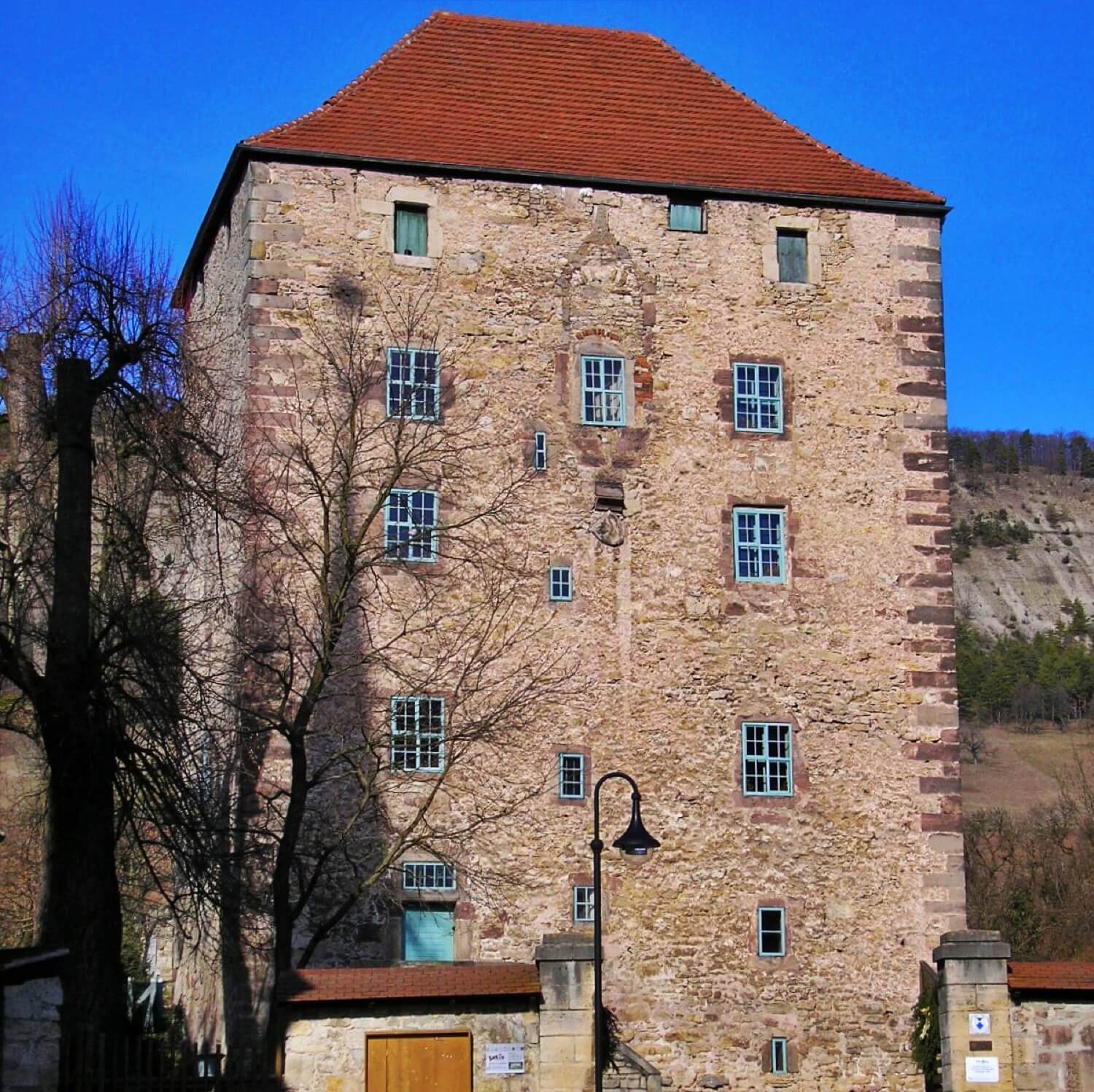
Kemenate Reinstadt
Saale-Holzland-Kreis
9.1km
castle, chateau
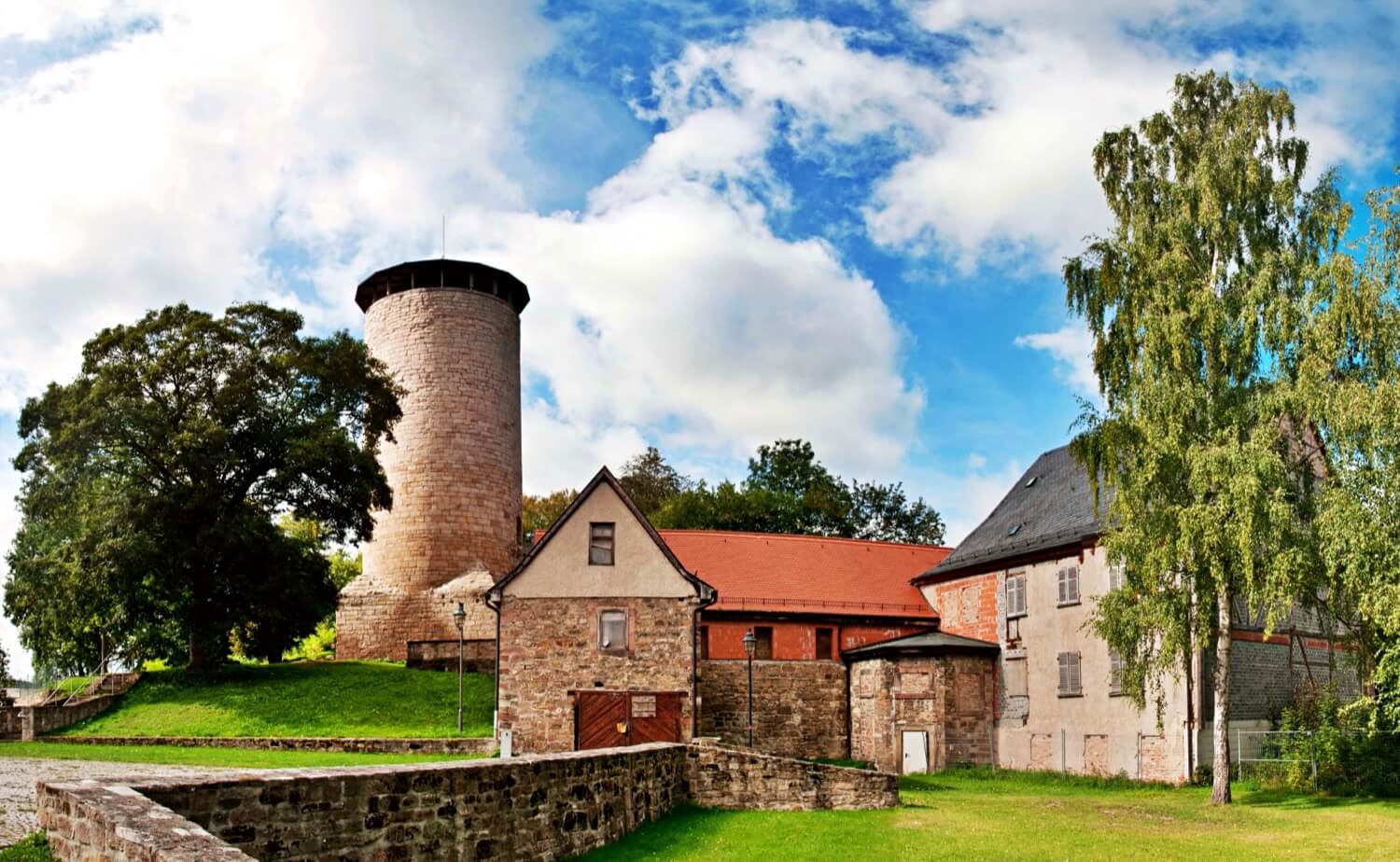
Burg Tannroda
Weimarer Land
12.1km
castle, chateau
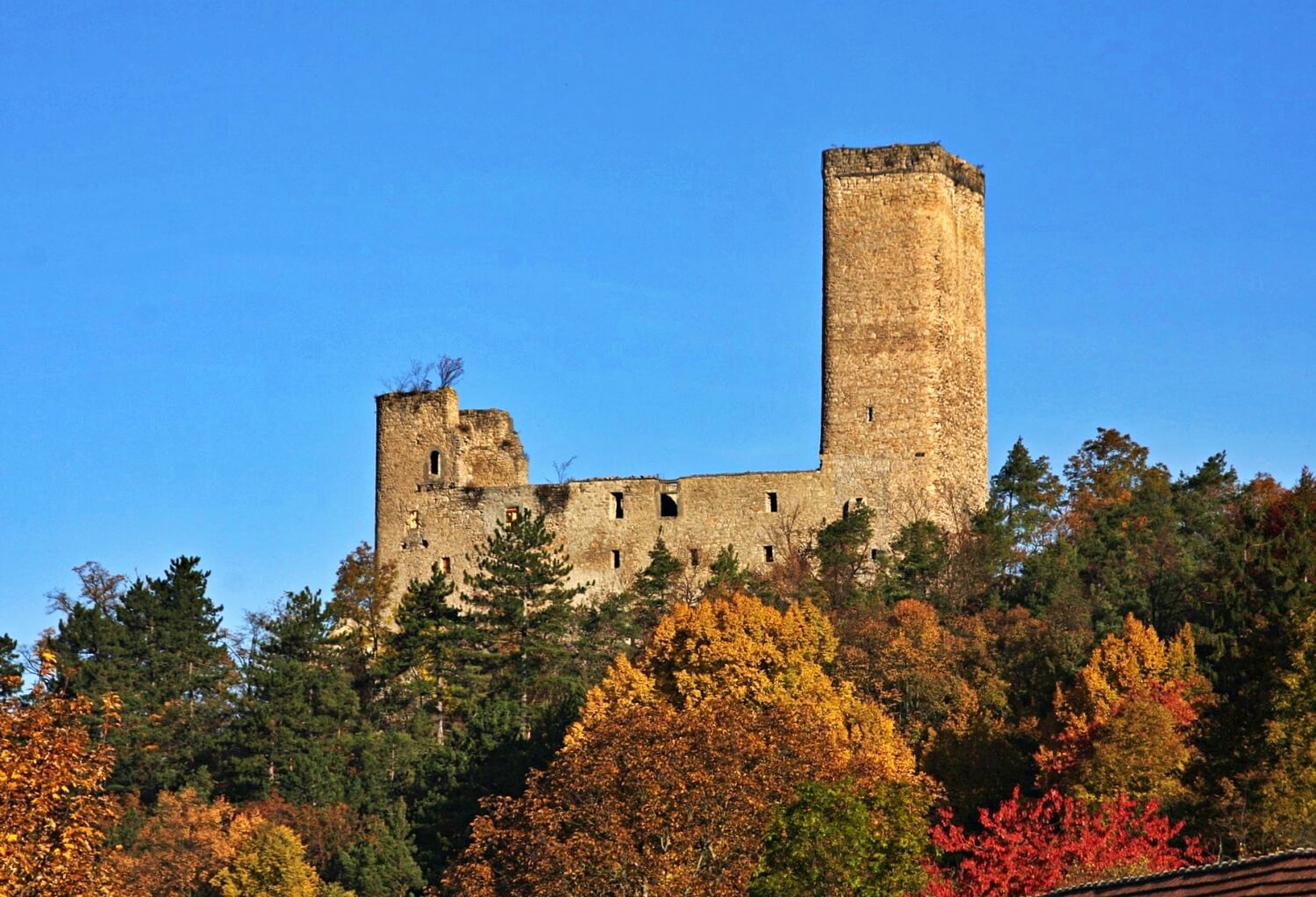
Burg Ehrenstein (Thuringen)
Ilm-Kreis
12.9km
castle, chateau
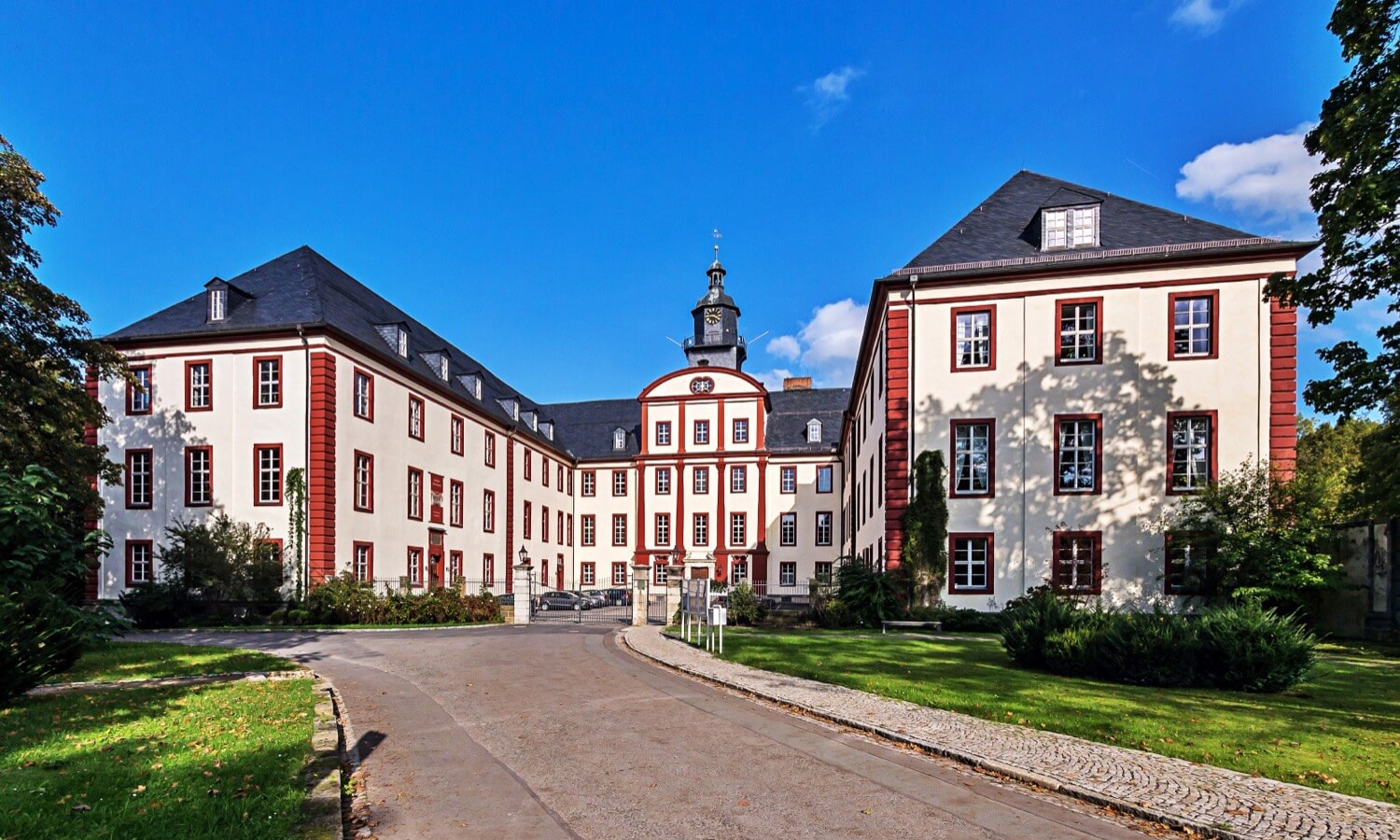
Schloss Saalfeld
Landkreis Saalfeld-Rudolstadt
13.7km
castle, chateau
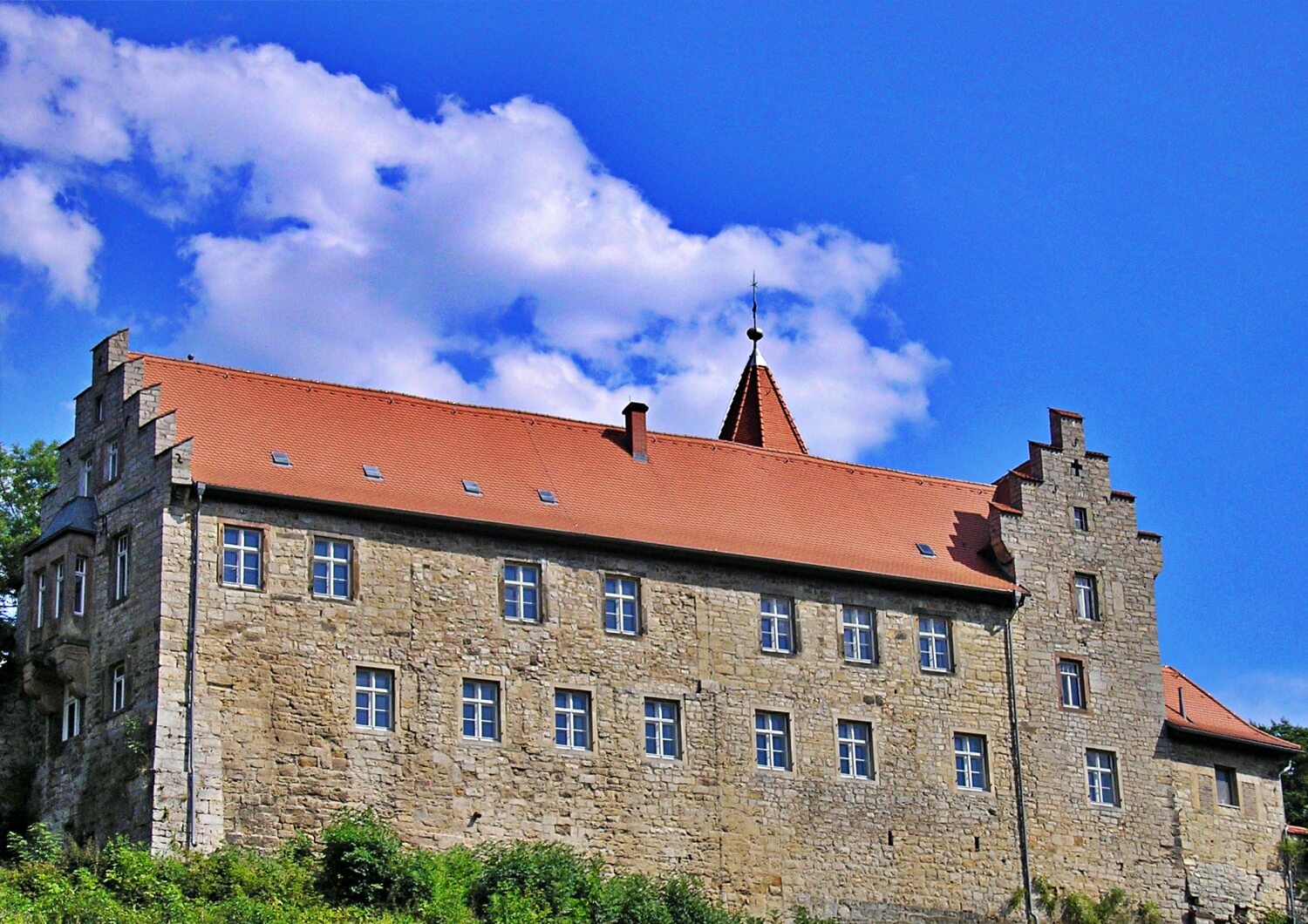
Niederburg Kranichfeld
Weimarer Land
13.8km
castle, chateau
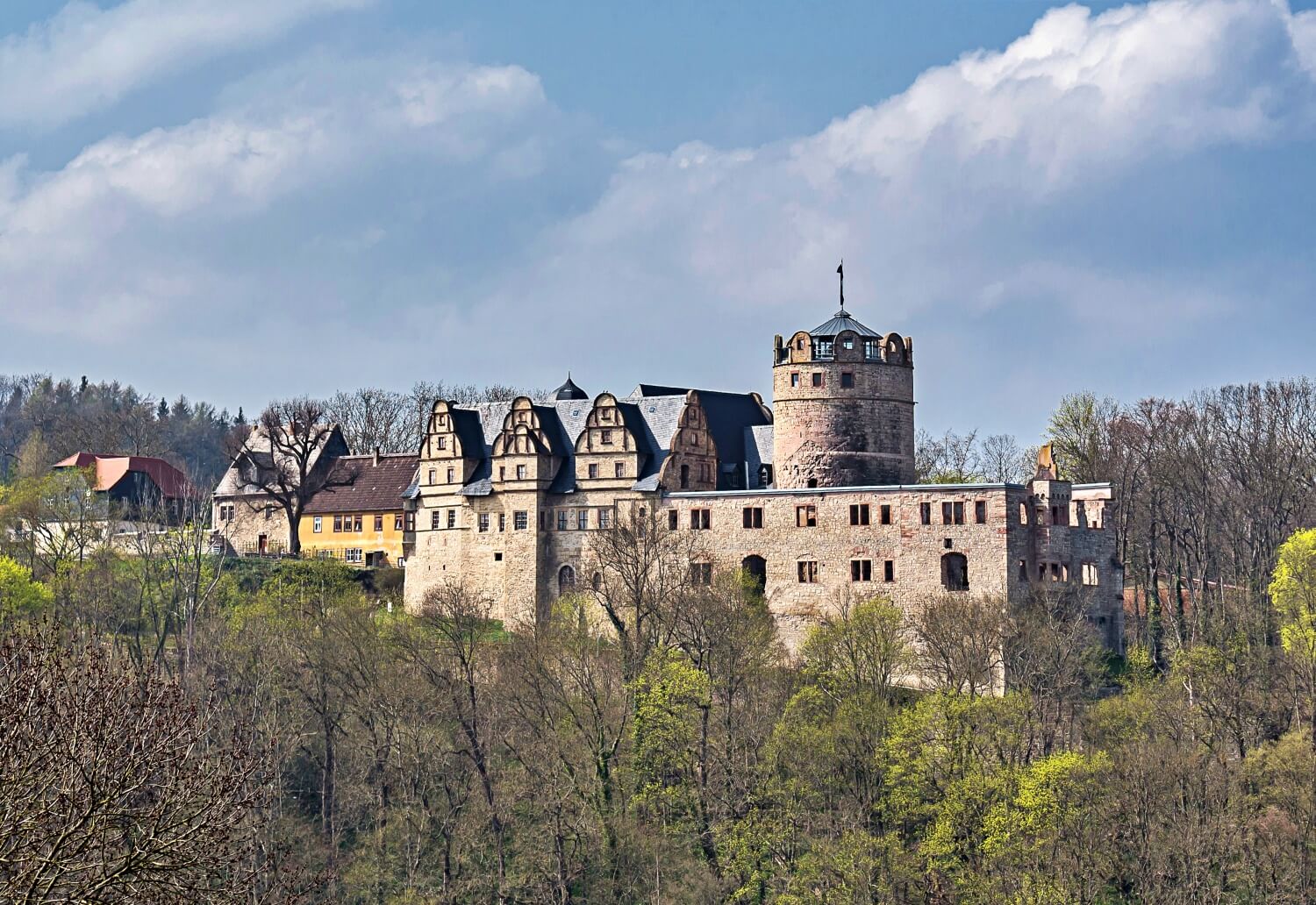
Oberschloss Kranichfeld
Weimarer Land
14.2km
castle, chateau