Schloss Kannawurf
Sömmerda Thüringen Germany
castle, chateau
Schloss Kannawurf
Sömmerda Thüringen Germany
castle, chateau
Kannawurf Castle is a Renaissance castle in Rimbach 6, Kannawurf , Sömmerda district , Thuringia
Schloss Kannawurf ist ein Renaissance-Schloss in Rimbach 6, Kannawurf, Landkreis Sömmerda, Thüringen
Previous names
Schloss Kannawurf, Schloss Kannawurf
Description
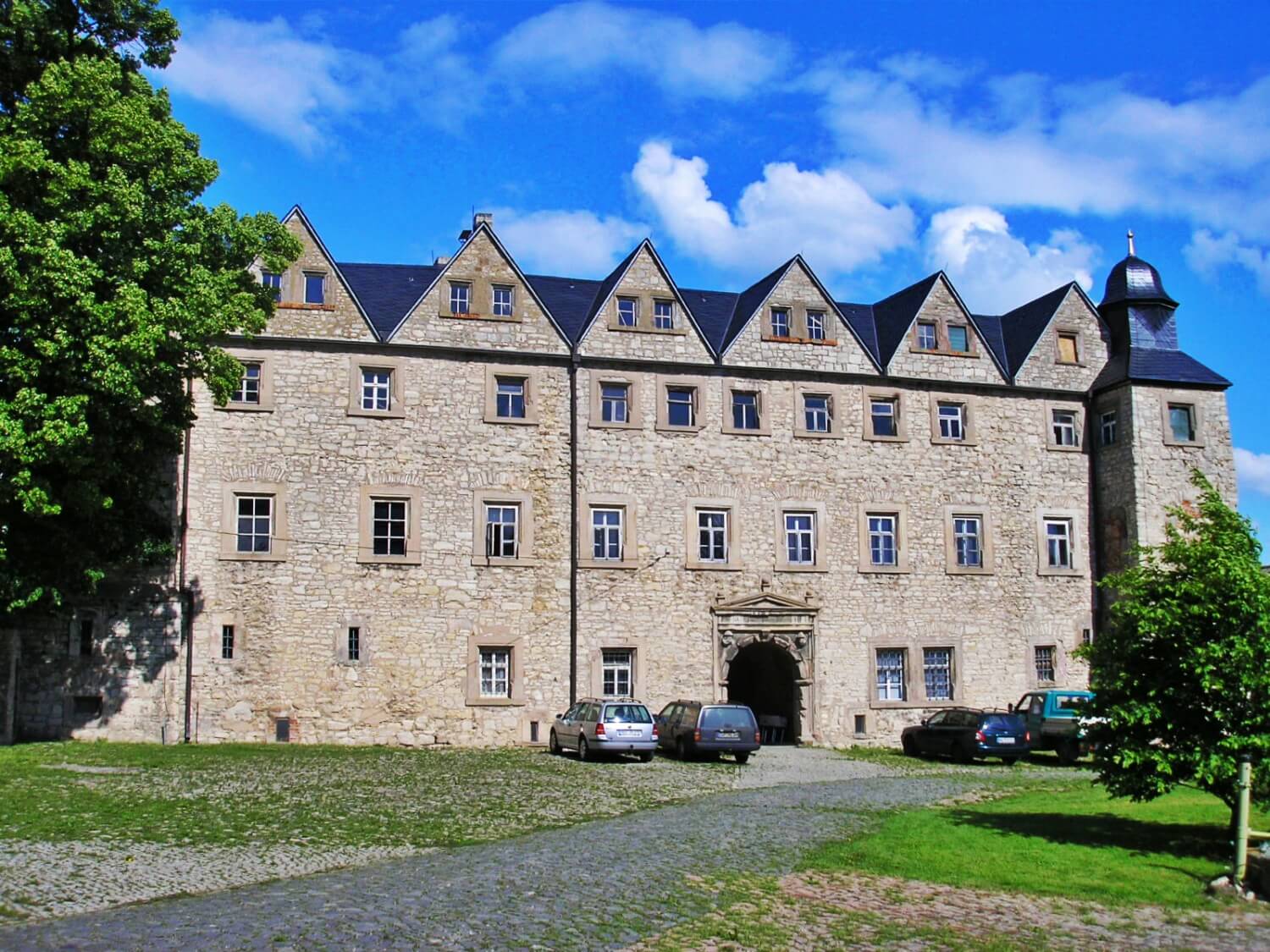
Kannawurf Castle is a Renaissance castle in Rimbach 6, Kannawurf , Sömmerda district , Thuringia.
History
In 1564 Georg II. Vitzthum von Eckstedt built the renaissance castle Kannawurf on the estate, which has been in the family since 1539; there were also three other manors in the village. Inscriptions on doors and windows date between 1563 and 1565. Instead of a medieval moated castle, a three-wing complex was built around an almost square inner courtyard, the fourth side of which is closed off by a shield wall with a central round tower. The roof is adorned with a row of dwelling houses . With this form of the so-called fort type , Georg II. Vitzthum cited the construction of the Dresden residential palace begun around 1547 by Elector Moritz von Sachsen , in whose service he was marshal.
The preserved bell tower from 1586 is decorated with the family coat of arms. The north wing housed the state rooms, including a large hall; the south wing was reserved for economic and residential functions, u. a. the castle kitchen was located there. The dungeon, bell tower, a wooden gallery from the 16th century and imposing cellars complete the ensemble. After George's death in 1570, his five sons received the castle. Johann Friedrich I. von Eckstedt leased the property in 1661, as he was in debt due to the Thirty Years War.
In 1685 the von Bose family bought the property. In a renovation phase around 1717, changes were made to the room layout and the roof landscape under the aegis of Bose, creating a continuous second floor. In the window niches of the ballroom and also in the small hall there are fragments of wall paintings (including Ovid's Metamorphoses ). In 1726 the property went to the von Helmholt, later to other owners, in 1839 to the princes of Schwarzburg-Sondershausen .
After 1860 the agricultural use was expanded and a large farmyard was created, which was surrounded by spacious barns and stables. In 1914 the estate became a state domain. At the time of the Soviet occupation zone and the GDR it was a people's own property . The palace garden had to give way to stables and new farm buildings. The castle fell into disrepair, and the north wing collapsed in the 1980s. The final decay seemed sealed. After the fall of the Wall at the beginning of the 1990s, the collapsed components and roofs were secured from federal and state funds, followed by renovation measures.
Since 2007 owned by the Thuringian Monument Preservation Center and the Künstlerhaus Thüringen e. V., the partially renovated castle is now used for cultural events.
Schloss Kannawurf ist ein Renaissance-Schloss in Rimbach 6, Kannawurf, Landkreis Sömmerda, Thüringen.
Geschichte
1564 baute Georg II. Vitzthum von Eckstedt das Renaissanceschloss Kannawurf auf dem seit 1539 im Familienbesitz befindlichen Gut; daneben gab es drei weitere Rittergüter im Ort. Inschriften an Türen und Fenstern datieren in die Zeit zwischen 1563 und 1565. Anstelle einer mittelalterlichen Wasserburg entstand bis etwa 1570 eine Dreiflügelanlage um einen fast quadratischen Innenhof, dessen vierte Seite eine Schildmauer mit mittigem Rundturm abschließt. Eine Reihe von Zwerchhäusern schmückt das Dach. Mit dieser Form des sogenannten Kastelltyps zitierte Georg II. Vitzthum den um 1547 begonnenen Neubau des Dresdner Residenzschlosses von Kurfürst Moritz von Sachsen, in dessen Diensten er als Marschall stand.
Die erhaltene Turmglocke aus dem Jahr 1586 ist mit dem Familienwappen verziert. Der Nordflügel beherbergte die Repräsentationsräume, darunter einen großen Saal; der Südflügel war Wirtschafts- und Wohnfunktionen vorbehalten, u. a. befand sich dort die Schlossküche. Verlies, Glockenturm, eine hölzerne Galerie aus dem 16. Jahrhundert und imposante Kellergewölbe runden das Ensemble ab. Nach Georgs Tod 1570 erhielten seine fünf Söhne das Schloss. Johann Friedrich I. von Eckstedt verpachtete das Gut 1661, da er durch den Dreißigjährigen Krieg verschuldet war.
1685 ersteigerte die Familie von Bose den Besitz. In einer Umbauphase um 1717 wurden unter der Ägide der Bose Veränderungen in der Raumaufteilung und der Dachlandschaft vorgenommen, wodurch ein durchgehendes zweites Obergeschoss geschaffen wurde. In den Fensternischen des Festsaals und auch im kleinen Saal befinden sich Fragmente von Wandmalereien (u. a. Metamorphosen des Ovid). 1726 ging der Besitz an die von Helmholt, später an weitere Besitzer, 1839 an die Fürsten von Schwarzburg-Sondershausen.
Nach 1860 wurde die landwirtschaftliche Nutzung ausgebaut und es entstand ein großer Wirtschaftshof, der von großzügigen Scheunen und Stallungen umgeben wurde. 1914 wurde das Gut Staatsdomäne. Zur Zeit der SBZ und DDR war es ein Volkseigenes Gut. Der Schlossgarten musste Ställen und neuen Wirtschaftsgebäuden weichen. Das Schloss verfiel zusehends, in den 1980er Jahren stürzte der Nordflügel ein. Der endgültige Verfall schien besiegelt. Nach der Wende Anfang der 1990er Jahre erfolgte die Notsicherung der eingestürzten Bauteile und Dächer aus Bundes- und Landesmitteln, gefolgt von Sanierungsmaßnahmen.
Seit 2007 im Besitz des thüringischen Denkmalpflegezentrums und des Künstlerhauses Thüringen e. V., dient das teilweise sanierte Schloss inzwischen kulturellen Veranstaltungen.
Useful information
Gratis
- Privateigentum (Veranstaltungsorganisation)
- Für Besucher geschlossen
-
Nearby castles
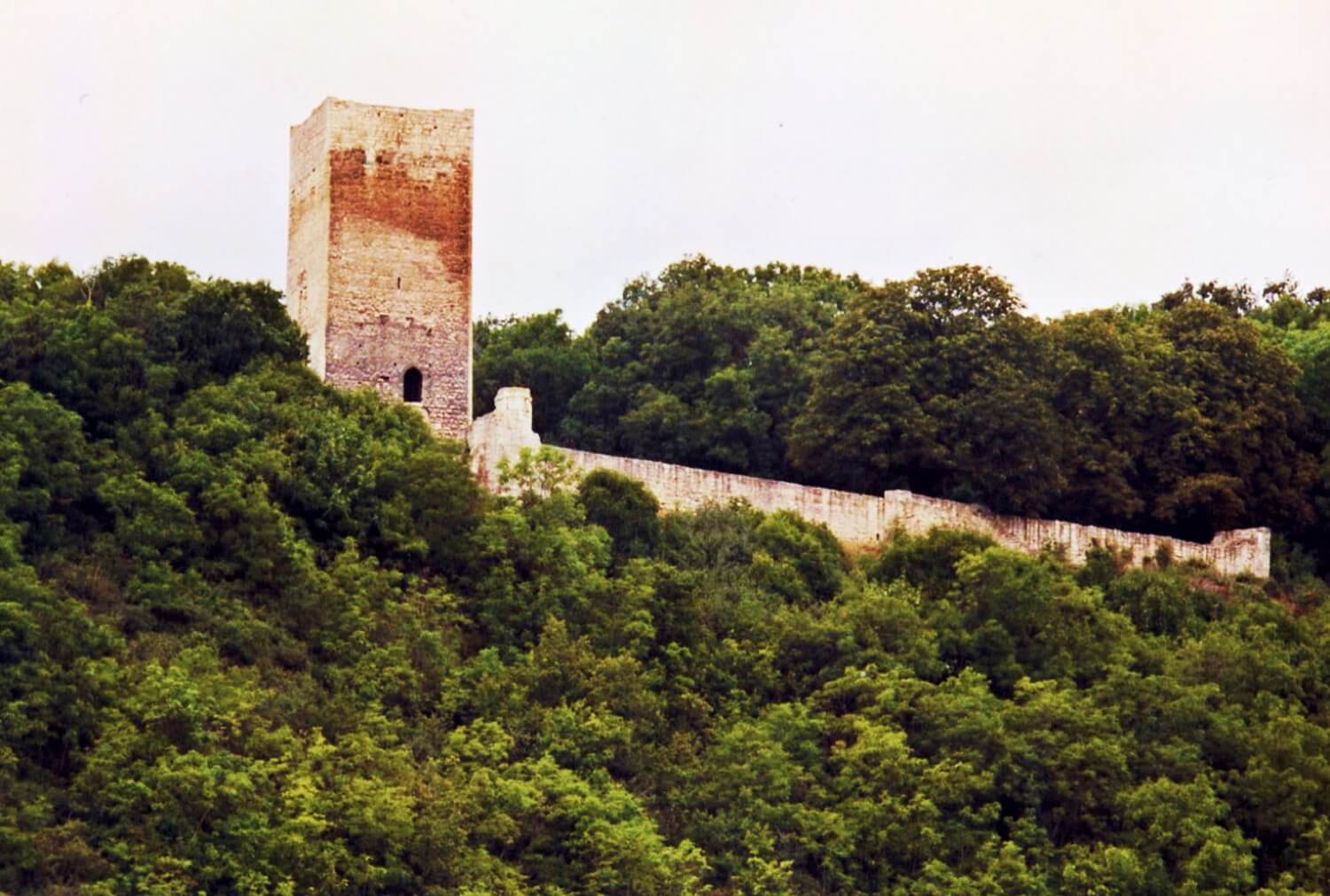
Untere Sachsenburg
Kyffhäuserkreis
3.2km
castle, chateau
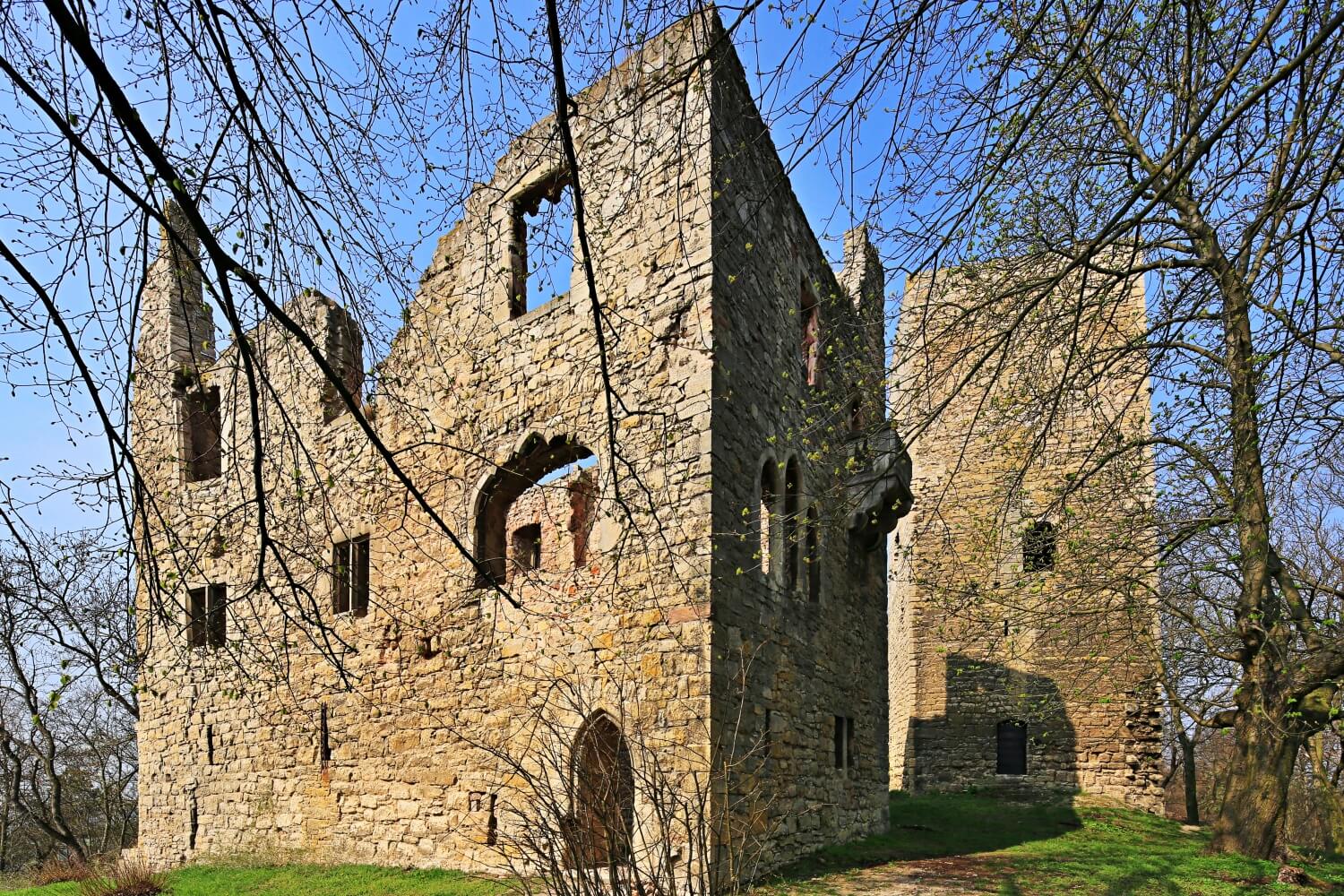
Obere Sachsenburg
Kyffhäuserkreis
3.4km
castle, chateau
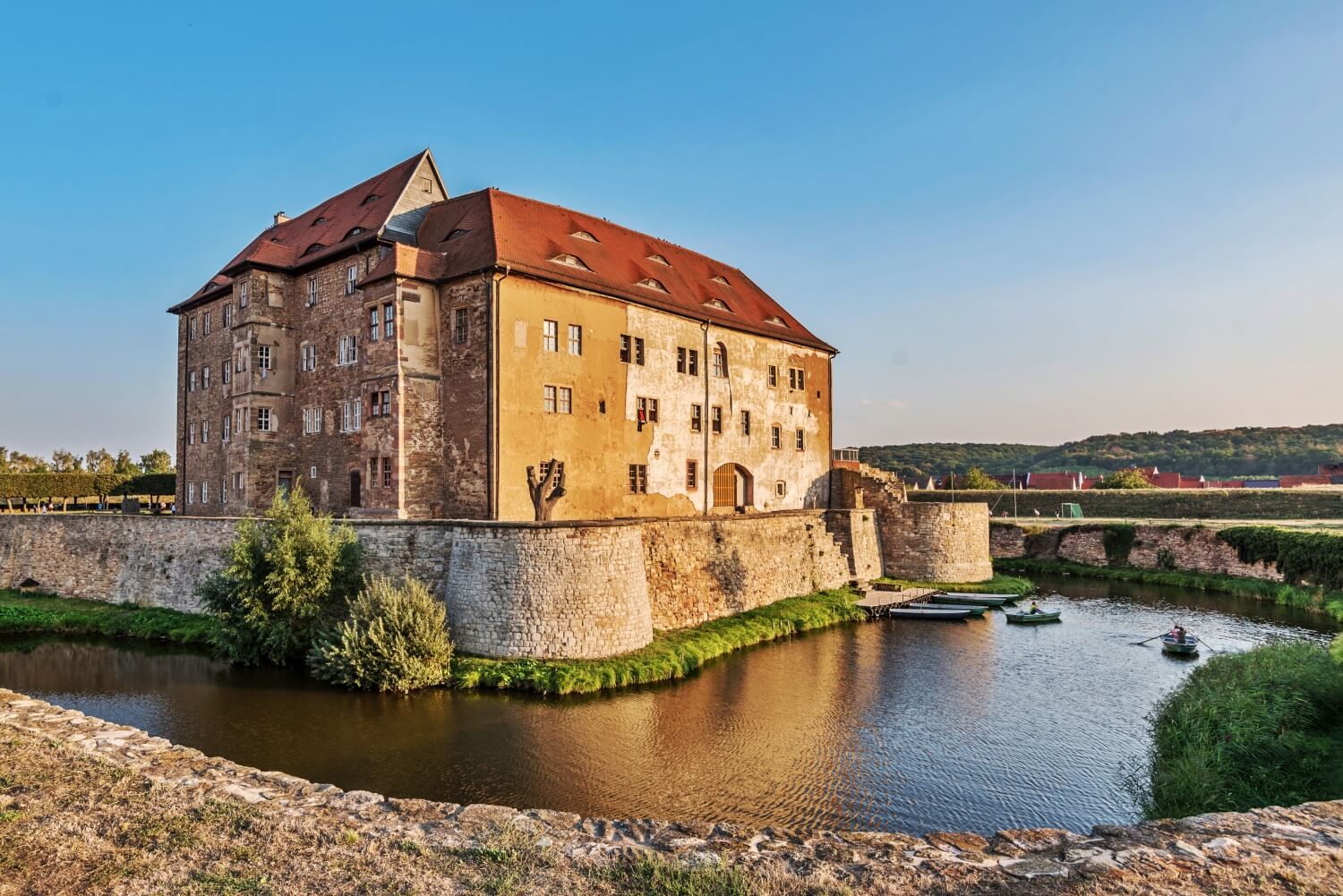
Festung Heldrungen
Kyffhäuserkreis
6.5km
castle, chateau
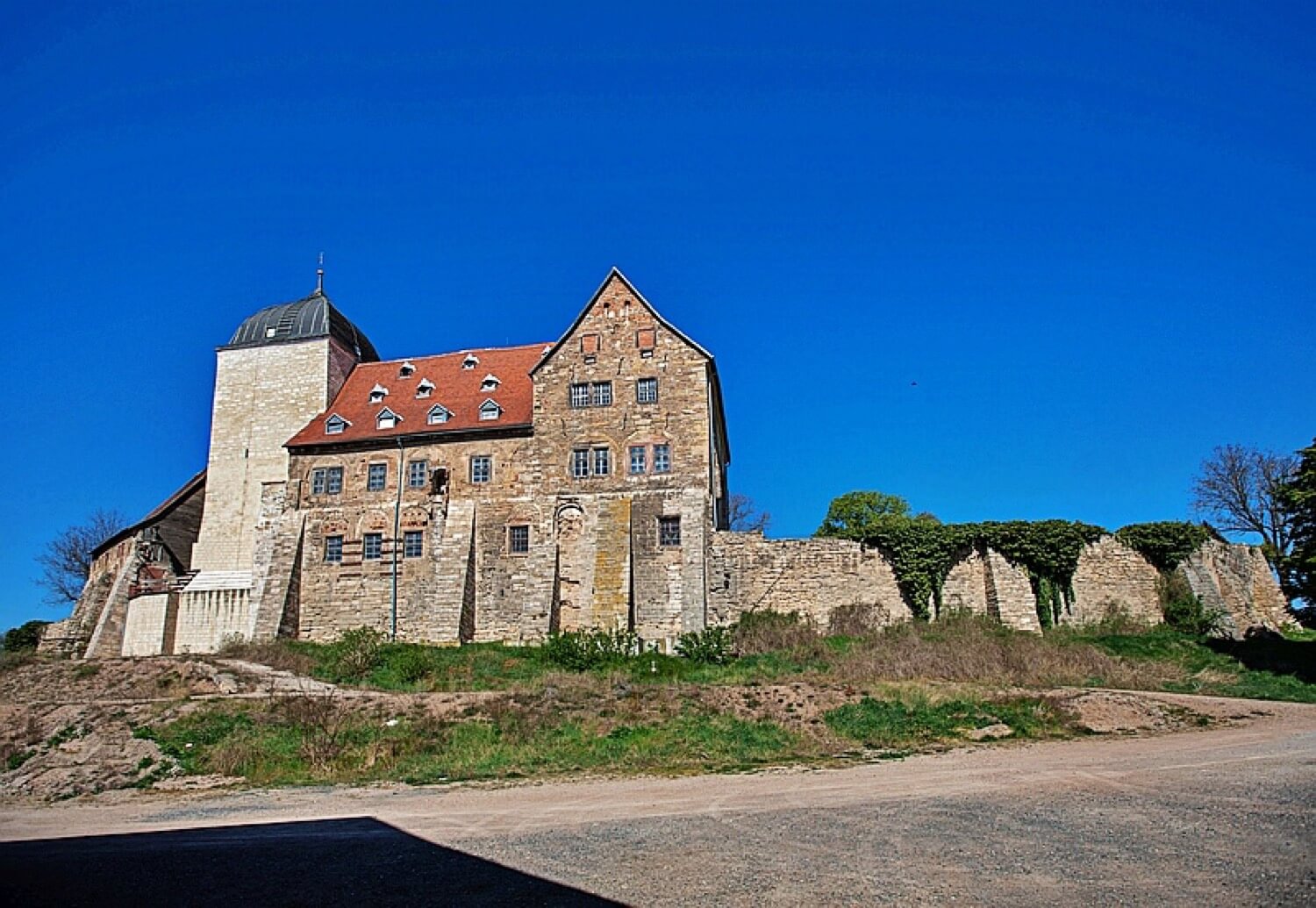
Runneburg Fortress
Sömmerda
9.4km
fortress
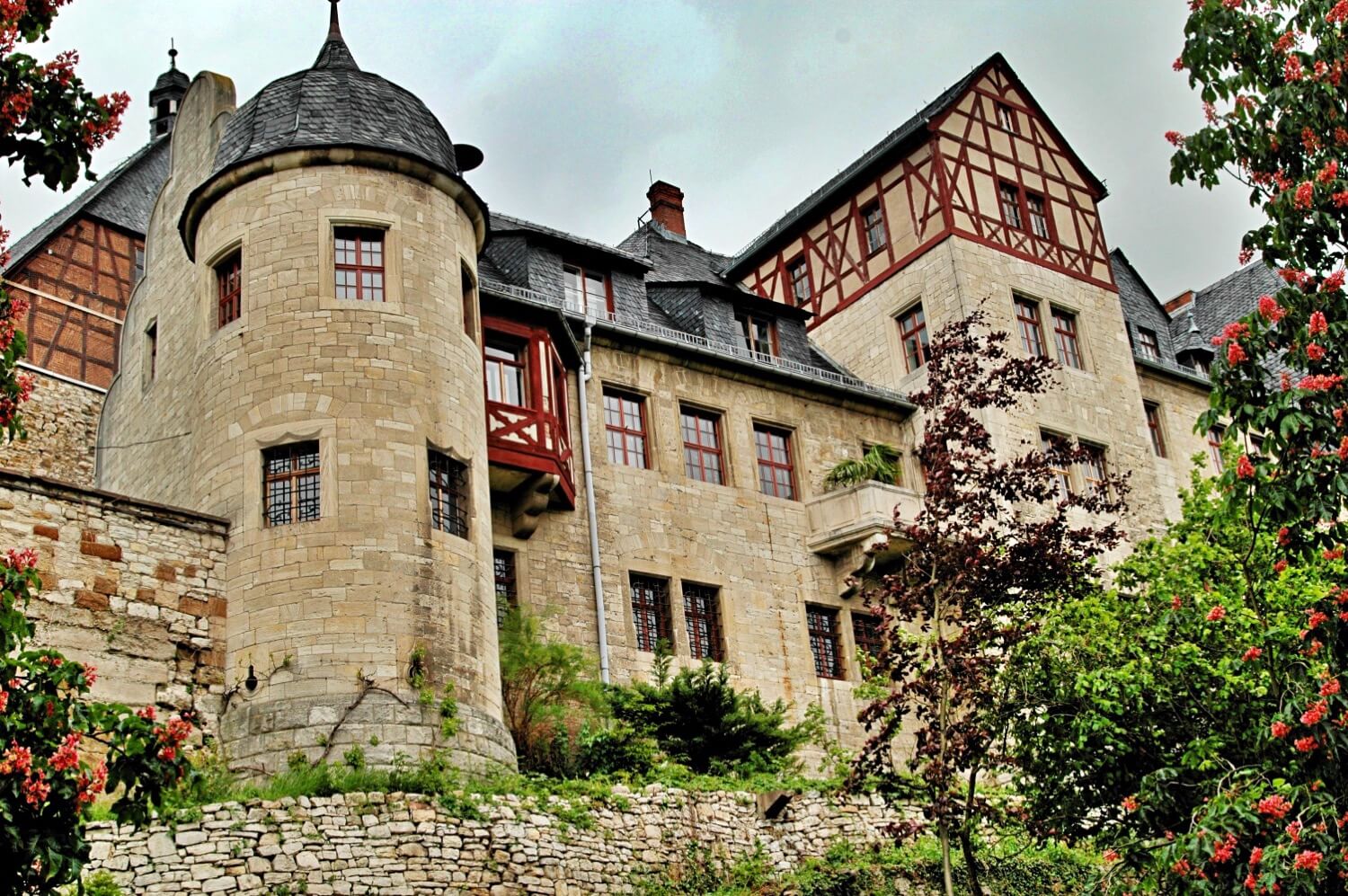
Schloss Beichlingen
Sömmerda
9.4km
castle, chateau
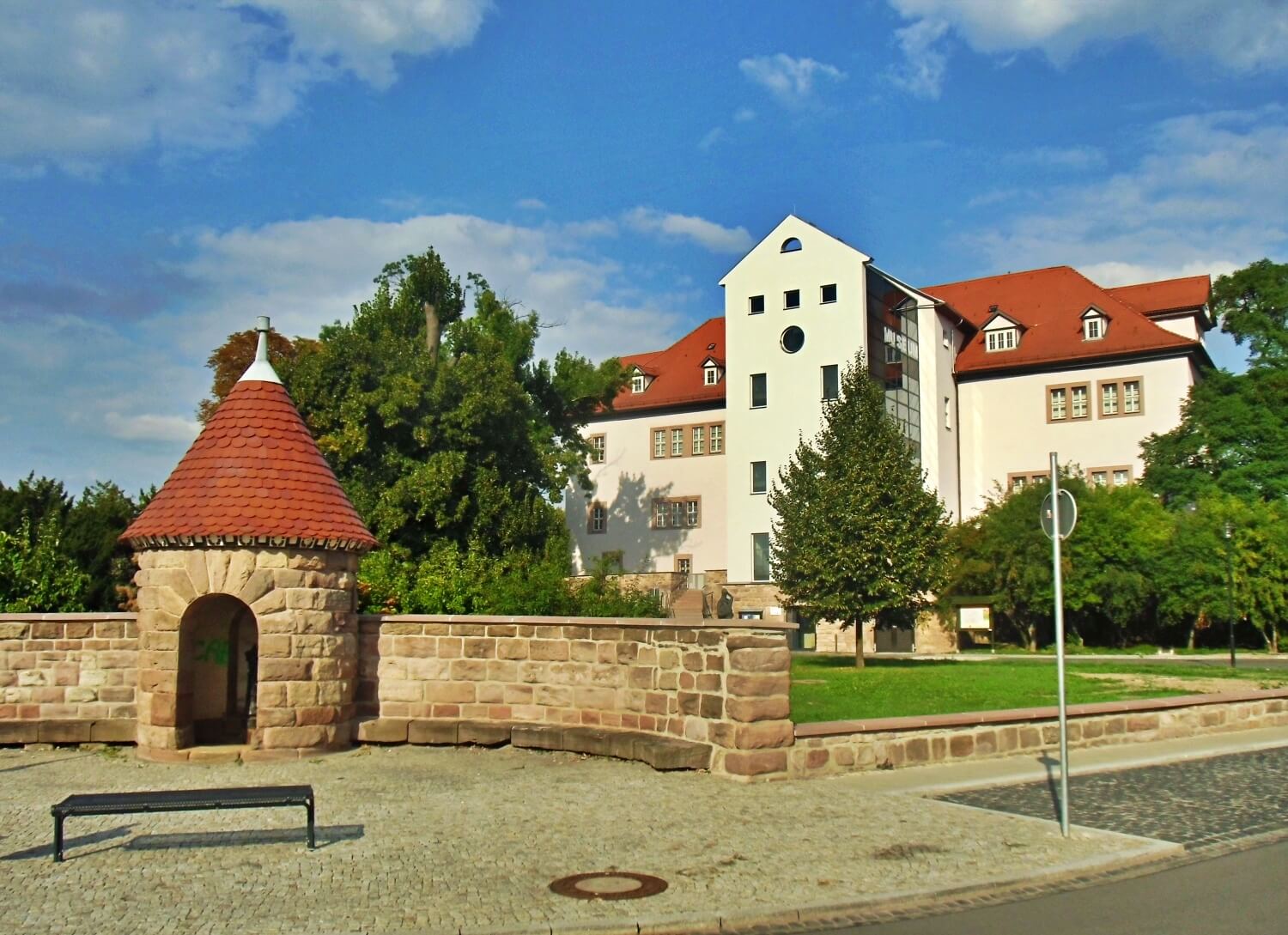
Frankenhausen Castle
Kyffhäuserkreis
9.6km
castle, chateau
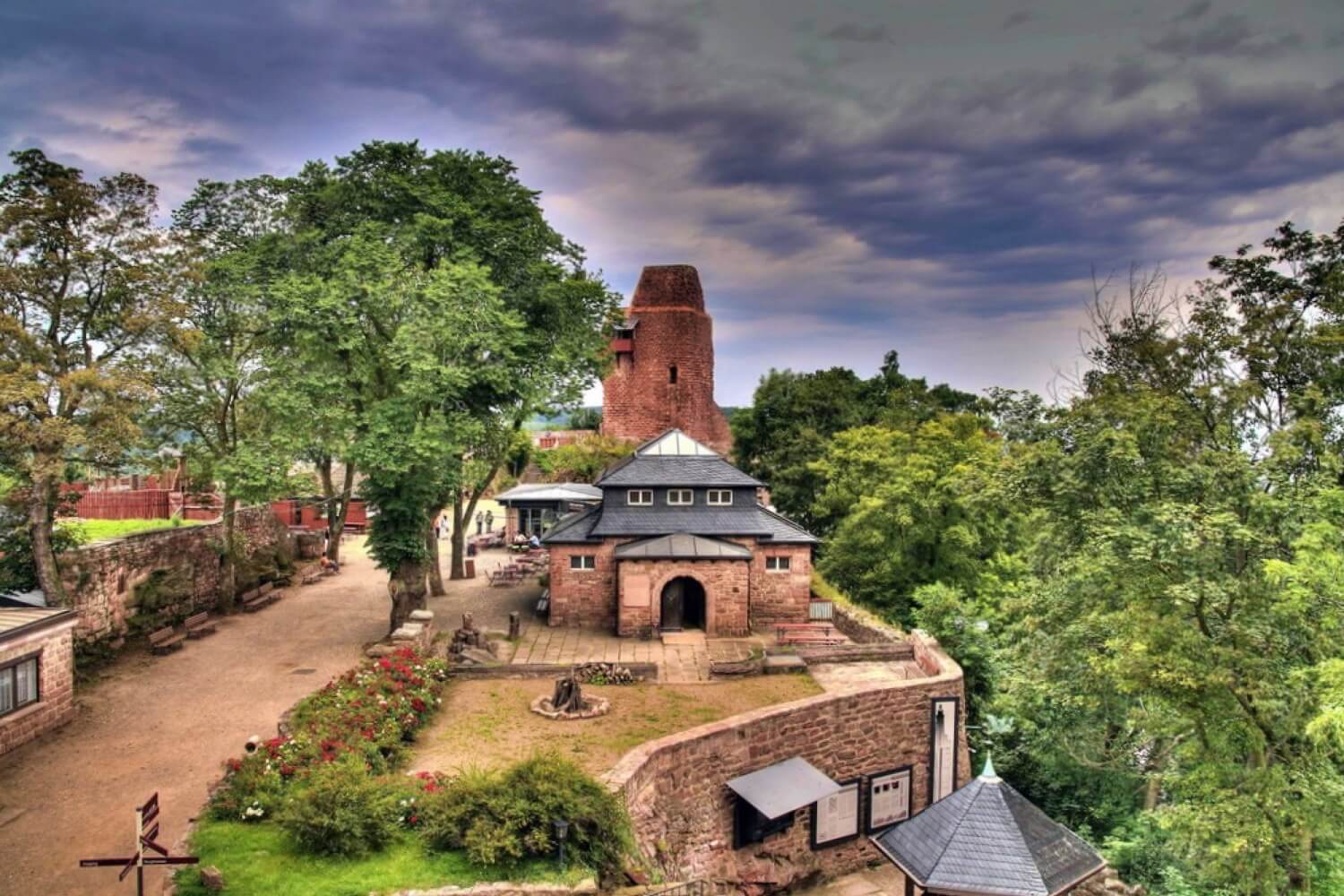
Kyffhausen Castle
Kyffhäuserkreis
16.0km
castle, chateau