Nuremberg Castle
Mittelfranken Bayern Germany
castle, chateau
Nürnberger Burg
Mittelfranken Bayern Germany
castle, chateau
Nuremberg Castle (German: Nürnberger Burg) is a group of medieval fortified buildings on a sandstone ridge dominating the historical center of Nuremberg in Bavaria, Germany
Die Nürnberger Burg ist das Wahrzeichen der Stadt Nürnberg
Previous names
Nuremberg Castle, Nürnberger Burg
Description
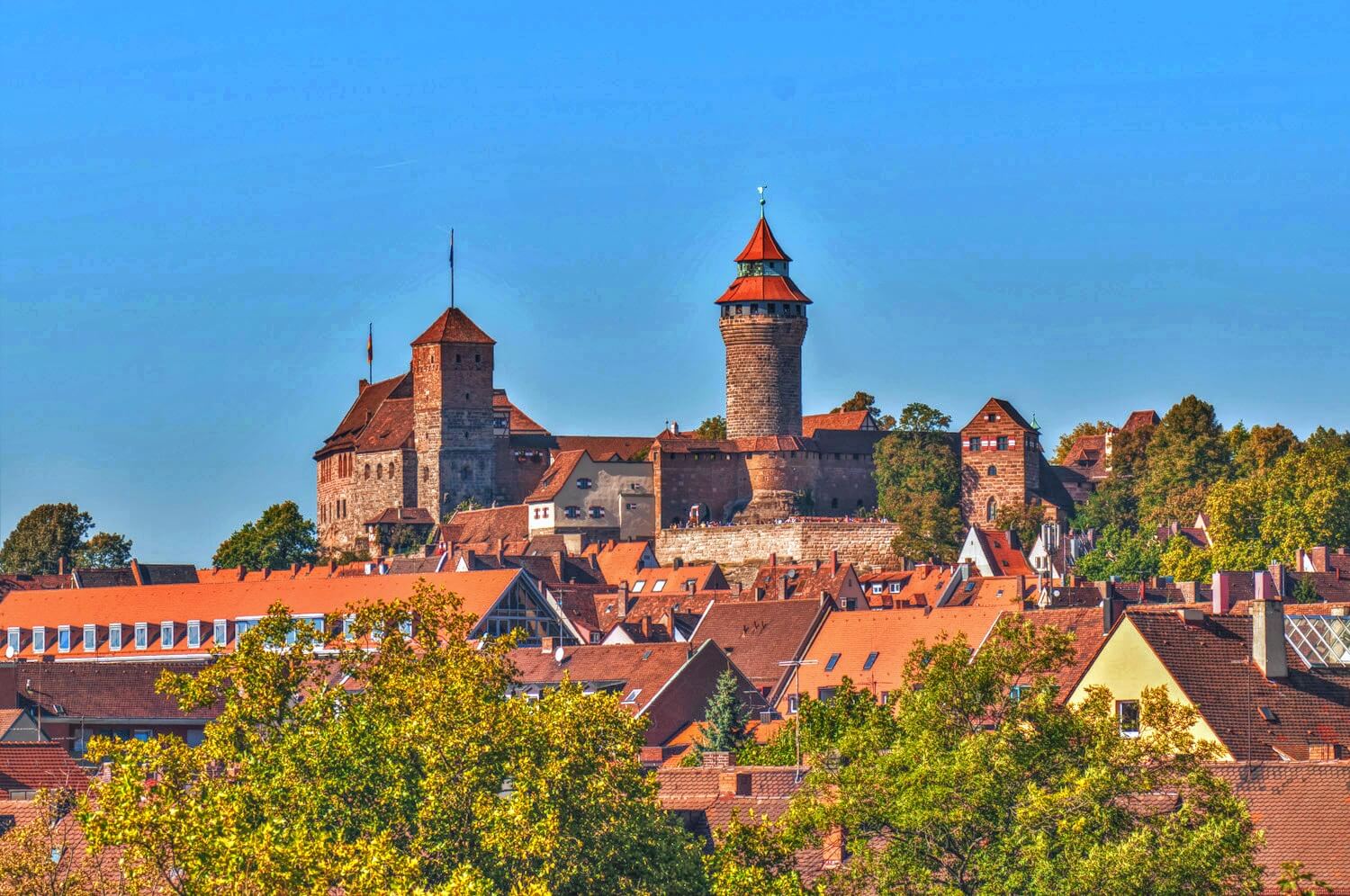
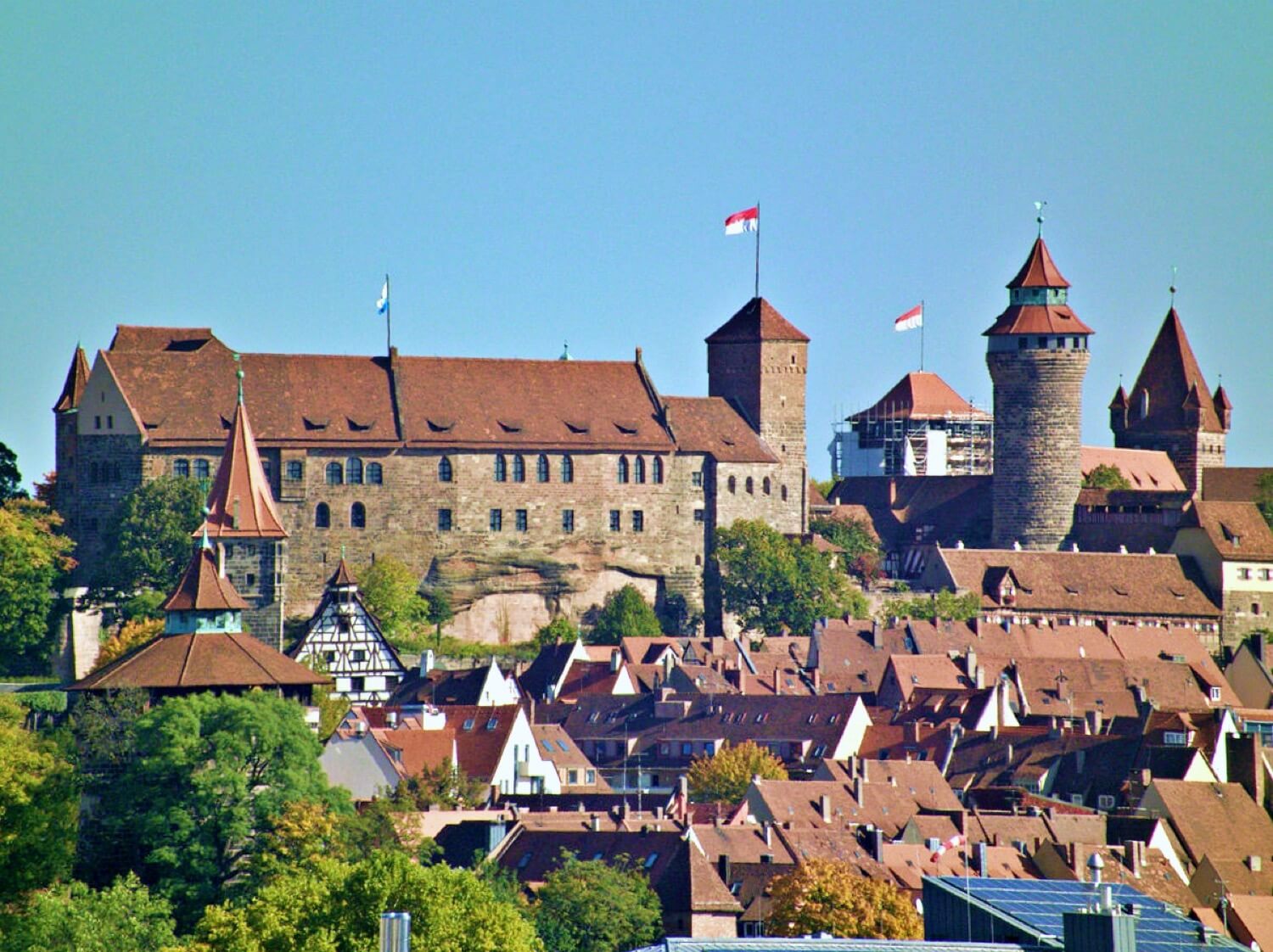
Nuremberg Castle (German: Nürnberger Burg) is a group of medieval fortified buildings on a sandstone ridge dominating the historical center of Nuremberg in Bavaria, Germany.
The castle, together with the city walls, is considered to be one of Europe's most formidable medieval fortifications. It represented the power and importance of the Holy Roman Empire and the outstanding role of the Imperial City of Nuremberg.
In the Middle Ages, German kings (respectively Holy Roman Emperors after their coronation by the Pope) did not have a capital, but voyaged from one of their castles (Kaiserpfalz or Imperial castle) to the next. Thus, the castle at Nürnberg became an important imperial castle, and in the following centuries, all German kings and emperors stayed at the castle, most of whom on several occasions.
Nuremberg Castle comprises three sections: the Imperial castle (Kaiserburg), the former Burgraves' castle (Burggrafenburg), and the buildings erected by the Imperial City at the eastern site (Reichsstädtische Bauten).
The first fortified buildings appear to have been erected around 1000. Thereafter, three major construction periods may be distinguished:
the castle built under the Salian kings respectively Holy Roman Emperors (1027–1125);
a new castle built under the Hohenstaufen emperors (1138–1254);
reconstruction of the Palas as well as various modifications and additions in the late medieval centuries.
The castle lost its importance after the Thirty Years' War (1618 to 1648). In the 19th century with its general interest in the medieval period, some modifications were added. During the Nazi period, in preparation of the Nuremberg party rally in 1936, it was "returned to its original state." A few years later, during World War II and its air raids in 1944/1945, a large part of the castle was laid in ruins. It took some thirty years to complete the rebuilding and restoration to its present state.
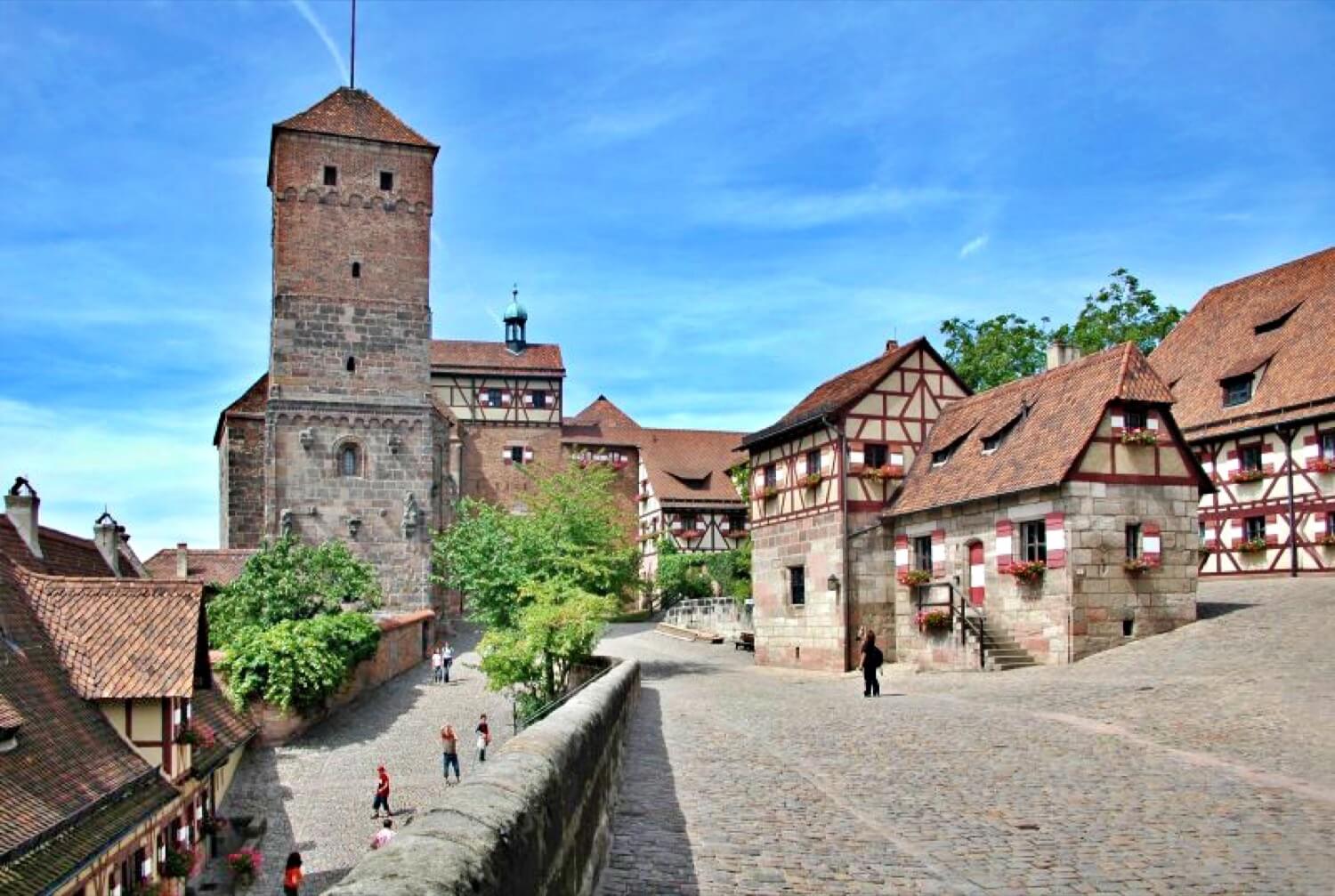
The usual access to the castle is via Burgstrasse ending in front of the sandstone ridge. A wide footpath leads into the outer courtyard through the Heavenly Gate (Himmelstor) situated next to the Hasenburg tower (named after the Bohemian Hasenburg family).
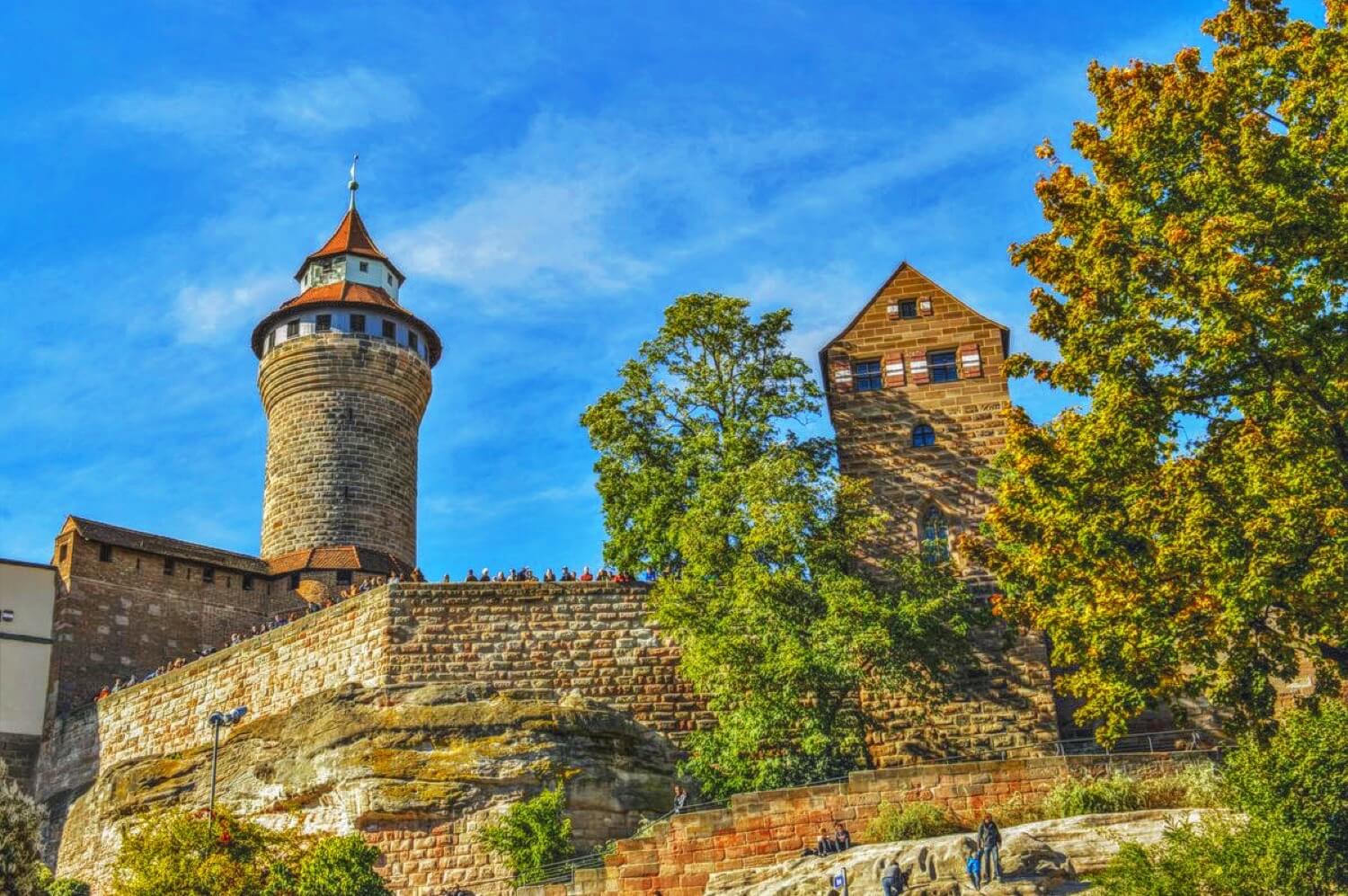
The Sinwell Tower built in the 2nd half of the 13th century was the major keep of the Castle. It is named after its cylindrical form: in Middle High German sinwell means perfectly round. In the 1560s, its height was increased by a further floor and a pavilion roof with a pointed helm.
The Deep Well (Tiefer Brunnen) inside the small half-timbered house in the middle of the courtyard is certainly as old as the castle itself, as it was the castle's only source of water. Its shaft reaches the water level in a depth of 50 meters (164 feet) and the water usually is 3 m (10 ft) deep. Above the water level, a niche was cut out of the rock for cleaning purposes. The lower stone walls of the building date from 1563. The little annex built in the following year was used as bathroom and changing room. The Deep Well provided sufficient quantities of water for normal consumption, but during Imperial Diets and visits by the Emperor, water barrels had to be transported on wagons from the city.
The Castellan's House (Kastellansgebäude), the Secretarial Building (Sekretariatsgebäude) and the Finance Building (Finanzstadel) as well as the post-medieval Himmelsstallung are further buildings in the outer court, to a large extent reconstructed after World War II.
The Inner Gate (Inneres Tor) leads to the Inner Courtyard (Innerer Burghof), surrounded by the Palas, the Imperial Chapel and the Kemenate. In the courtyard, remains of foundations of the Salian Period may be seen. In the middle, there is the Kunigunde Lime Tree planted in 1984, replacing older trees first mentioned in 1455 and named after Saint Cunigunde, consort of Emperor Henry II (Saint Henry).
The Palas, the main building of the Imperial Castle, has two floors which were used for official functions and as the Emperors residence. It was rebuilt and modified a number of times during the castle's history. It now houses the permanent exhibition »Emperor – Empire – City. The Imperial Castle in Nuremberg«.
The Imperial Chapel (Kaiserkapelle), from an architectural point of view, is the most important building on the castle rock. It was built around 1200, at the same time as the original Palas. It is a romanesque double chapel consisting of two chapels one above the other and connected only through an opening in the ceiling, thus representing the hierarchical levels in the medieval society.
The Heathens' Tower (Heidenturm) stands next to the Imperial Chapel. It was built at the same time as the Chapel. When the Castle was restored for the visit of Emperor Charles V, heathen idols and pictures on the tower were removed, meaning romanesque sculptures, and thus the tower's name in colloquial parlance subsists until today.
The Kemenate (Ladies' Building) originally was built during the Hohenstaufen period, but later replaced by a large four storeyed building. The present building was burned down in 1945 and later reconstructed. At present, it houses the ticket office, the small museum shop and a multimedia show about the building history of the Imperial Castle.
The Burgraves' Castle was situated on the area between the Sinwell Tower and the Luginsland, but after its destruction in 1420 and the purchase of its remains by the city, very little is left.
The Pentagonal Tower standing above the northern rock face is among the oldest buildings on the castle rock. It was the keep of the Burgraves' Castle. Its lower part made of ashlars may have been built at the same time as the Imperial Chapel. During later gothic times, a storey of brickwork was added.
The Walburga Chapel appears to have been built shortly thereafter. It was originally dedicated to Saint Othmar, but after the city purchased the ruins of Burgraves' Castle, it was rebuilt and dedicated to Saint Walpurga. Destroyed in World War II, it was reconstructed and opened to the public in 1970.
The Luginsland (literally look into the land) was built in 1377 near the main gate of the Burgraves' castle, in order to enable the city to monitor the activities inside the Burgraves' Castle, at a time when the relations between the city and the Burgraves had already deteriorated.
The Vestner Gate was the only exit from the castle to the north, at that time an open land.
The Imperial Stables were built as a granary in 1494 to 1495 by Hans Beheim the Elder, Nuremberg's most important architect at that time. The ground floor was also used as stables. Severely damaged in World War II, it was renovated and is now a Youth Hostel.
The Bastions were built in 1538 to 1545 in response to the progress in artillery which threatend the northern side of the castle. At about the same time, the fortifications of the city of Nuremberg as a whole were renewed and extended.
Archeological excavations within the castle unearthed remnants of walls dated around 1000, and in deeper strata even older ones that may be attributed to a building of Henry of Schweinfurt.
The first written record is of 1050, when Henry III issued the so-called Sigena document in Norenberc releasing a bondswoman. His father Conrad II, on voyages from Regensburg (Ratisbon) to Bamberg in 1025 and 1030, still had issued documents in Megelendorf, a small village some 4 km further to the east where the river Pegnitz could be crossed by a ford (presently Mögelsdorf, a district of Nuremberg). In the customary way, these documents indicate the place and date of their issuance, but do not contain any reference to the type of the place (e.g. castle, village etc.).
Henry III used the castle in his campaigns to extend his rule over Bohemia, Poland and Hungary. Henry IV, who had been the opponent of Pope Gregory VII in the Investiture Controversy, at the end of his reign, in 1105, had to endure that in his absence, after a siege lasting two months, the castle was taken by his son Henry V and that at the end of the same year he was forced by his son to abdicate.
Upon the death of Henry V in 1125, the last member of the Salian dynasty, his elected successor Lothair of Supplinburg attempted to seize the crown lands from the Hohenstaufen Frederick II, Duke of Swabia and his brother Conrad who considered all these lands, including Nuremberg Castle, to be part of the Salian family property inherited by them. After several sieges, Lothair succeeded in October 1130 in capturing the castle.
Upon Lothair's death in 1137, the Hohenstaufen Conrad was elected King Conrad III in the subsequent year and soon afterwards started to build a new Imperial Castle which appears to have been completed unter his reign. The new buildings comprised the Palas, the Imperial Chapel and the Heathens' Tower.
At about the same time, Conrad established the Burgraviate in order to ensure the safety of the castle in the absence of the king. Thus, the first burgraves from the Austrian House of Raabs built the Burgraves' Castle next to the Imperial Castle and were granted a substantial landholding in the vicinity.
Frederick I (Barbarossa) used the castle for a number of Diets and receptions, e.g. of a legation from the Eastern Roman Empire in 1156, but according to recent research, he did not contribute to the building of the Palace.
Henry VI apparently was engaged in various building activities related to the Palas, the Imperial Chapel and adjacent buildings.
After the last count of Raabs had died, his son-in-law Frederick of Zollern, in 1192, was granted the Burgraviate by Emperor Henry VI. The Zollerns, soon renamed Hohenzollern, held it until the Burgraves' Castle was destroyed and afterwards its ruins sold to the city of Nuremberg in 1427 (the Hohenzollerns, however, continued to administer their landholdings outside of Nuremberg).
Frederick II, on the occasion of his first diet at the Imperial Castle in 1219, granted the Great Letter of Freedom (Großer Freiheitsbrief) to the city, including town rights, Imperial immediacy (Reichsfreiheit), the privilege to mint coins, and an independent customs policy, making the city an Imperial Free City subject only to the Emperor. Frederick II also transferred various responsibilities for the care of the Imperial Castle to the city. This was the starting point not only of a remarkable development of the city, but also of a long dispute between the city and the Burgraves.
Frederick II stayed at the castle at least 16 times, and his son King Henry (VII) of Germany as many as 21 times. In 1224, on the first diet of thirteen year old King Henry (VII), Walther von der Vogelweide was on the guest list, and in 1225, Henry (VII) was married at the castle to Margaret of Babenberg, daughter of Duke Leopold VI of Austria.
Frederick II made his last visit to Germany in 1236 and returned to Italy in 1237 for the remaining thirteen years of his life, leaving the German affairs to his son Conrad IV.
The Interregnum ceased in 1273 with the election in Frankfurt of King Rudolf I, the first King of the Romans of the House of Habsburg. Immediately thereafter, Rudolf I attested a number of privileges to the Burgraves in consideration of their assistance in his election. Rudolf I held several diets at the Imperial Castle, and under his reign as well as under the reign of his successors Adolf of Nassau and Albert I of Habsburg, new buildings were added such as the Sinwell Tower, and works were executed on the Palas and the upper parts of the Chapel Tower (Heathens' Tower). During the same period, the Burgraves extended their adjacent castle.
Both the Burgraves and the city improved their positions in the surrounding lands. The city of Nuremberg prospered and became one of the most important towns in Germany. The Golden Bull of 1356 named Nuremberg as the place of the first Imperial Diet of a newly elected ruler. The Burgraves' rise to power reached its climax when King Sigismund transfered the Margraviate of Brandenburg to the Hohenzollern in 1411.
Thus, it was inevitable that the relations between the city and the Burgraves on the castle hill deteriorated significantly. In 1367, the city obstructed the Burgraves' access to the city by a wall in front of their castle, and in 1377, the city erected the Luginsland tower (literally look into the land) near the main gate of the Burgraves' castle, in order to control the activities inside the castle. In 1388/89, there was an armed conflict which was settled. Finally, the Burgraves' Castle was attacked in 1420 by Duke Louis VII of Bavaria and burned down, probably with the consent of the city. In 1422, Sigismund transferred the care of the Imperial Castle to the city, and in 1427, Frederick I, Elector of Brandenburg sold the remains of the Burgraves' Castle to the city.
With the political and commercial rise of the city, the Imperial Castle became less attractive. Emperors started to execute their governmental acts in the town hall completed in 1340 and preferred to stay in the luxurious houses of the leading families rather than in the less comfortable castle. The castle continued to be used on important formal occasions. Frederick III appreciated the safety of the Castle and stayed there several months. The last king holding his first Imperial Diet in Nuremberg was his son Maximilian I. In 1491, he stayed at the castle for almost six months. His grandson and successor Charles V, because of epidemics raging at Nuremberg, relocated his first Imperial Diet to Worms. He visited Nuremberg only in 1541 on his way to the Imperial Diet in Regensburg.
At this time, in 1538 to 1545, bastions were built on the northern side of the castle to better protect it against an improved artillery, and the Castle was integrated in the renewed and improved fortifications of the city.
The subsequent Habsburg emperors concentrated on their territories mainly in Austria, Bohemia and Hungary. Thus, Nuremberg was rarely visited any more by acting rulers.
During the Thirty Years' War, in 1632, the armies of Gustavus Adolphus and Wallenstein appeared in front of the walled city, but were diminished less by their hostilities than by typhus and scurvy.
Neither the city nor the Castle fully recovered from the effects of the Thirty Years' War.
Since 1594, the Imperial Diet had met only in Regensburg. The Peace of Westphalia of 1648 not only ended the atrocities of the war, but led to the Perpetual Diet of Regensburg which from 1663 to 1806 seated in Regensburg. As a consequence, the Nuremberg Castle lost practically all of its importance and was left undisturbed by outside forces.
In 1806, during Napoleon's restructuring of central Europe, French troops occupied Nuremberg and, according to the Treaty of the Confederation of the Rhine (Rheinbundakte), handed it over to Bavaria, then raised to a kingdom.
In line with the Romantic Period's revived interest for medieval art and architecture, King Ludwig I of Bavaria, in 1833, ordered Carl Alexander Heideloff to execute restoration work, but the king was not pleased with his neo-Gothic style and stopped the work. His son Maximilian II later commissioned August von Voit to continue the refurbishment between 1852 and 1858 in a more moderate style.
In the 1930s, the general opinion of 19th century art and architecture had deteriorated. During the Third Reich, Rudolf Esterer, director of the Bavarian Administration of State-Owned Palaces, Gardens and Lakes, removed most of the previous installations and returned the Castle to what was thought to be its original state.
In World War II, the castle was damaged in 1944-45, with only the Imperial Chapel and the Sinwell Tower remaining entirely intact. After the war, the castle was restored under the direction of Rudolf Esterer and Julius Lincke to its historical form, including the Luginsland tower which had been completely destroyed.
The Castle is owned by the state of Bavaria and administered by its Bavarian Administration of State-Owned Palaces, Gardens and Lakes (Bayerische Verwaltung der staatlichen Schlösser, Gärten und Seen).
Die Nürnberger Burg ist das Wahrzeichen der Stadt Nürnberg. Sie ist eine Doppelburg und besteht aus der Kaiserburg und der Burggrafenburg.
Früheste bauliche Spuren stammen aus der Zeit um 1000. Nach den schweren Beschädigungen im Zweiten Weltkrieg wurde die Burganlage in historischen Formen wiederaufgebaut. Sie zählt in ihrem historischen Charakter als Wehrbau und Kaiserresidenz, Reichsburg und hohenzollerischer Burggrafensitz zu den geschichtlich und baukünstlerisch bedeutendsten Wehranlagen Europas. Sie ist eines der bedeutendsten Kunst- und Baudenkmäler der Stadt und gehört zur Historischen Meile Nürnberg.
Die Nürnberger Burg liegt nördlich der Pegnitz auf einem Sandsteinrücken oberhalb der Sebalder Altstadt. Im Westen grenzt sie an den Neutorgraben, im Norden an den Vestnertorgraben. Die Burg ist nach Norden hin Teil der Nürnberger Stadtbefestigung. Von der Burg aus bietet sich ein Blick auf das unter ihr liegende Handwerkerviertel und die Altstadt.
Besitzgeschichtlich setzt sich die Burg aus drei Teilen zusammen, deren Grenzen im heutigen Baubestand jedoch nur mit Mühe abzulesen sind:
Die Reste der Burggrafenburg mit dem Fünfeckturm befinden sich in der Mitte. Die Burggrafenburg wurde höchstwahrscheinlich 1192 neu erbaut, der größte Teil wurde 1420 zerstört.
Die Kaiserburg mit Sinwellturm, Tiefem Brunnen, Doppelkapelle und Palas dehnt sich nach Westen aus. Die ältesten Teile stammen von 1200, danach wurde die Burg laufend aus- und umgebaut.
Weitere (reichs)städtische Bauten liegen im Norden und Osten (z. B. die ehemalige Kaiserstallung von Hans Beheim dem Älteren und der Turm Luginsland).
Baugeschichtlich lassen sich drei Phasen in zwei Hauptstilen unterscheiden:
in der ersten Hälfte des 11. Jahrhunderts die salische Königsburg im romanischen Stil
um 1200 die staufische Kaiserburg im romanischen Stil
im 15. Jahrhundert die Umbauten des Palas und städtische Bauten im gotischen Stil
Nachträgliche Umbauten haben die Originalbauten verändert.
In der Anfangszeit bildete die Kaiserburg den Mittelpunkt der Hausmachtpolitik der Staufer in Ostfranken. Ab 1192 wurde die Burggrafenburg Ausgangspunkt der Territorialbildung der Hohenzollern in Franken, gleichzeitig gewann die Reichsstadt Nürnberg an Macht, bekämpfte die Hohenzollern und konnte sie 1427 von der Burg vertreiben. Die Stadt übernahm die gesamte Burg, die in die Stadtbefestigung einbezogen und 1538–1545 mit den Burgbasteien ergänzt wurde. Später wurde die Burg zunehmend nur noch zu Repräsentationszwecken genutzt. 1806 übernahm Bayern die Burg. In der Romantik wie auch in den 1930er Jahren wurde die Burg dem jeweiligen Zeitgeist entsprechend umgestaltet.
Im Zweiten Weltkrieg wurde die Burganlage durch Luftangriffe schwer beschädigt, danach wurde sie in historischen Formen wiederaufgebaut.
Heute wird die Burg überwiegend touristisch genutzt.
Die in archäologischen Untersuchungen entdeckten Reste früher Bauten wurden vor 1000 datiert – für diese Zeit finden sich jedoch keine schriftlichen Belege. Auch in der so genannten Sigena-Urkunde Kaiser Heinrichs III. aus dem Jahr 1050 wird nuorenberc lediglich als Ort der Ausstellung angegeben, ohne zu erwähnen, ob damit die Burg bezeichnet wurde. Nachdem König Konrad II. auf seinen Reisen von Regensburg nach Bamberg aber 1025 und 1030 noch in Megelendorf an der Pegnitzfurt, dem heutigen Mögeldorf, „beurkundete“, lässt sich annehmen, dass die Sigena-Urkunde in der Nürnberger Burg ausgestellt wurde. Die Burg taucht erst 1105 in den Quellen auf. Zwischen dieser Zeit und 1571 hielten sich alle Kaiser und Könige des Heiligen Römischen Reichs zeitweilig dort auf.
Die salische Königsburg war ein Ausgangspunkt der Ostfeldzüge Heinrich III., der Böhmen, Polen und Ungarn lehenspflichtig gemacht hatte. 1105 eroberte der salische König Heinrich V. die Burg nach zweimonatiger Belagerung im Krieg gegen seinen Vater Kaiser Heinrich IV. 1127 belagerte Kaiser Lothar von Supplinburg die Burg, die von den staufischen Brüdern Konrad und Friedrich verteidigt wurden, zehn Wochen lang ohne Erfolg. 1130 gelang ihm im zweiten Anlauf die Eroberung und er übergab die Burg Heinrich dem Stolzen, bis sie 1138 an die Staufer fiel.
Unter den Staufern wuchs die Bedeutung der Kaiserburg, sie wurde aufwändig umgebaut und sicherte gemeinsam mit den Burgen Altenburg bei Bamberg, Burg Eger und der Wartburg die Ostgrenze des Reiches. 1140 begann König Konrad III. mit dem Bau einer zweiten Burg, der Kaiserburg, die als Königspfalz dienen sollte. Er verlieh die neu errichtete Burggrafschaft mit Gericht und Verwaltung an die Edelfreien von Raabs (aus Niederösterreich). 1190/91 erbte sie Friedrich von Zollern. Im Zuge der reichsstädtischen Eigenständigkeit, die Nürnberg im 13. Jahrhundert erlangte, wurde die Kaiserburg der Obhut der Stadt übergeben. Kaiser Friedrich I. Barbarossa weilte 12-mal auf der Burg, Heinrich (VII.), der 1225 auf der Burg geheiratet hat, 21-mal und Friedrich II. 16-mal. Der Untergang der Staufer (ab 1254) hinterließ ein Machtvakuum.
Sowohl das Bürgertum der Stadt als auch die Burggrafen gewannen an Macht; ihre Rivalität wuchs seit dem 14. Jahrhundert. Die Burggrafen erwarben große Gebiete in Franken und gerieten auch deshalb in Gegensatz zur Stadt. Die Stadt wollte in Übereinstimmung mit den Reichsinteressen die Burggrafen von der Kaiserburg fernhalten. Hierzu bediente sie sich baulicher Mittel: Sie versperrte den Zugang zur Stadt und mit dem Vestnertor auch den Zugang nach Norden. 1377 begann sie direkt neben der Burggrafenburg mit dem Bau eines hohen Turms, dem Luginsland, von dem aus das Burginnere überwacht werden konnte. Beschwerden der Hohenzollern beim Kaiser blieben erfolglos. Es kam zu offenen Kämpfen und 1388/89 besetzte die Stadt die Burggrafenburg, musste sie aber in einem Vergleich wieder räumen. Die Macht der Hohenzollern auf der Burg war auf einem Tiefpunkt, als 1420 bayerische Truppen die Burggrafenburg zerstörten. Danach verkaufte der letzte Burggraf Friedrich VI. die zerstörte Burg 1427 an den Rat der Stadt Nürnberg und zog sich auf die Burg in Cadolzburg zurück. Nach der Belehnung mit Brandenburg im Jahr 1415 haben sich die Interessen der Hohenzollern nach Norden verschoben. Obwohl die fränkischen Hohenzollern auch danach noch den Namenszusatz Burggraf zu Nürnberg in ihrem Titel führten, bedeutete dieser Verkauf das Ende der Existenz der Burggrafschaft Nürnberg. Aus ihrem Territorium gingen in der Folgezeit die beiden hohenzollernschen Markgraftümer Brandenburg-Ansbach und Brandenburg-Kulmbach hervor.
Eine Anekdote ist der sagenhafte Sprung des Rosses von Raubritter Eppelein von Gailingen († 1381) in den Burggraben, mit dem er seiner Hinrichtung am Galgen entkommen sein soll.
Die Nürnberger Burg war nun vollständig in der Obhut der Stadt. Während der Hussitenkriege wurden die West- und die Nordseite verstärkt und die Burg in die Stadtbefestigung einbezogen. 1538–45 wurden West- und Nordseite endgültig durch die Burgbasteien gesichert. 1440–42 wurde der romanische Palas durch einen spätgotischen Neubau ersetzt und 1487 durch einen Anbau verlängert. 1494/95 erbaute die Stadt das „Kornhaus auf den Vesten“, später Kaiserstallung genannt. 1524 übernahm die Stadt die Reformation, dies führte zu einer Entfremdung zwischen Kaiser und Stadt. Für Kaiser Karl V. wurden die Wohnräume der Burg neu gestaltet, 1559/60 ließ Ferdinand I. den Palas nochmals erweitern, doch hatte die Burg ihre Bedeutung verloren.
Im Dreißigjährigen Krieg war die Gegend um Nürnberg Schauplatz eines mehrere Jahre dauernden Stellungskriegs der Kriegsparteien, der 1632 zur Schlacht an der Alten Veste führte. Die Stadt und die Burg wurden aber nicht erobert. Nach dem Krieg verlor die Burg ihre militärische Bedeutung und die Reichstage fanden nicht mehr in Nürnberg, sondern ab 1663 endgültig in Regensburg statt.
1806 kamen Burg und Stadt zum Königreich Bayern. Im Jahr 1828 war Kaspar Hauser einige Wochen in der Burg im Gefängnis untergebracht.
Mit der Romantik entstand ein historisches Interesse an der Burg. Baukonservierende und umgestaltende Maßnahmen begannen ab dem Jahr 1834 unter Ludwig I.; zu nennen sind insbesondere die Arbeiten von Carl Alexander Heideloff, August von Voit und August Essenwein. So wurde z. B. an der Westseite ein hoher Söller angefügt, zur Innenausstattung fertigten örtliche Schreiner historisierende Möbel, es wurden aber auch Originalstücke aus anderen Burgen (z. B. der Willibaldsburg aus Eichstätt) verwendet.
Nach der bayerischen Niederlage im Deutschen Krieg 1866 musste Ludwig II. dem preußischen König Wilhelm I. die Mitbenutzung der „Burg seiner Väter“ einräumen.
Nach der Machtergreifung der NSDAP 1933 begann man mit einem Umbau der Kaiserburg. Im Rahmen der jährlich stattfindenden Reichsparteitage sollte die Kaiserburg als symbolträchtige Kulisse für das NS-Regime und als Unterkunft für hohe Staatsgäste dienen. Die sogenannte Restaurierung im Sinne einer „schöpferischen Denkmalpflege“, bei der man die als „schwächliches Stilkostüm“ empfundene historistische Ausstattung der Burg aus dem 19. Jahrhundert zerstörte, wurde unter der Leitung von Rudolf Esterer ab 1934 durchgeführt. Die Fachzeitschrift „Der Baumeister“ bewertete damals die NS-Umgestaltungsmaßnahme nach ihrem Abschluss euphorisch: „Wenn wir heute die Nürnberger Burg besuchen, empfängt uns nicht mehr ein falscher Theaterzauber, der uns innerlich nichts zu sagen hat, sondern wir erleben wieder auf Schritt und Tritt die alte hehre Kaiserburg, die uns mit einer auf ihrer schlichten Formgebung beruhenden krafvollen Größe und herben Schönheit als ein Werk wiedergefundener alter, gediegener deutscher Handwerkskunst bezwingend in ihren Bann schlägt. Diese ursprüngliche Größe zu neuem Leben erweckt zu haben, ist das unbestreitbare Verdienst der Männer, die hier am Werk gewesen sind.“
Im Zweiten Weltkrieg erlitt die Burg 1944/45 schwere Schäden; fast unversehrt blieben nur die Doppelkapelle und der Sinwellturm. In der Nachkriegszeit wurden alle Baugruppen in den historischen Formen wiederhergestellt, so beispielsweise auch der im Krieg völlig zerstörte Luginsland; jedoch verzichtete man darauf, die Raumgestaltungen des 19. Jahrhunderts, die 1934/35 nahezu umfassend beseitigt worden waren, zu rekonstruieren. Somit befinden sich die Innenräume der Burg heute weitgehend in der Form, die ihnen die Maßnahmen Rudolf Esterers gab.
Seit 2013 erfährt die lange Zeit vernachlässigte touristische Nutzung der Burg wieder mehr Aufmerksamkeit. Die Dauerausstellung wurde neu konzipiert – neben der Burg wird auch das Heilige Römische Reich Deutscher Nation und die Rolle Nürnbergs im Spätmittelalter dargestellt. Viele Gebäude und Außenanlagen sollen renoviert und die Nutzungsmöglichkeiten erweitert werden.
Nearby castles
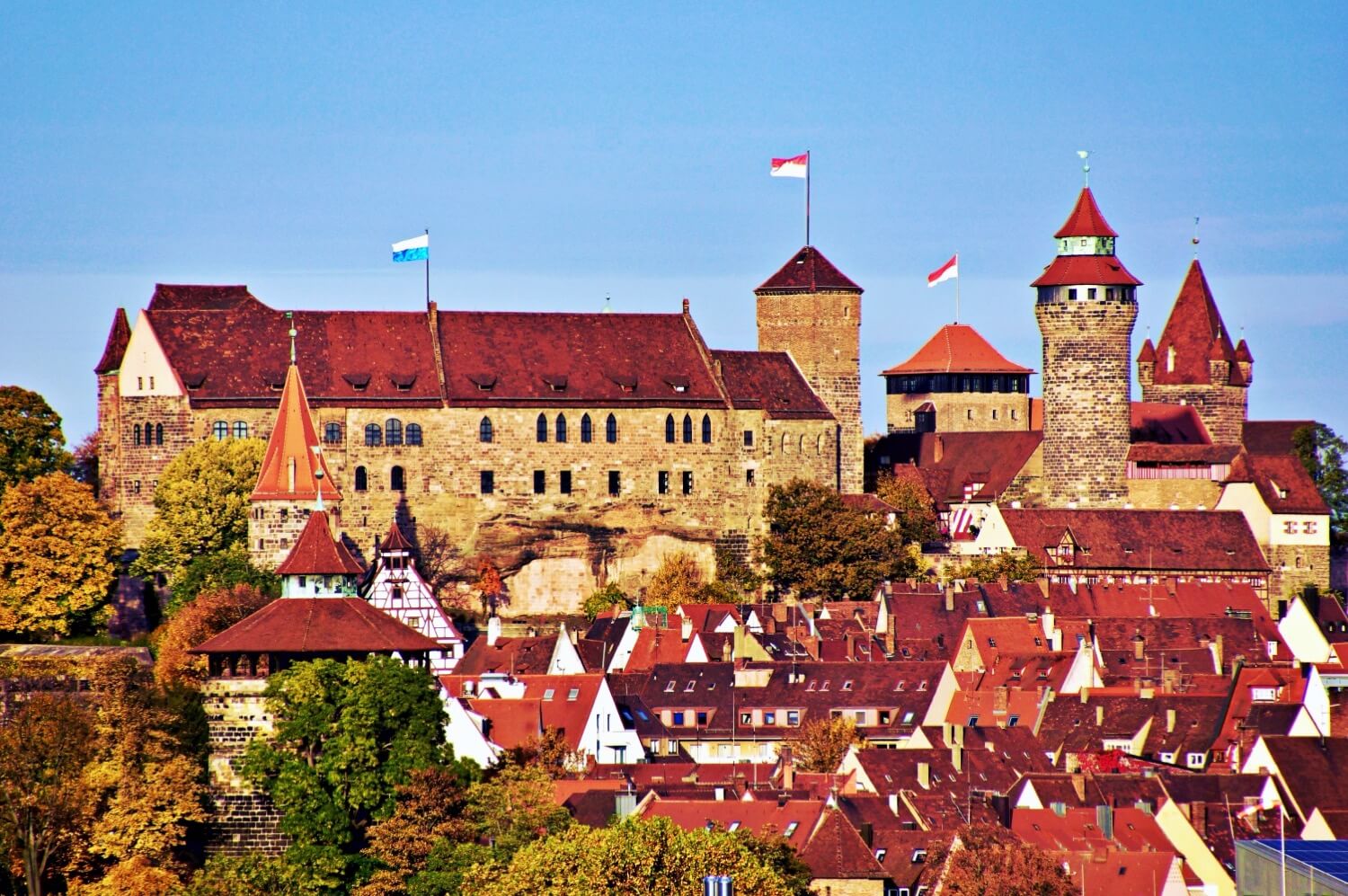
Nurnberger Burg
Mittelfranken
0.0km
castle, chateau
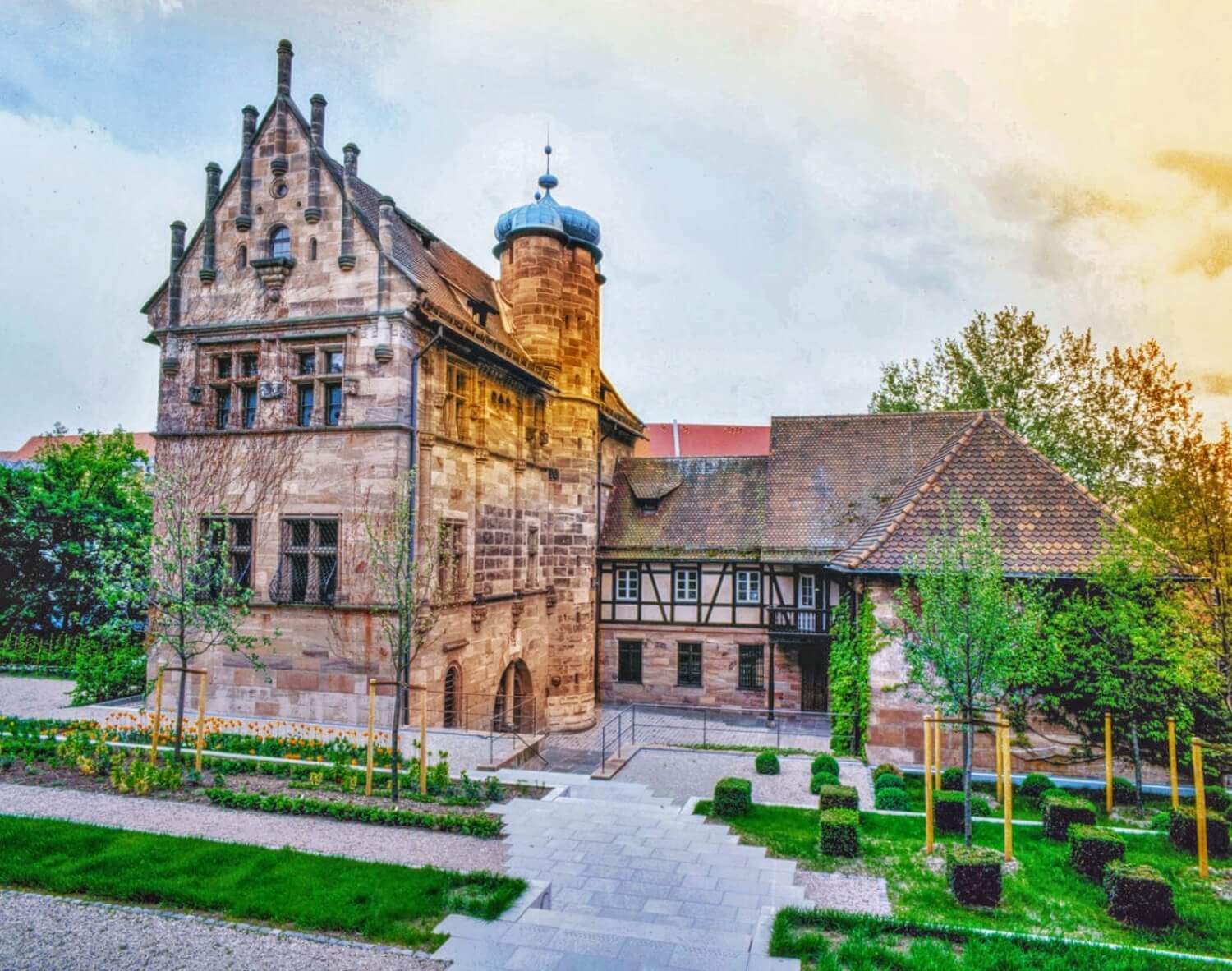
Tucherschloss
Mittelfranken
0.6km
castle, chateau
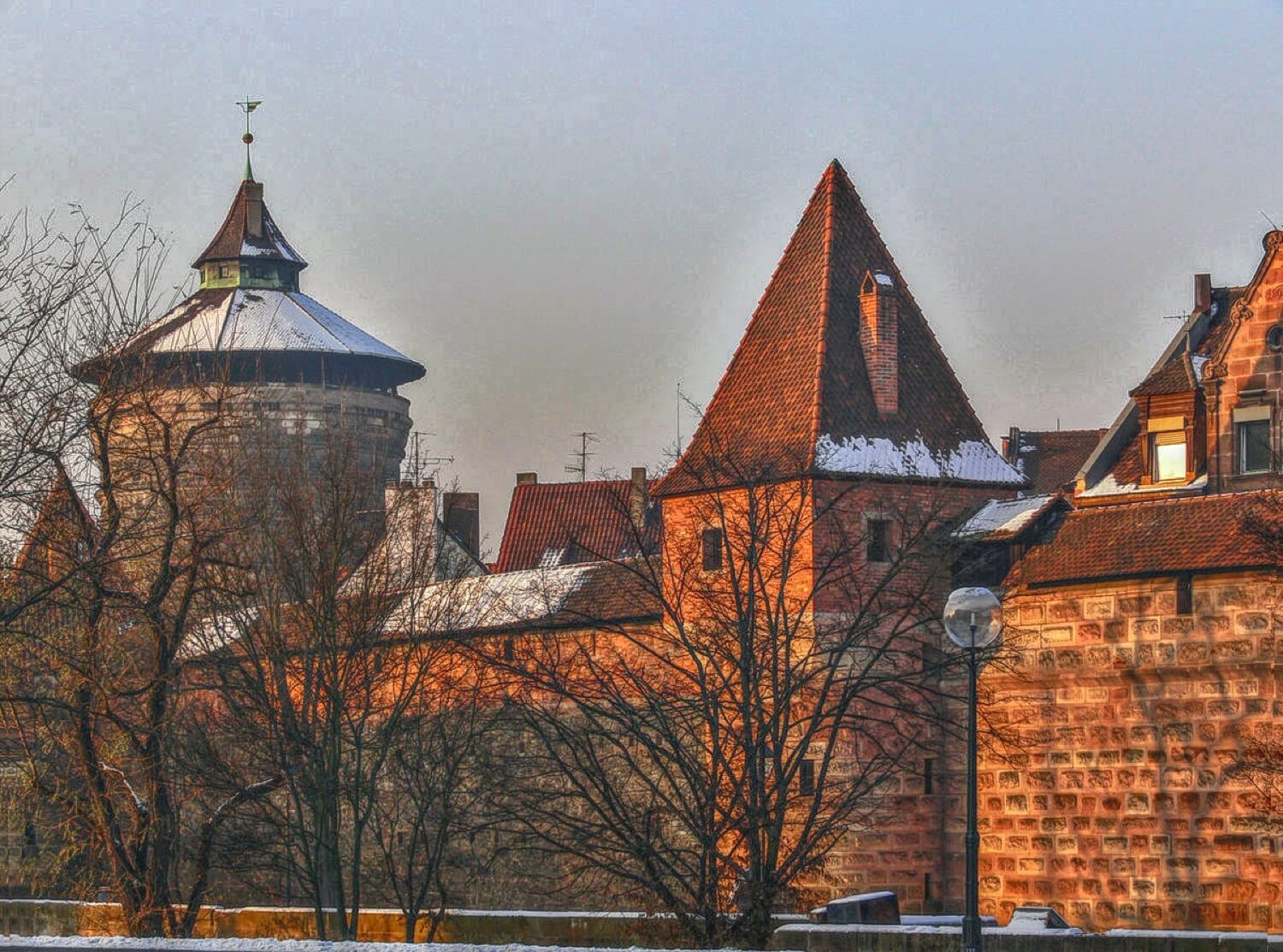
City walls of Nuremberg
Mittelfranken
0.9km
castle, chateau
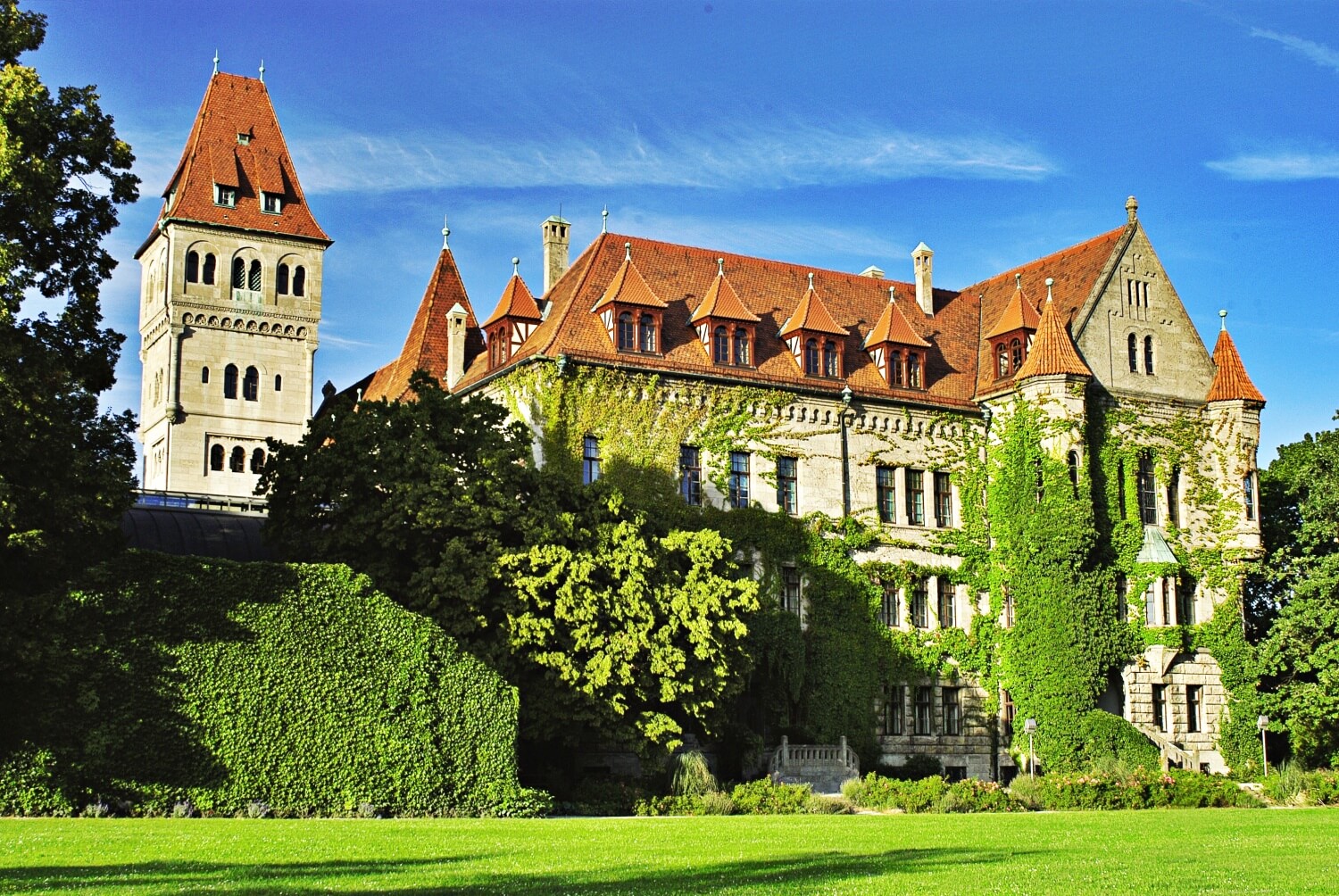
Faberschloss
Mittelfranken
6.0km
castle, chateau
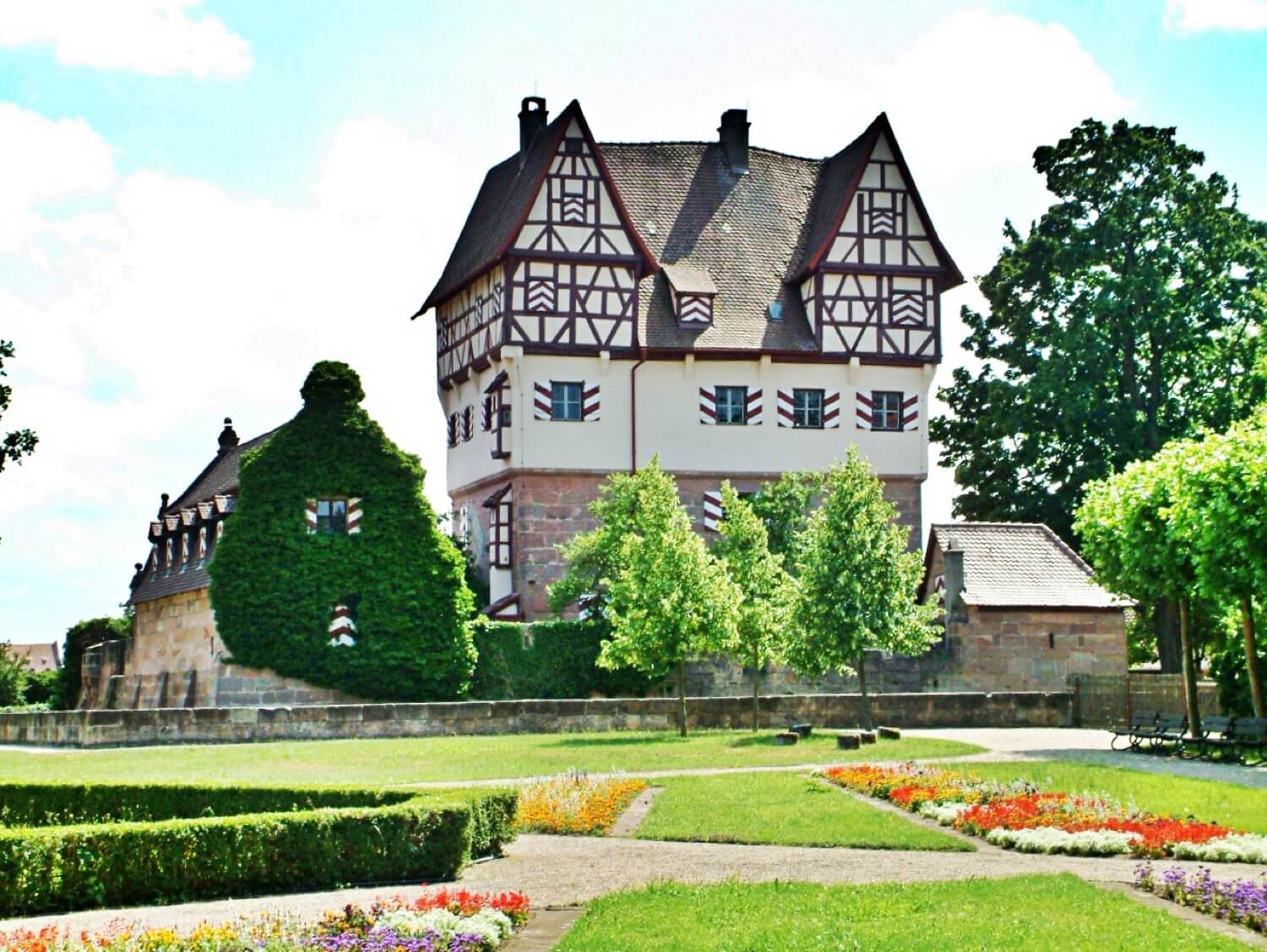
Schloss Neunhof
Mittelfranken
7.0km
castle, chateau
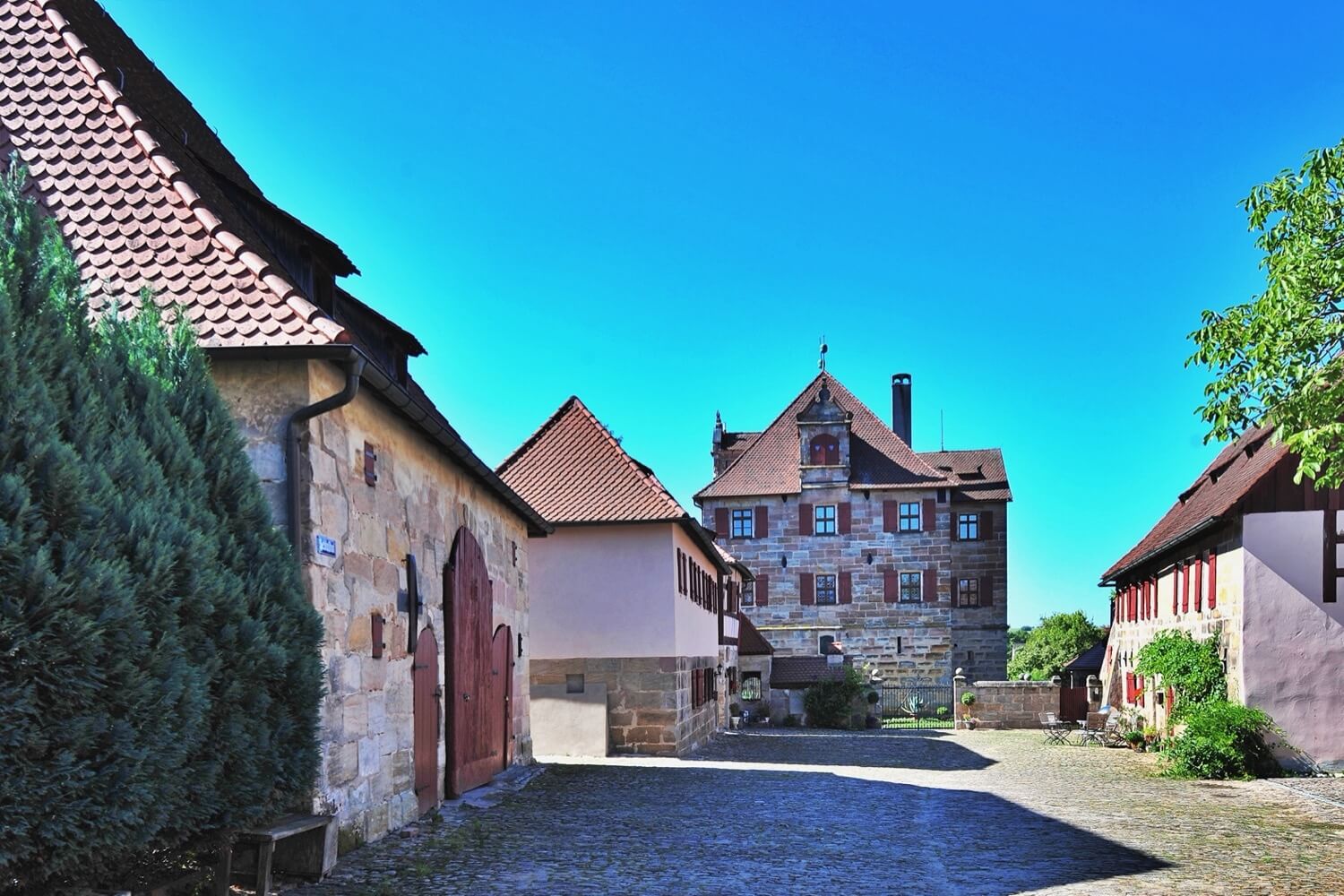
Rotes Schloss (Heroldsberg)
Mittelfranken
10.4km
castle, chateau
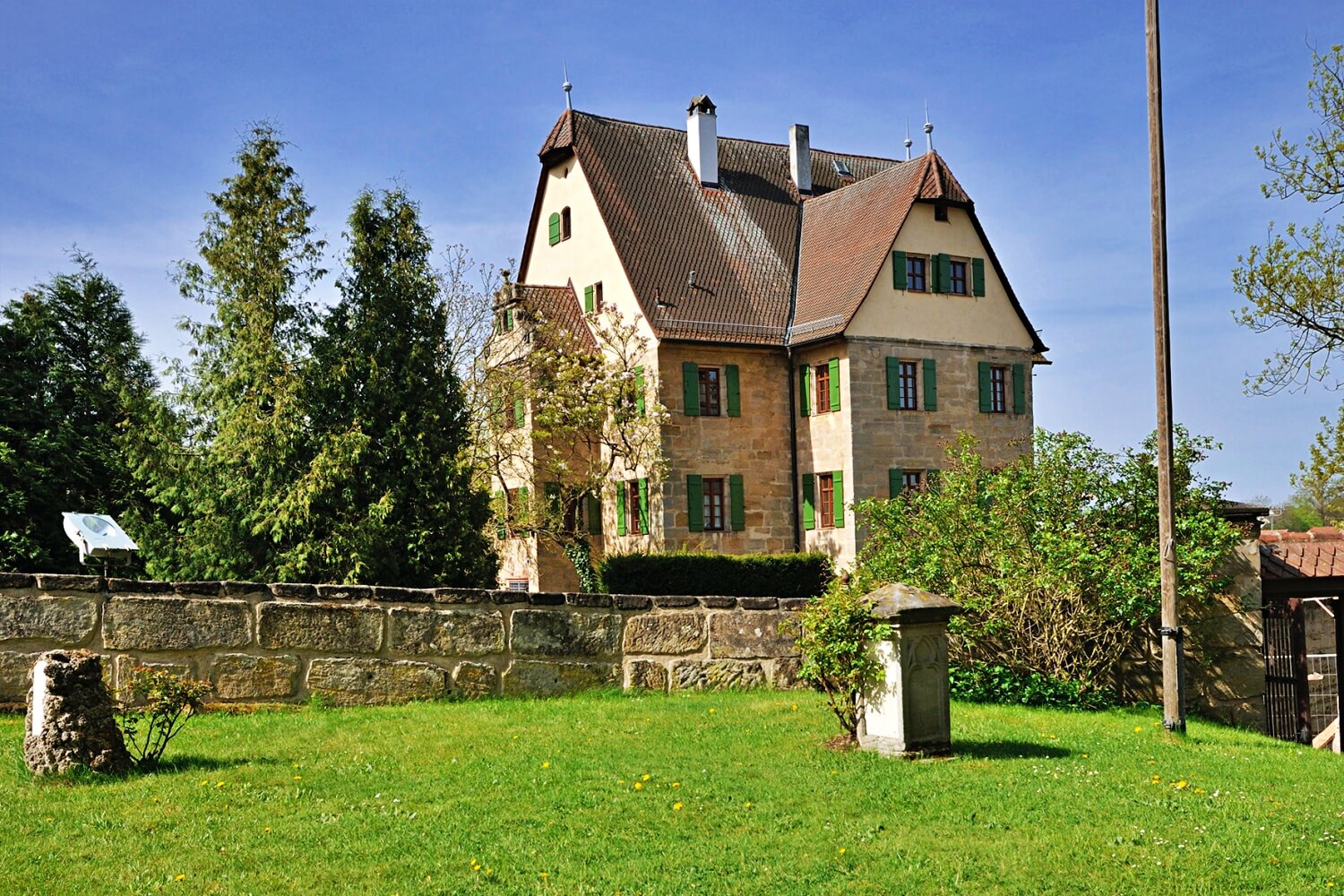
Grunes Schloss (Heroldsberg)
Mittelfranken
10.5km
castle, chateau