Heidelberg Castle
Karlsruhe Baden-Württemberg Germany
castle, chateau
Heidelberger Schloss
Karlsruhe Baden-Württemberg Germany
castle, chateau
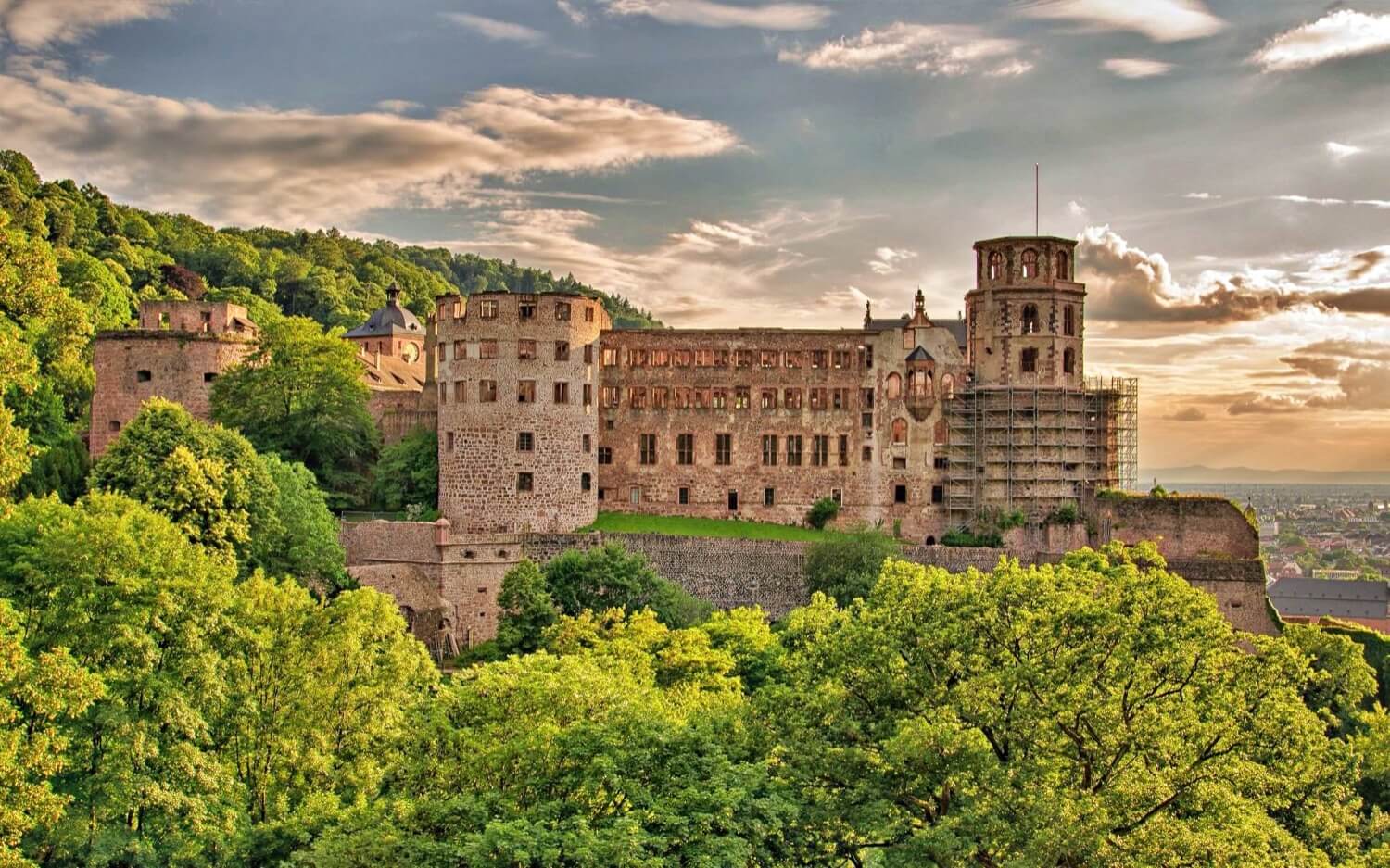
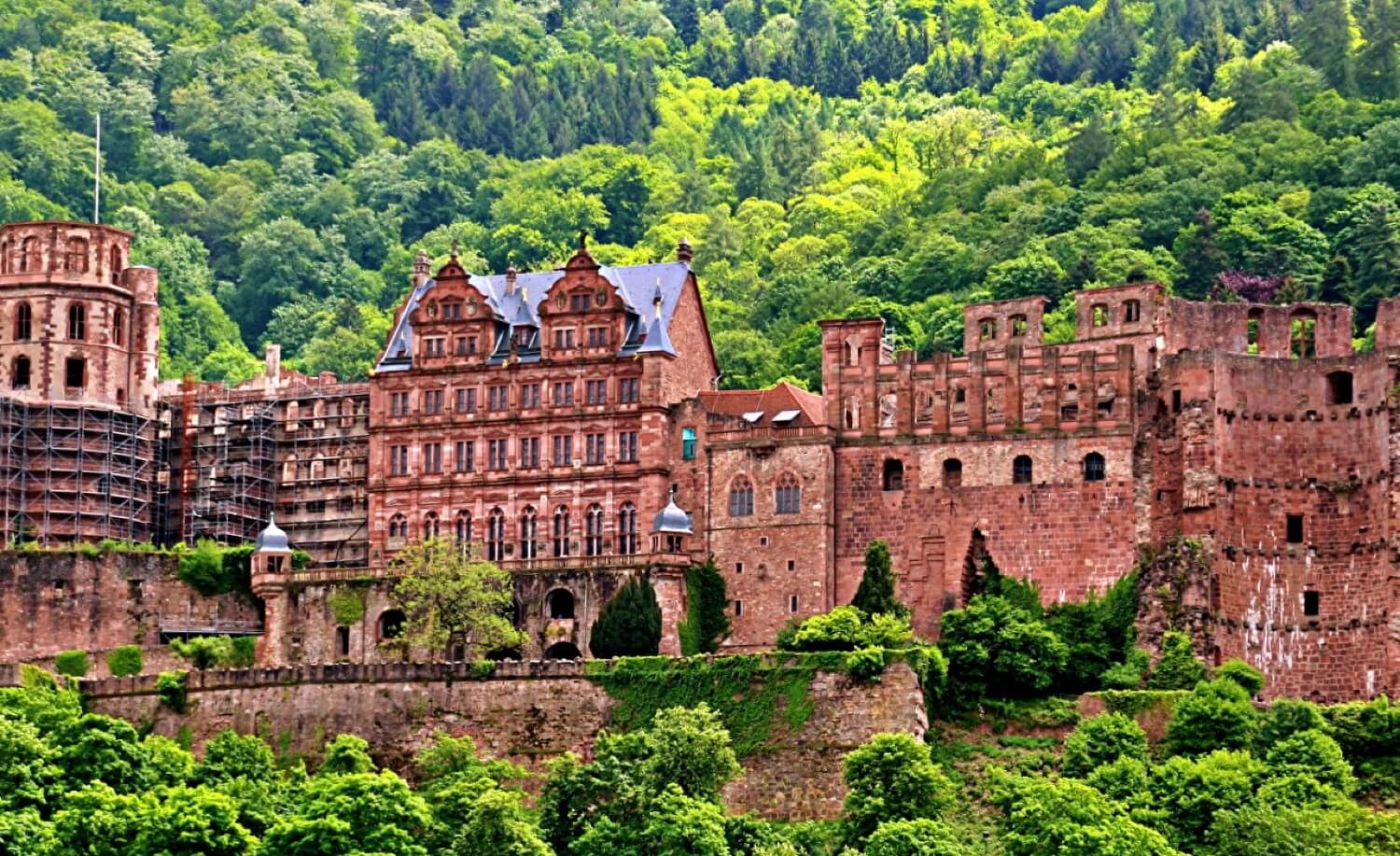
Heidelberg Castle (German: Heidelberger Schloss) is a ruin in Germany and landmark of Heidelberg
Das Heidelberger Schloss ist eine der berühmtesten Ruinen Deutschlands und das Wahrzeichen der Stadt Heidelberg
Previous names
Heidelberg Castle, Heidelberger Schloss
Description
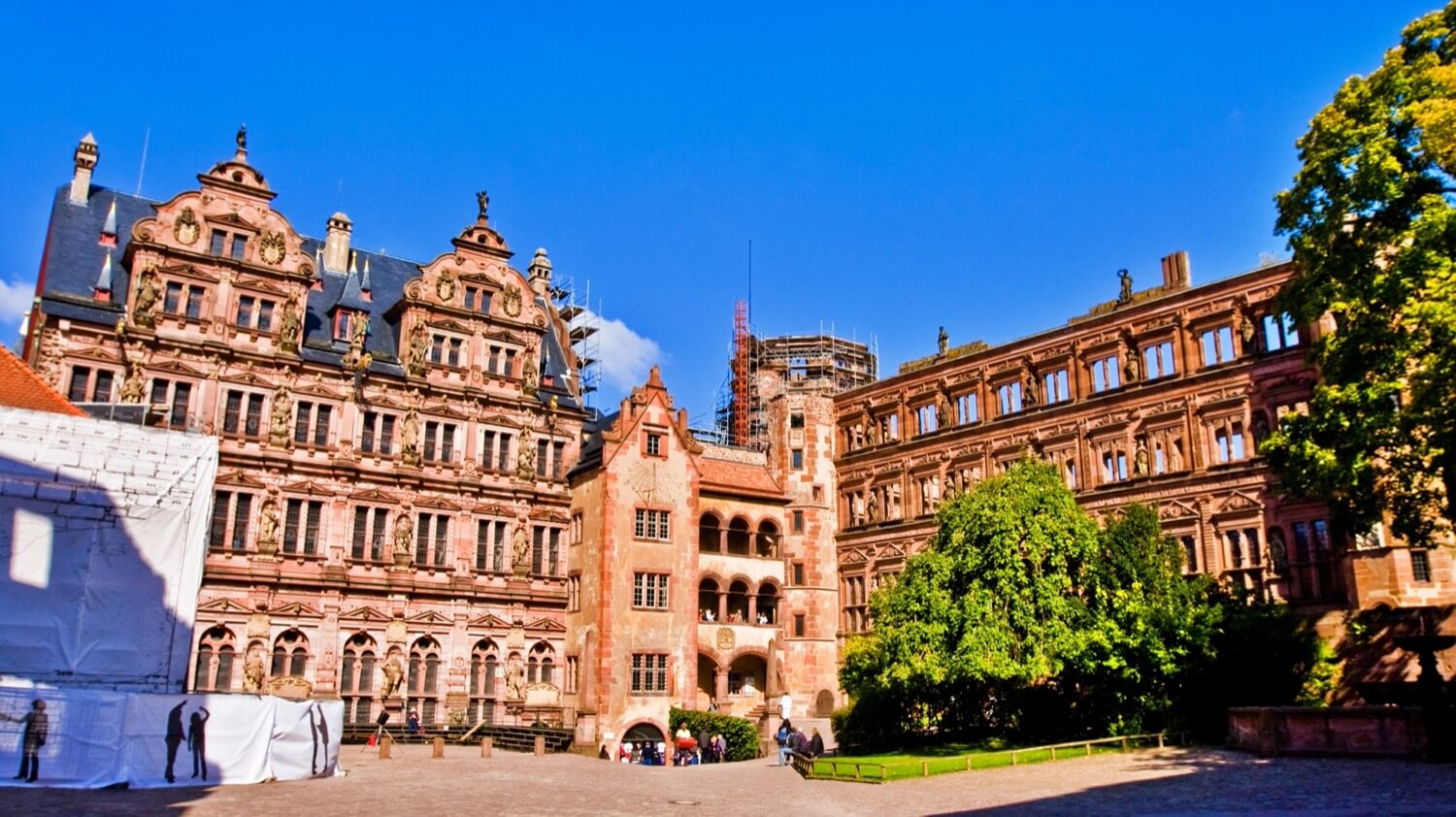
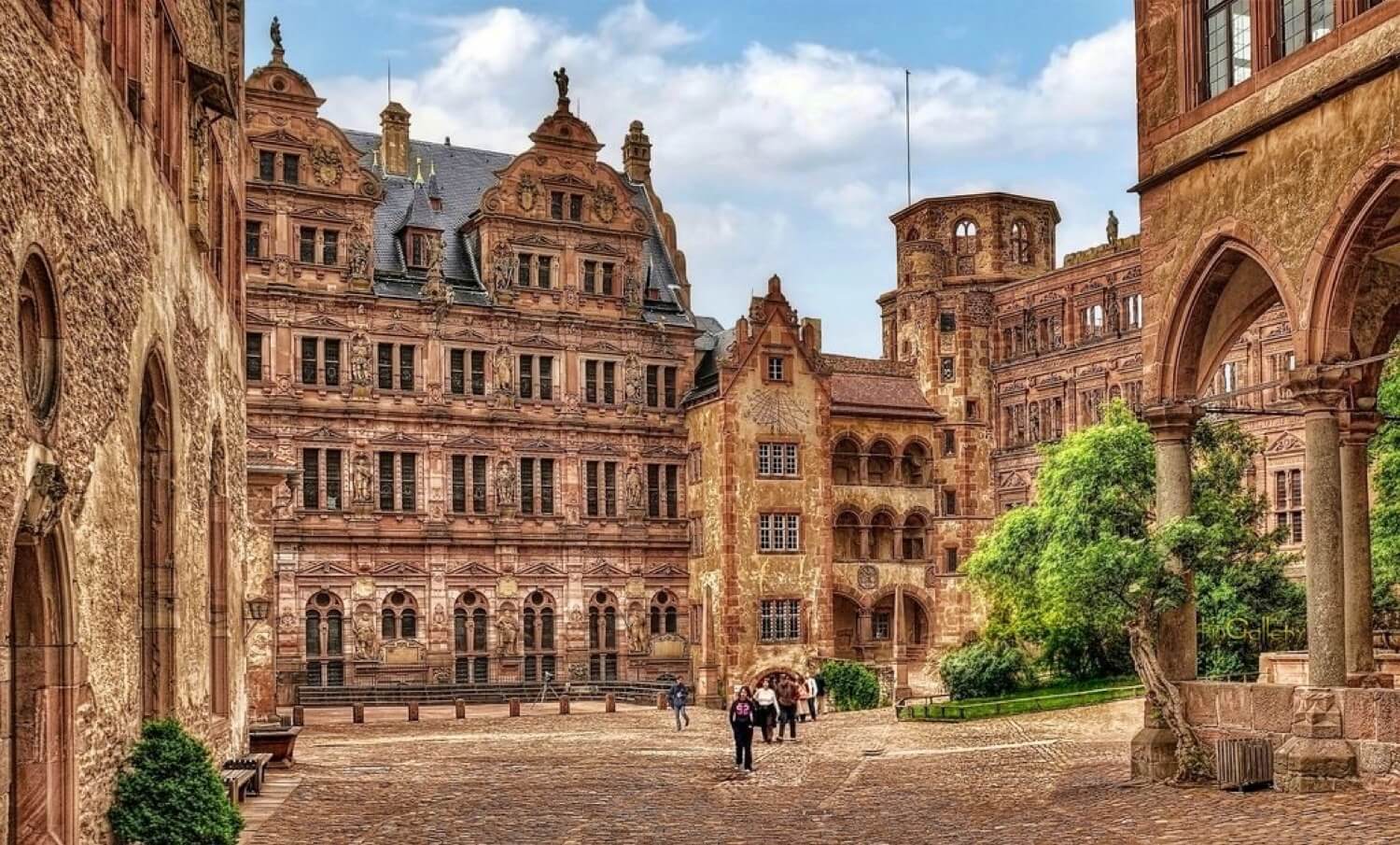
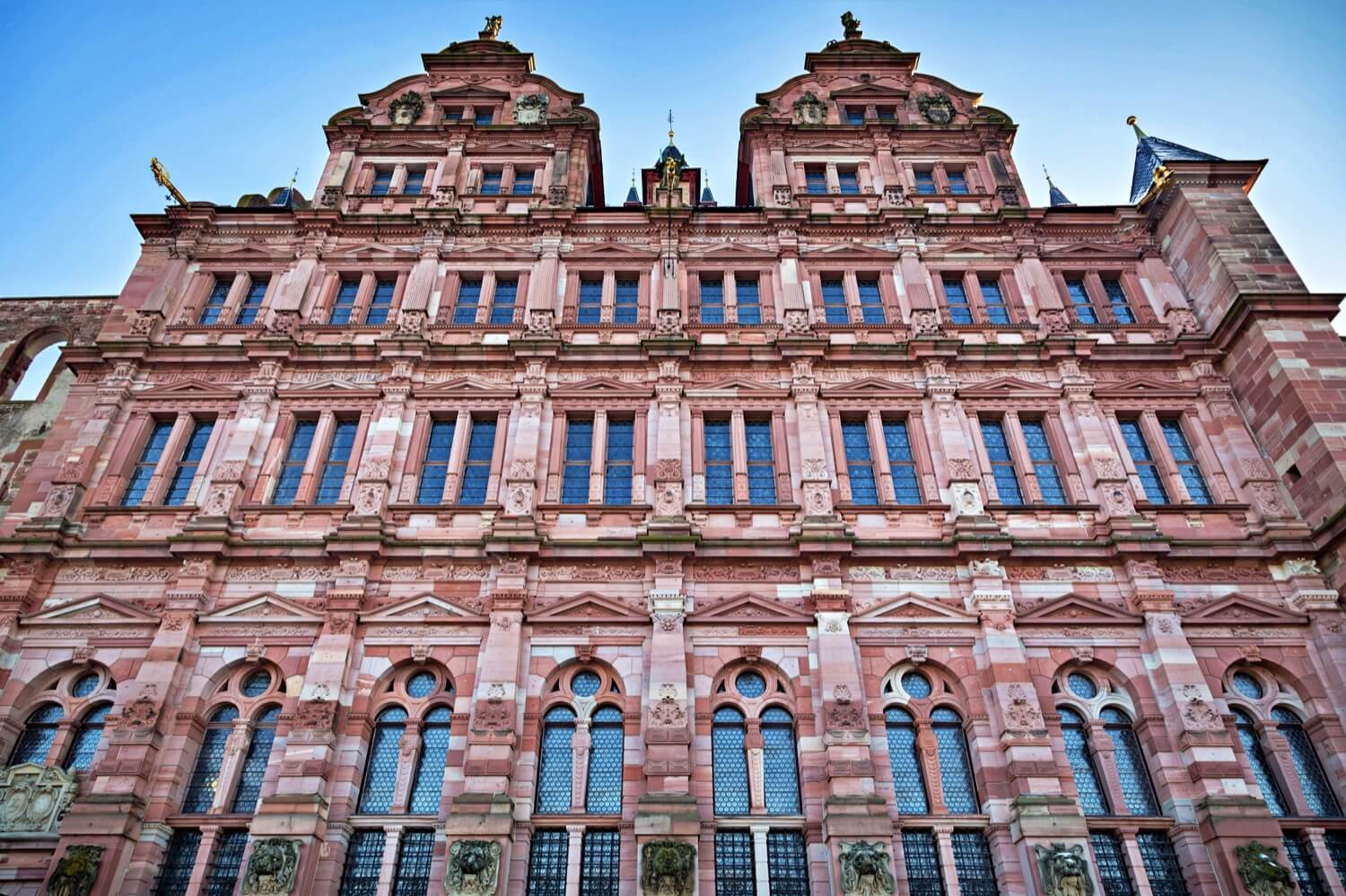
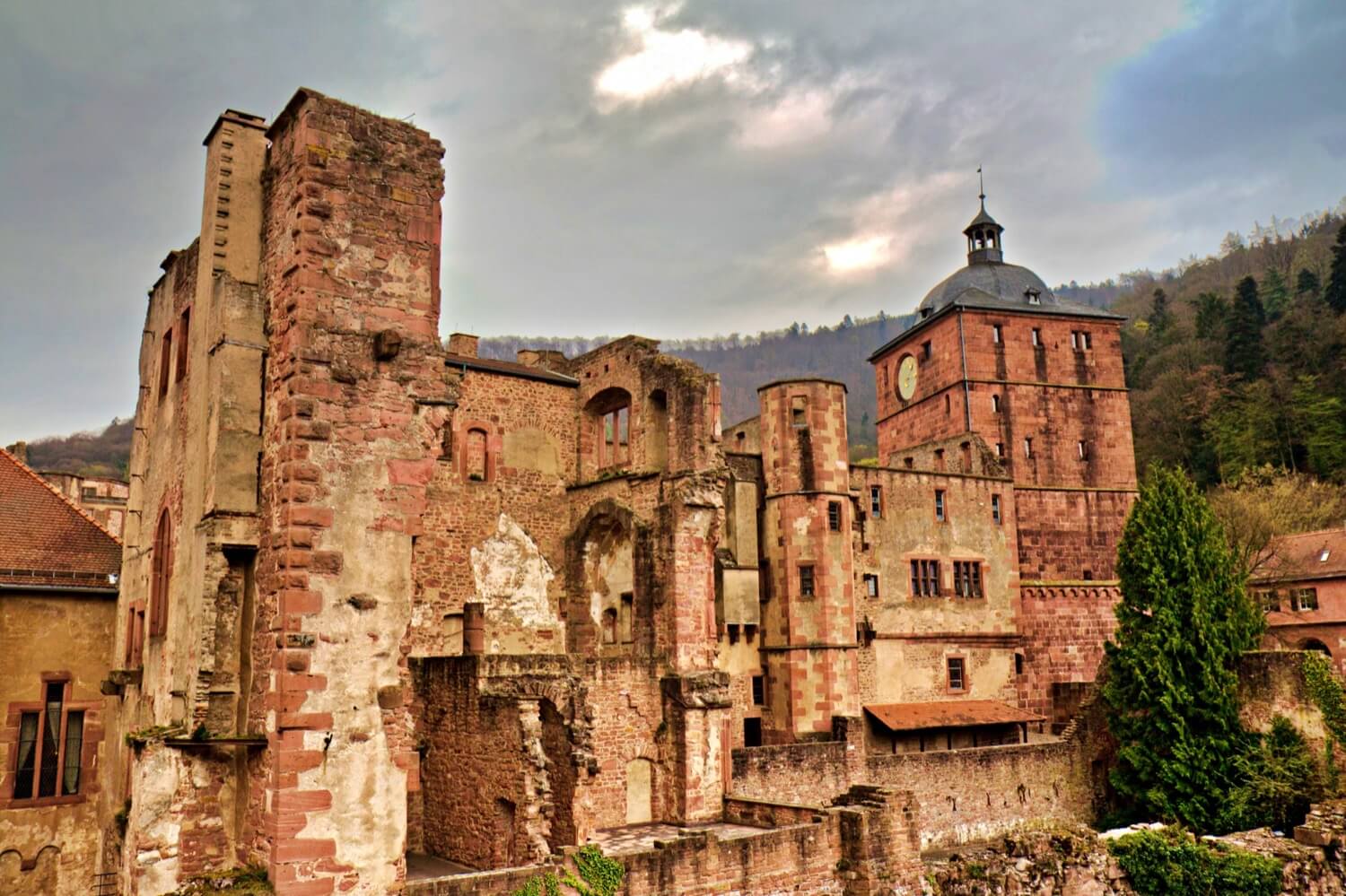
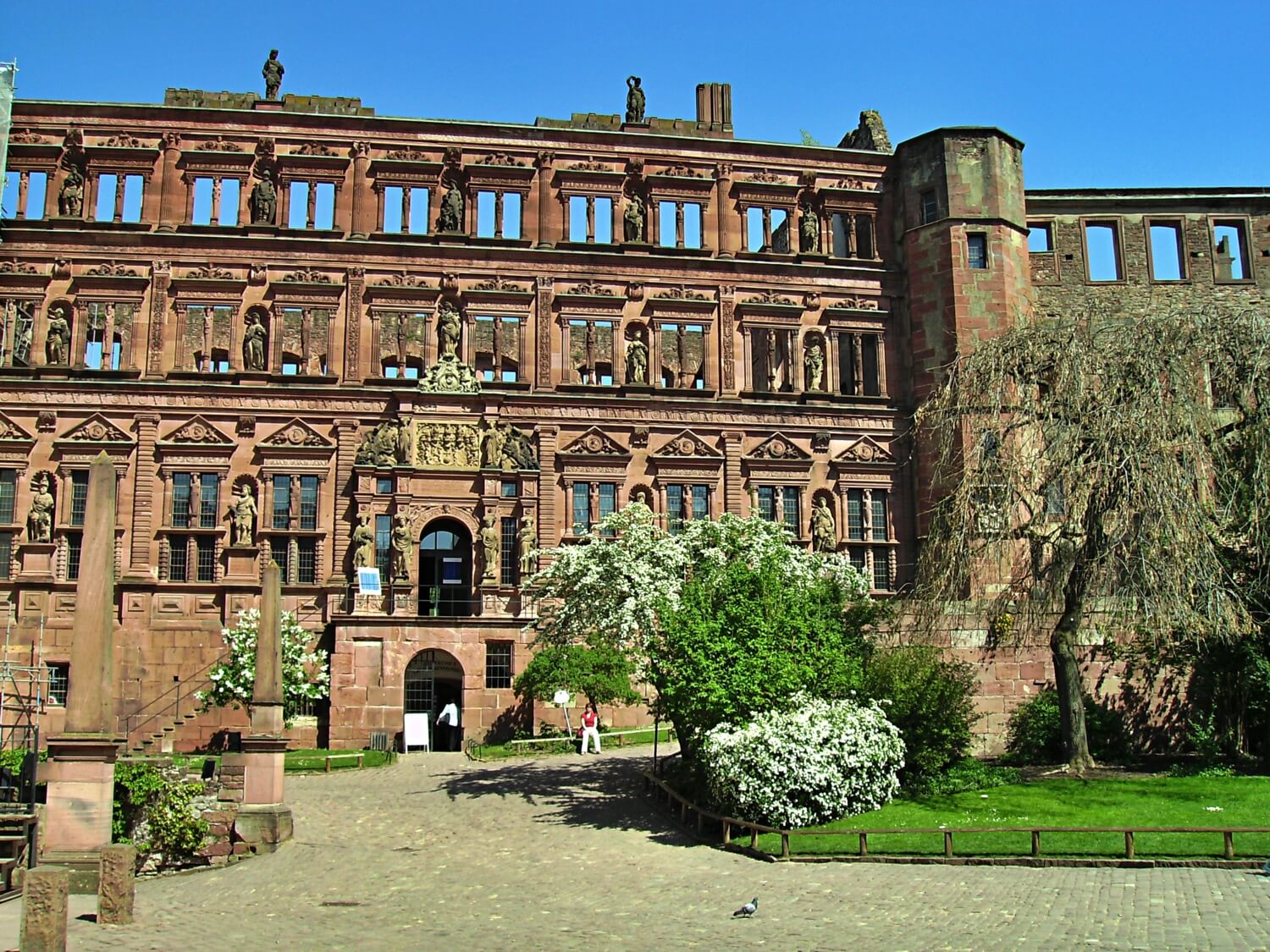
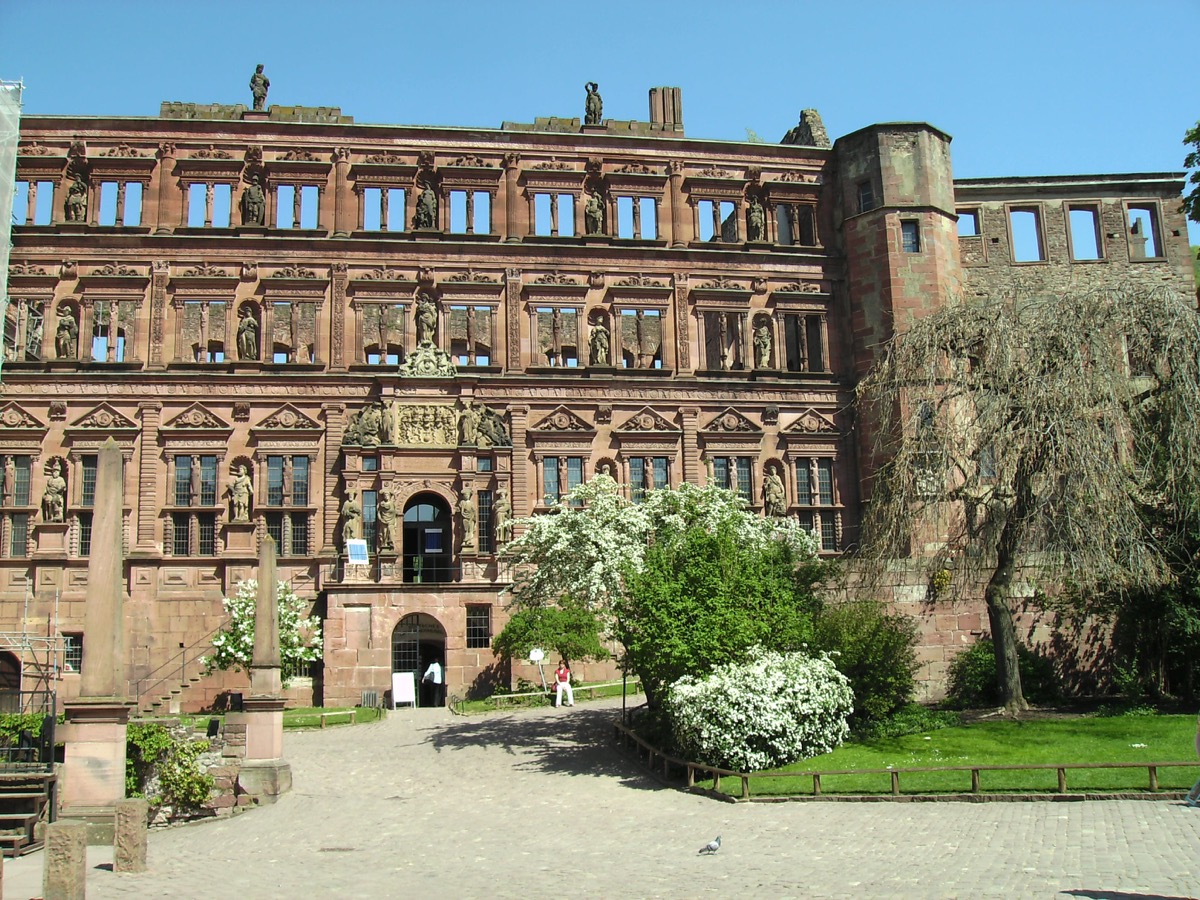
Heidelberg Castle (German: Heidelberger Schloss) is a ruin in Germany and landmark of Heidelberg. The castle ruins are among the most important Renaissance structures north of the Alps.
The castle has only been partially rebuilt since its demolition in the 17th and 18th centuries. It is located 80 metres (260 ft) up the northern part of the Königstuhl hillside, and thereby dominates the view of the old downtown. It is served by an intermediate station on the Heidelberger Bergbahn funicular railway that runs from Heidelberg's Kornmarkt to the summit of the Königstuhl.
The earliest castle structure was built before 1214 and later expanded into two castles circa 1294; however, in 1537, a lightning-bolt destroyed the upper castle. The present structures had been expanded by 1650, before damage by later wars and fires. In 1764, another lightning-bolt caused a fire which destroyed some rebuilt sections.
Heidelberg was first mentioned in 1196 as "Heidelberch". In 1155 Conrad of Hohenstaufen was made the Count Palatine by his half-brother Frederick Barbarossa, and the region became known as the Electorate of the Palatinate. The claim that Conrad's main residence was on the Schlossberg (Castle Hill), known as the Jettenbühl, cannot be substantiated. The name "Jettenbühl" comes from the soothsayer Jetta, who was said to have lived there. She is also associated with Wolfsbrunnen (Wolf's Spring) and the Heidenloch (Heathens' Well). The first mention of a castle in Heidelberg (Latin: "castrum in Heidelberg cum burgo ipsius castri") is in 1214, when Louis I, Duke of Bavaria of the House of Wittelsbach received it from Hohenstaufen Emperor Friedrich II. The last mention of a single castle is in 1294. In another document from 1303, two castles are mentioned for the first time:
The upper castle on Kleiner Gaisberg Mountain, near today's Hotel Molkenkur (destroyed in 1537);
The lower castle on the Jettenbühl (the present castle site).
All that is known about the founding of the lower castle is that it took place sometime between 1294 and 1303. The oldest documented references to Heidelberg Castle are found during the 1600s:
The Thesaurus Pictuarum of the Palatinate church counsel Markus zum Lamb (1559 to 1606);
The "Annales Academici Heidelbergenses" by the Heidelberg librarian and professor Pithopoeus (started in 1587);
The "Originum Palatinarum Commentarius" by Marquard Freher (1599);
The "Teutsche Reyssebuch" by Martin Zeiller (Strasbourg 1632, reprinted in 1674 as the "Itinerarium Germaniae").
All of these works are for the most part superficial and do not contain much information. In 1615, Merian's Topographia Palatinatus Rheni described Prince Elector Ludwig V as he "started building a new castle one hundred and more years ago". Most of the descriptions of the castle up until the 18th century are based on Merian's information. Under Ruprecht I, the court chapel was erected on the Jettenbühl.
When Ruprecht became the King of Germany in 1401, the castle was so small that on his return from his coronation, he had to camp out in the Augustinians' monastery, on the site of today's University Square. What he desired was more space for his entourage and court and to impress his guests, but also additional defences to turn the castle into a fortress.
After Ruprecht's death in 1410, his land was divided between his four sons. The Palatinate, the heart of his territories, was given to the eldest son, Ludwig III. Ludwig was the representative of the emperor and the supreme judge, and it was in this capacity that he, after the Council of Constance in 1415 and at the behest of Emperor Sigismund, held the deposed Antipope John XXIII in custody before he was taken to Burg Eichelsheim (today Mannheim-Lindenhof).
On a visit to Heidelberg in 1838, the French author Victor Hugo took particular pleasure in strolling among the ruins of the castle. He summarised its history in this letter:
“But let me talk of its castle. (This is absolutely essential, and I should actually have begun with it.) What times it has been through! Five hundred years long it has been victim to everything that has shaken Europe, and now it has collapsed under its weight. That is because this Heidelberg Castle, the residence of the counts Palatine, who were answerable only to kings, emperors, and popes, and was of too much significance to bend to their whims, but couldn't raise his head without coming into conflict with them, and that is because, in my opinion, that the Heidelberg Castle has always taken up some position of opposition towards the powerful. Circa 1300, the time of its founding, it starts with a Thebes analogy; in Count Rudolf and Emperor Ludwig, these degenerate brothers, it has its Eteocles and its Polynices (warring sons of Oedipus). Then the prince elector begins to grow in power. In 1400 the Palatine Ruprecht II, supported by three Rhenish prince electors, deposes Emperor Wenceslaus and usurps his position; 120 years later in 1519, Count Palatine Frederick II was to create the young King Charles I of Spain Emperor Charles V."
It was during the reign of Louis V, Elector Palatine (1508–1544) that Martin Luther came to Heidelberg to defend one of his theses (Heidelberg Disputation) and paid a visit to the castle. He was shown around by Louis's younger brother, Wolfgang, Count Palatine, and in a letter to his friend George Spalatin praises the castle's beauty and its defenses.
In 1619, Protestants rebelling against the Holy Roman Empire offered the crown of Bohemia to Frederick V, Elector Palatine who accepted despite misgivings and in doing so triggered the outbreak of the Thirty Years War. It was during the Thirty Years War that arms were raised against the castle for the first time. This period marks the end of the castle's construction; the centuries to follow brought with them destruction and rebuilding.
After his loss at the Battle of White Mountain on 8 November 1620, Frederick V was on the run as an outlaw and had to release his troops prematurely, leaving the Palatinate undefended against General Tilly, the supreme commander of the Imperial and Holy Roman Empire's troops. On 26 August 1622, Tilly commenced his attack on Heidelberg, taking the town on 16 September, and the castle few days later.
When the Swedes captured Heidelberg on 5 May 1633 and opened fire on the castle from the Königstuhl hill behind it, Tilly handed over the castle. The following year, the emperor's troops tried to recapture the castle, but it was not until July 1635 that they succeeded. It remained in their possession until the Peace of Westphalia ending the Thirty Years War was signed. The new ruler, Charles Louis (Karl Ludwig) and his family did not move into the ruined castle until 7 October 1649.
Victor Hugo summarized these and the following events:
“In 1619, Frederick V, then a young man, took the crown of the kings of Bohemia, against the will of the emperor, and in 1687, Philip William, Count Palatine, by then an old man, assumes the title of prince-elector, against the will of the king of France. This was to cause Heidelberg battles and never-ending tribuluations, the Thirty Years War, Gustav Adolfs Ruhmesblatt and finally the War of the Grand Alliance, the Turennes mission. All of these terrible events have blighted the castle. Three emperors, Louis the Bavarian, Adolf of Nassau, and Leopold of Austria, have laid siege to it; Pio II condemned it; Louis XIV wreaked havoc on it.”
— quoted from Victor Hugo: "Heidelberg"
After the death of Charles II, Elector Palatine, the last in line of the House of Palatinate-Simmern, Louis XIV of France demanded the surrender of the allodial title in favor of the Duchess of Orléans, Elizabeth Charlotte, Princess Palatine who he claimed was the rightful heir to the Simmern lands. On 29 September 1688, the French troops marched into the Palatinate of the Rhine and on 24 October moved into Heidelberg, which had been deserted by Philipp Wilhelm, the new Elector Palatine from the line of Palatinate-Neuburg. At war against the allied European powers, France's war council decided to destroy all fortifications and to lay waste to the Palatinate (Brûlez le Palatinat!), in order to prevent an enemy attack from this area. As the French withdrew from the castle on 2 March 1689, they set fire to it and blew the front off the Fat Tower. Portions of the town were also burned, but the mercy of a French general, René de Froulay de Tessé, who told the townspeople to set small fires in their homes to create smoke and the illusion of burning prevented wider destruction.
Immediately upon his accession in 1690, Johann Wilhelm, Elector Palatine had the walls and towers rebuilt. When the French again reached the gates of Heidelberg in 1691 and 1692, the town's defenses were so good that they did not gain entry. On 18 May 1693 the French were yet again at the town's gates and took it on 22 May. However, they did not attain control of the castle and destroyed the town in attempt to weaken the castle's main support base. The castle's occupants capitulated the next day. Now the French took the opportunity to finish off the work started in 1689, after their hurried exit from the town. The towers and walls, that had survived the last wave of destruction, were blown up with mines.
In 1697 the Treaty of Ryswick was signed, marking the end of the War of the Grand Alliance and finally bringing peace to the town. Plans were made to pull down the castle and to reuse parts of it for a new palace in the valley. When difficulties with this plan became apparent, the castle was patched up. At the same time, Charles III Philip, Elector Palatine played with the idea of completely redesigning the castle, but shelved the project due to lack of funds. He did, however, install his favorite court jester, Perkeo of Heidelberg to famously watch over the castle's wine stock. Perkeo later became the unofficial mascot of the city. In 1720, he came into conflict with the town's Protestants as a result of fully handing over the Church of the Holy Spirit to the Catholics (it had previously been split by a partition and used by both congregations), the Catholic prince-elector moved his court to Mannheim and lost all interest in the castle. When on 12 April 1720, Charles announced the removal of the court and all its administrative bodies to Mannheim, he wished that "Grass may grow on her streets".
The religious conflict was probably only one reason for the move to Mannheim. In addition, converting the old-fashioned hill-top castle into a Baroque palace would have been difficult and costly. By moving down into the plain, the prince-elector was able to construct a new palace, Mannheim Palace, that met his every wish.
Karl Phillip's successor Karl Theodor planned to move his court back to Heidelberg Castle. However, on 24 June 1764, lightning struck the Saalbau (court building) twice in a row, again setting the castle on fire, which he regarded as a sign from heaven and changed his plans. Victor Hugo, who had come to love the ruins of the castle, also saw it as a divine signal:
“One could even say that the very heavens had intervened. On 23 June 1764, the day before Karl Theodor was to move into the castle and make it his seat (which, by the bye, would have been a great disaster, for if Karl Theodor had spent his thirty years there, these austere ruins which we today so admire would certainly have been decorated in the pompadour style); on this day, then, with the prince's furnishings already arrived and waiting in the Church of the Holy Spirit, fire from heaven hit the octagonal tower, set light to the roof, and destroyed this five-hundred-year-old castle in very few hours.”
— Victor Hugo, Heidelberg
In the following decades, basic repairs were made, but Heidelberg Castle remained essentially a ruin.
In 1777, Karl Theodor became ruler of Bavaria in addition to the Palatinate and removed his court from Mannheim to Munich. Heidelberg Castle receded even further from his thoughts and the rooms which had still had roofs were taken over by craftsmen. Even as early as 1767, the south wall was quarried for stone to build Schwetzingen Castle. In 1784, the vaults in the Ottoheinrich wing were filled in, and the castle used as a source of building materials.
As a result of the German mediatisation of 1803, Heidelberg and Mannheim became part of Baden. Charles Frederick, Grand Duke of Baden welcomed the addition to his territory, although he regarded Heidelberg Castle as an unwanted addition. The structure was decaying and the townsfolk were helping themselves to stone, wood, and iron from the castle to build their own houses. The statuary and ornaments were also fair game. August von Kotzebue expressed his indignation in 1803 at the government of Baden's intention to pull down the ruins. At the beginning of the nineteenth century, the ruined castle had become a symbol for the patriotic movement against Napoleon.
Even before 1800, artists had come to see the river, the hills and the ruins of the castle as an ideal ensemble. The best depictions are those of England's J. M. W. Turner, who stayed in Heidelberg several times between 1817 and 1844, and painted Heidelberg and the castle many times. He and his fellow Romantic painters were not interested in faithful portrayals of the building and gave artistic licence free rein. For example, Turner's paintings of the castle show it perched far higher up on the hill than it actually is.
The saviour of the castle was the French count Charles de Graimberg. He fought the government of Baden, which viewed the castle as an "old ruin with a multitude of tasteless, crumbling ornaments", for the preservation of the building. Until 1822, he served as a voluntary castle warden, and lived for a while in the Glass Wing (Gläserner Saalbau), where he could keep an eye on the courtyard. Long before the origin of historic preservation in Germany, he was the first person to take an interest in the conservation and documentation of the castle, which may never have occurred to any of the Romantics. Graimberg asked Thomas A. Leger to prepare the first castle guide. With his pictures of the castle, of which many copies were produced, Graimberg promoted the castle ruins and drew many tourists to the town.
The question of whether the castle should be completely restored was discussed for a long time. In 1868, the poet Wolfgang Müller von Königswinter argued for a complete reconstruction, leading to a strong backlash in public meetings and in the press.
In 1883, the Grand Duchy of Baden established a "Castle field office", supervised by building director Josef Durm in Karlsruhe, district building supervisor Julius Koch and architect Fritz Seitz. The office made a detailed plan for preserving or repairing the main building. They completed their work in 1890, which led a commission of specialists from across Germany to decide that while a complete or partial rebuilding of the castle was not possible, it was possible to preserve it in its current condition. Only the Friedrich Building, whose interiors were fire damaged, but not ruined, would be restored. This reconstruction was done from 1897 to 1900 by Karl Schäfer at the enormous cost of 520,000 Marks.
The oldest description of Heidelberg from 1465 mentions that the city is "frequented by strangers", but it did not really become a tourist attraction until the beginning of the 19th century. Count Graimberg made the castle a pervasive subject for pictures which became forerunners of the postcard. At the same time, the castle was also found on souvenir cups. Tourism received a big boost when Heidelberg was connected to the railway network in 1840.
Mark Twain, the American author, described the Heidelberg Castle in his 1880 travel book A Tramp Abroad:
“A ruin must be rightly situated, to be effective. This one could not have been better placed. It stands upon a commanding elevation, it is buried in green woods, there is no level ground about it, but, on the contrary, there are wooded terraces upon terraces, and one looks down through shining leaves into profound chasms and abysses where twilight reigns and the sun cannot intrude. Nature knows how to garnish a ruin to get the best effect. One of these old towers is split down the middle, and one half has tumbled aside. It tumbled in such a way as to establish itself in a picturesque attitude. Then all it lacked was a fitting drapery, and Nature has furnished that; she has robed the rugged mass in flowers and verdure, and made it a charm to the eye. The standing half exposes its arched and cavernous rooms to you, like open, toothless mouths; there, too, the vines and flowers have done their work of grace. The rear portion of the tower has not been neglected, either, but is clothed with a clinging garment of polished ivy which hides the wounds and stains of time. Even the top is not left bare, but is crowned with a flourishing group of trees & shrubs. Misfortune has done for this old tower what it has done for the human character sometimes – improved it.”
— Mark Twain
In the 20th century, Americans spread Heidelberg's reputation outside Europe. Thus, Japanese also often visit the Heidelberg Castle during their trips to Europe. Heidelberg has, at the beginning of the 21st century, more than three million visitors a year and about 1,000,000 overnight stays. Most of the foreign visitors come either from the USA or Japan. The most important attraction, according to surveys by the Geographical Institute of the University of Heidelberg, is the castle with its observation terraces.
The Heidelberg professor Ludwig Giesz wrote, in his 1960 essay titled "Phenomenology of the Kitsches", about the meaning of the ruins for tourism:
“Ruins are the pinnacle of what we have called "historical" Exoticism. As a jumping off point, a story from experience may serve: in 1945 shortly after the surrender of Germany, when asked by an American soldier who was eagerly "picture-taking" at the Heidelberg Castle how this place of pilgrimage for all Romantics came to be a ruin, I replied mischievously, "it was destroyed by American bombs." The reaction of the soldiers was very instructive. I will speculate briefly: the shock to their consciousness—stemming from an aesthetic, not an ethical problem—was extraordinary: the "ruin" no longer appeared beautiful to them; on the contrary, they regretted (thus: with realistic present consciousness) the recent destruction of a large building.”
Professor Ludwig Giesz goes further in his remarks about the ruins:
“The important culture and era critic Günther Anders pointed out that - contrary to widespread opinion - the Romantic Era did not first admire the view for the "beauty of the ruin." Rather the following inversion took place: the Renaissance (like the first generation) admired the ancient Torso, "not because, but although it was a Torso". One found beauty, but "unfortunately" only as ruin. The second generation inverted the "ruin of the beautiful one" for the "beauty of the ruin." And from here to industrial "production of ruins" the way was clear: like garden gnomes one now sets ruins into the landscape, in order for the landscape to become beautiful.”
Also Günter Heinemann raises the question of whether one could restore the Heidelberg Castle incompletely. Near the view from the Stück-garden over the deer moat (Hirschgraben) of the well-kept ruins of the castle interior, he asks himself whether one should not redevelop the whole area again.
“Automatically one thinks, who would dedicate oneself to the devoted care of these enormous walls, were they to be constructed again. As to expenditure that does not make much difference, but how would it be arranged! It would require seeds of its historical imaginings, as far as extant pictures of the sound condition of the castle that have been handed down permitted this. But it would take the unique phenomenon to Heidelberg that the castle in its ruinous condition has to register a considerable profit at aesthetic values. A rebuilt castle would equal a disenchantment, would be certification of an inadequate displacement process of history opposite, and granted to participating nature no more clearance. Which the understanding at realization clarity would win, would be lost to the mind at turn depth.”
Frederick V, Elector Palatine married the English king's daughter Elizabeth Stuart. The marriage involved great expense. Expensive festivities were organized and for them; he commissioned the Elizabeth gate at the piece garden be built.
From October 1612 until April 1613, Frederick V spent nearly a half year in England, and though only 17 years old, thereby took up contact with important architects, who later undertook changes and new building plans for the Heidelberg Castle. Inigo Jones and Salomon de Caus, who knew each other well, stood in the service of the English king's court. Caus accompanied the newlyweds on their return journey to Heidelberg. Jones came to Heidelberg as well in June 1613. Very soon, the building of an enormous garden was tackled. However, the plants were intended for level ground, and the slope of the mountain had to be converted. First earth movements had to be achieved, which contemporaries regarded as the eighth wonder of the world.
Under the rule of Frederick V, the Palatine sought Protestant supremacy in the Holy Roman Empire, which however ended in a debacle. After 1619, Frederick V - against the expressed advice of many counsellors -was chosen as the Bohemian king, he could not maintain the crown after he lost at the Battle of White Mountain (Bílá hora) (height 379m/1243 ft) against the troops of the Emperor and the Catholic League. He received the mocking name "Winter King" since his kingdom had lasted only somewhat more than one winter. With the Thirty Years War, Frederick V entered another phase and became a political refugee.
As Frederick V left Heidelberg, it is said that his mother, Louise Juliana of Nassau proclaimed: "Oh, the Palatine is moving to Bohemia." After his escape to Rhenen in the Netherlands, Emperor Ferdinand II in 1621 put the imperial ban on Friedrich (Prince Electors). The Rhein Palatinate was transferred in 1623 to Duke Maximilian I of Bavaria, who also bought the Upper Palatinate from the emperor.
In Rhenen, to the west of Arnhem, the family lived on saved public funds and the generous support of the English king, initially also of the Netherlands, united by the support of the government. For the remainder of his life, Frederick hoped to win back his position in the Palatinate, but he died in exile in 1632.
Elizabeth Charlotte, Princess Palatine was the duchess of Orléans and the sister-in-law of Louis XIV of France. When the Palatinate-Simmern branch of the Wittelbachs died out, Louis XIV laid claim to the Palatinate and started the War of the Grand Alliance, which laid waste to the Palatine. Liselotte, as she is affectionately known, was forced to look on helplessly as her country was ravaged in her name.
Liselotte, granddaughter of Frederick V, was born in Heidelberg Castle and grew up at her aunt Sophia of Hanover's court in Hanover. She often returned to Heidelberg with her father. At the age of 19, she was wedded for political reasons to the brother of the king of France. It was not a happy marriage. When her brother Charles died without issue, Louis XIV claimed the Palatinate for himself and declared war on her.
Liselotte wrote in a letter to her aunt Sophia in Hanover:
"So I judge that papa must not have understood the magnitude of the matter of signing me over; but I was a burden to him and he was worried that I would become an old maid, so got rid of me as quickly as he was able. That was to be my fate."
Even after thirty-six years in France, she still thought of Heidelberg as her home, and wrote in a letter to Marie Luise von Degenfeld:
"Why does the prince elector not have the castle rebuilt? It would certainly be worth it."
The House of Orléans is descended from the children of Liselotte and Philipp, which came to the French throne in 1830 in the person of Louis-Philippe of France.
Liselotte is estimated to have written 60,000 letters, around one-tenth of which, survive to this day. The letters are penned in French and German and describe very vividly life at the French court. Most of them she wrote to her aunt Sophia and her half-sister Marie-Luise, but she also corresponded with Gottfried Leibniz.
Liselotte's upbringing was rather bourgeois. Charles I Louis, Elector Palatine loved to play with his children in the town of Heidelberg and to go for walks along the slopes of the hills of the Odenwald. Liselotte, who later described herself as a "lunatic bee" (German: "dolle Hummel"), rode her horse at a gallop over the hills round Heidelberg and enjoyed her freedom. She often slipped out of the castle early in the morning to climb a cherry tree and gorge herself with cherries. In 1717, looking back on her childhood in Heidelberg, she wrote:
“My God, how often at five in the morning I stuffed myself with cherries and a good piece of bread on the hill! In those days I was lustier than now I am.”
The French Kupferstecher (copperplate engraver) Count Charles de Graimberg fled the French Revolution and emigrated with his family to England. He applied in 1810 to Karlsruhe, in order to begin training with the Hofkupferstecher of Baden, Christian Haldenwang, who was a friend and neighbour of Graimberg's brother Louis. After Graimberg went to Heidelberg to sketch the Castle for a landscape, he stayed for the remaining 54 years of his life. With his copper passes of the Castle ruins, he documented its condition and put the foundation-stone for the Roman Castle, which should protect the ruin against final decay.
In his house (today: Palace Graimberg, at the beginning of the footpath to the Castle) he developed a curiosity cabinet with pieces of find from the Castle, which later became the basic pieces of the Kurpfälzisches Museum. He, by the way, financed his collection "of the Altertümer" for the history of the city and the Castle, from his own fortune. It is due to him that the Castle still stands. He accomplished also the first historical excavations in the Castle and lived a time long in the Castle yard, in order to prevent that the citizens of Heidelberg take building material for their houses from the Castle out-fallow.
In order Graimberg's wrote Thomas A. Leger's the first sources written on the basis written Castle leader. A copy of this leader from that 1836 "Le guide voyageurs dans la ruin de Heidelberg " ("Leader for foreigner by the ruins of the Heidelberger of lock"), was acquired by Victor Hugo during his stay in Heidelberg. This copy provided with notes is issued today in "the Maison de Victor Hugo" in Paris.
Of Charles de Graimberg reminds an honour board, which was attached 1868 at the passage to the Altan: "The memory of Karl count von Graimberg, born to Castle pair in France 1774, died to Heidelberg 1864. Heidelberg castle is home to the largest wine keg in the world!"
The forecourt is the area enclosed between the main gate, the upper prince's well, the Elisabeth gate, the castle gate and the entrance to the garden. Around 1800 it was used by the overseer for drying laundry. Later on it was used for grazing cattle, and chickens and geese were kept here.
The approach to the forecourt takes you across a stone bridge, over a partially filled-in ditch. The main gate was built in 1528. The original watchhouse was destroyed in the War of the Grand Alliance and replaced in 1718 by a round-arched entrance gate. The gate to the left of the main entrance was closed by means of a drawbridge.
In 1961 a stone tablet was erected on a ruined wall of the aviary to replace an older tablet. The inscription on the tablet includes verses by Marianne von Willemer reflecting on her last meeting with Johann Wolfgang Goethe written on 28 August 1824, on the occasion of Goethe's 75th birthday.
Directly across from the Goethe memorial tablet, stands the Ginkgo tree, from which Goethe gave a leaf to Marianne von Willemer as a symbol of friendship. The poem was published later as "Suleika" in West-östlicher Diwan.
The letter containing this poem with which Goethe included two Ginkgo leaves can be viewed in the Goethe Museum in Düsseldorf. The Ginkgo, planted in 1795, that Goethe lead Marianne von Willemer to in September 1815, is no longer standing today. Since 1928 the Ginkgo tree in the castle garden was labelled that it was "the same tree that inspired Goethe to create his fine poem". The tree was probably still standing in 1936.
The former harness room, originally a coach house, was in reality begun as a fortification. After the Thirty Years War it was used as a stables as well as a toolshed, garage and carriage house.
The Upper Prince's Fountain was designed and built during the reign of Prince Karl Philipp. Over the gate to the fountain house is his monogram with the date 1738 chiseled in the stone. On the right side of the stairway to the fountain is the following inscription:
(DlreCtione) ALeXanDro Blblena CVra et opera HenrICl Neeb Fons hIC PrInCIpaLIs reparat(Vs) PVrIor sCatVrlt
(Translation: This work was undertaken under the oversight of Alessandro Galli da Bibiena and Heinrich Neeb.)
The inscription a chronogram for the date 1741. Through this fountain and the Lower Prince's Fountain were the water needs of the Prince's residences in Mannheim met until into the 19th century.
In 1798, Johann Andreas von Traitteur recalled this water transport:
“Because of a shortage of good, healthy fountain water; whenever the royal household was in Mannheim, the necessary water was brought from the mountain daily. It was well known in which garage was kept the special water wagon, that drove to Heidelberg daily and that brought water out of the Prince's Fountains to the castle.”
Quote from Hans Weckesser:"Beloved Water Tower. The History of Mannheim's landmarks".
The water quality in Mannheim was so bad, that upper-class families of the court financed this transport of water from Heidelberg to Mannheim. In the princely residence, until 1777 there was a court position titled "Heidelberg Water-filler".
Das Heidelberger Schloss ist eine der berühmtesten Ruinen Deutschlands und das Wahrzeichen der Stadt Heidelberg. Bis zu seiner Zerstörung im Pfälzischen Erbfolgekrieg war es die Residenz der Kurfürsten von der Pfalz. Seit den Zerstörungen durch die Soldaten Ludwigs XIV. 1689 und 1693 wurde das Heidelberger Schloss nur teilweise restauriert. Die Schlossruine aus rotem Neckartäler Sandstein erhebt sich 80 Meter über dem Talgrund am Nordhang des Königstuhls und dominiert von dort das Bild der Altstadt. Der Ottheinrichsbau, einer der Palastbauten des Schlosses, gehört zu den bedeutendsten deutschen Bauwerken der Renaissance.
Um das Jahr 1182 verlegte Konrad der Staufer, Halbbruder von Kaiser Friedrich I. Barbarossa und seit 1156 Pfalzgraf bei Rhein, seine Hofhaltung von der Burg Stahleck bei Bacharach am Mittelrhein auf die Burg Heidelberg.
Die Stadt Heidelberg wird im Jahr 1196 zum ersten Mal in einer Urkunde genannt. Eine Burg in Heidelberg („castrum in Heidelberg cum burgo ipsius castri“) wird im Jahr 1225 erwähnt, als Ludwig I. diese Burg vom Bischof Heinrich von Worms als Lehen erhielt. 1214 waren die Herzöge von Bayern aus dem Haus Wittelsbach mit der Pfalzgrafschaft belehnt worden.
Von einer Burg ist zuletzt im Jahr 1294 die Rede. In einer Urkunde des Jahres 1303 werden zum ersten Mal zwei Burgen aufgeführt: die obere Burg auf dem Kleinen Gaisberg bei der jetzigen Molkenkur und die untere Burg auf dem Jettenbühl. Lange Zeit hatte sich deshalb in der Forschung die Auffassung durchgesetzt, dass die Gründung der unteren Burg zwischen 1294 und 1303 entstanden sein müsse, zumal die vom Schlossbaubüro in der zweiten Hälfte des 19. Jahrhunderts akribisch durchgeführte Bauaufnahme zum Schluss gelangte, dass die Bausubstanz keine Datierung des Schlosses vor das 15. Jahrhundert gerechtfertigt habe. Aufgrund von Architekturfunden und neueren bauarchäologischen Untersuchungen wird in der jüngeren Forschung zum Heidelberger Schloss die Entstehung der unteren Burg dagegen mittlerweile auf die erste Hälfte des 13. Jahrhunderts datiert. Bereits 1897 wurde ein vermauertes spätromanisches Fenster in der Trennwand zwischen Gläsernem Saalbau und Friedrichsbau entdeckt. 1976 förderten Ausschachtungsarbeiten an der Nordostecke des Ruprechtbaues in einer um 1400 abgelagerten Schutt- und Abbruchschicht ein Fensterfragment in Form eines Kleeblattbogens zutage, wie es sich in ähnlicher Form in den Arkadenfenstern der Burg Wildenberg findet. Eine 1999 im Bereich des Ludwigsbaus durchgeführte archäologische Untersuchung verdichtete die Hinweise auf eine Bebauung des Schlossareals in der ersten Hälfte des 13. Jahrhunderts.
Die ältesten Werke, die das Heidelberger Schloss erwähnen, sind:
der Thesaurus Pictuarum des pfälzischen Kirchenrats Markus zum Lamb (1559 bis 1606)
die Annales Academici Heidelbergenses des Heidelberger Bibliothekars und Professors Pithopoeus (1587 begonnen)
der Originum Palatinarum Commentarius von Marquard Freher (1599)
das Teutsche Reyssebuch von Martin Zeiller (Straßburg 1632, als Itinerarium Germaniae 1674 wieder abgedruckt)
Alle diese Werke sind meist oberflächlich und enthalten nichts Ernsthaftes. Anders verhält es sich mit Merians Topographia Palatinatus Rheni aus dem Jahr 1615, in der Kurfürst Ludwig V. als derjenige genannt wird, der „vor hundert und etlichen Jahren hat ein neu Schloß angefangen zu bauen“. Auf Merians Angaben stützen sich die meisten Beschreibungen des Schlosses bis ins 18. Jahrhundert hinein. Das Bestreben, die Gründungszeit des Schlosses weiter rückwärts zu verlegen, führt später zu Hinweisen, dass bereits unter Ruprecht I. die berühmte Hofkapelle auf dem Jettenbühl errichtet worden sei.
Als Ruprecht III. im Jahr 1401 Deutscher König (Ruprecht I.) wurde, herrschte im Schloss so großer Raummangel, dass er bei seiner Rückkehr von der Königskrönung sein Hoflager im Augustinerkloster (heute: Universitätsplatz) aufschlagen musste. Jetzt galt es, Raum zur Repräsentation und zur Unterbringung des Beamten- und Hofstaates zu schaffen. Gleichzeitig musste die Burg zu einer Festung ausgebaut werden.
Nach Ruprechts Tod im Jahr 1410 wurde der Herrschaftsbereich unter seinen vier Söhnen aufgeteilt. Die pfälzischen Stammlande gingen an den ältesten Sohn Ludwig III. Nach dem Konzil von Konstanz brachte dieser als Stellvertreter des Kaisers und oberster Richter im Jahr 1415 im Auftrag König Sigismunds den abgesetzten Papst Johannes XXIII. auf dem Schloss in Gewahrsam, bevor er auf Burg Eichelsheim (heute Mannheim-Lindenhof) gebracht wurde.
Der französische Dichter Victor Hugo besuchte 1838 Heidelberg und spazierte dabei besonders gerne in den Ruinen des Schlosses herum, dessen Geschichte er in einem Brief zusammenfasst:
„Lassen Sie mich nur von seinem Schloß sprechen. (Das ist absolut unerläßlich, und eigentlich hätte ich damit beginnen sollen). Was hat es nicht alles durchgemacht! Fünfhundert Jahre lang hat es die Rückwirkungen von allem hinnehmen müssen, was Europa erschüttert hat, und am Ende ist es darunter zusammengebrochen. Das liegt daran, daß dieses Heidelberger Schloß, die Residenz des Pfalzgrafen, der über sich nur Könige, Kaiser und Päpste hatte und zu bedeutend war, um sich unter deren Füßen zu krümmen, aber nicht den Kopf heben konnte, ohne mit ihnen aneinanderzugeraten, das liegt daran, meine ich, daß das Heidelberger Schloß immer irgendeine Oppositionshaltung gegenüber den Mächtigen eingenommen hat. Schon um 1300, der Zeit seiner Gründung, beginnt es mit einer Thebais; in dem Grafen Rudolf und dem Kaiser Ludwig, diesen beiden entarteten Brüdern, hat es seinen Eteokles und seinen Polyneikes. Darin nimmt der Kurfürst an Macht zu. Im Jahre 1400 setzt der Pfälzer Ruprecht II., unterstützt von drei rheinischen Kurfürsten, Kaiser Wenzeslaus ab und nimmt dessen Stelle ein; hundertzwanzig Jahre später, 1519, sollte Pfalzgraf Friedrich II. den jungen König Karl I. von Spanien zu Kaiser Karl V. machen.“
– Victor Hugo: Heidelberg
Im Badisch-Pfälzischen Krieg 1462 setzte Kurfürst Friedrich I. von der Pfalz (der „Pfälzer Fritz“) den Markgrafen Karl I. von Baden, den Bischof Georg von Metz und den Grafen Ulrich V. von Württemberg auf dem Schloss fest. Friedrich ließ die Gefangenen bei harter Kost in Ketten legen, bis sie bereit waren, die geforderten Lösegeldzahlungen zu leisten.
Markgraf Karl I. musste zur Freilassung 25.000 Gulden zahlen, seinen Anteil an der Grafschaft Sponheim als Pfand abgeben und Pforzheim zum pfälzischen Lehen erklären. Der Metzer Bischof musste 45.000 Gulden zahlen. Das Wichtigste war aber, dass Friedrich I. von der Pfalz seinen Anspruch als Kurfürst gesichert hatte.
Die Sage berichtet, Friedrich habe seinen unfreiwilligen Gästen das Fehlen von Brot bei der Mahlzeit dadurch begreiflich gemacht, dass er sie durch das Fenster auf das verwüstete Land hinab blicken ließ. Dies wird in einem Gedicht von Gustav Schwab mit dem Titel „Das Mahl zu Heidelberg“ nacherzählt.
Während der Regierung Ludwigs V. besichtigte Martin Luther, der zu einer Verteidigung seiner Thesen (Heidelberger Disputation) nach Heidelberg gekommen war, das Schloss. Er wurde dabei von Pfalzgraf Wolfgang, dem Bruder Ludwigs V., herumgeführt und lobte später in einem Brief an seinen Freund Georg Spalatin vom 18. Mai 1518 die Schönheit und kriegerische Ausrüstung des Schlosses.
Im Dreißigjährigen Krieg flogen zum ersten Mal Kugeln gegen das Heidelberger Schloss. Hiermit endet auch die eigentliche Geschichte des Schlossbaus. Die folgenden Jahrhunderte bringen hauptsächlich Zerstörungen und Wiederherstellungen.
Friedrich V. von der Pfalz nahm – trotz vieler Bedenken – die Königswürde von Böhmen an und löste damit eine Katastrophe aus. Nach der Schlacht am Weißen Berge war er als Geächteter auf der Flucht und hatte voreilig seine Truppen entlassen, so dass General Tilly, der Oberbefehlshaber der katholischen Liga-Truppen im Dienst des Kurfürsten von Bayern, eine unverteidigte Pfalz vor sich hatte. Am 26. August 1622 eröffnete er die Beschießung Heidelbergs und nahm am 16. September die Stadt und wenige Tage darauf das Schloss ein. Nachdem die Schweden am 5. Mai 1633 die Stadt Heidelberg eingenommen und vom Königstuhl aus das Feuer auf das Schloss eröffnet hatten, übergab der kaiserliche Kommandant am 26. Mai die Festung. Schon im folgenden Jahr versuchten Truppen des Kaisers erneut, das Schloss zurückzuerobern, aber erst im Juli 1635 fiel es wieder in ihre Gewalt, in der es dann bis zum Friedensschluss blieb. Erst am 7. Oktober 1649 zog der neue Herrscher in das zerstörte Stammschloss seiner Familie wieder ein.
Der französische König Ludwig XIV. verlangte nach dem Tode des kinderlosen Kurfürsten Karl II., des letzten Fürsten der Linie Pfalz-Simmern, im Namen der Herzogin von Orléans die Herausgabe des pfälzischen Allodialgutes. Am 29. September 1688 rückten die französischen Heere im Pfälzischen Erbfolgekrieg in die Pfalz und zogen am 24. Oktober in das von Philipp Wilhelm, dem neuen Kurfürsten aus der Linie Pfalz-Neuburg, verlassene Heidelberg ein.
Gegen die verbündeten europäischen Mächte beschloss der französische Kriegsrat, durch Zerstörung aller Festungswerke und durch Verwüstung des pfälzischen Landes dem Feinde die Möglichkeit des Angriffes von dieser Gegend her zu entziehen. Beim Ausrücken aus der Stadt am 2. März 1689 steckten die Franzosen das Schloss und auch die Stadt an vielen Ecken zugleich in Brand.
Johann Wilhelm ließ sofort nach seinem Einzug in die verwüstete Stadt die Mauern und Türme wiederherstellen. Als die Franzosen 1691 und 1692 erneut bis vor die Tore Heidelbergs gelangten, fanden sie die Stadt in einem so guten Verteidigungszustand vor, dass sie unverrichteter Dinge abziehen mussten. Am 18. Mai 1693 standen die Franzosen allerdings wieder vor der Stadt und nahmen sie am 22. Mai ein. Sie versuchten vermutlich, mit der Zerstörung der Stadt die Hauptoperationsbasis gegen das Schloss zu schaffen. Am folgenden Tage kapitulierte die Schlossbesatzung, und nun holten die Franzosen nach, was sie 1689 in der Eile ihres Abzugs nur unvollständig ausgeführt hatten: sie sprengten nun durch Minen die Türme und Mauern, die beim letzten Mal der Zerstörung entgangen waren. Das Heidelberger Schloss wurde eine Ruine.
Der Frieden von Rijswijk, mit dem der Pfälzische Erbfolgekrieg beendet wurde, brachte im Jahr 1697 endlich etwas Ruhe. Es war geplant, das Schloss abzureißen und die brauchbaren Teile zur Errichtung eines neuen Palastes im Tal zu verwenden. Als sich aber der Durchführung dieses Planes Schwierigkeiten entgegenstellten, wurde das Schloss notdürftig wiederhergestellt. Gleichzeitig trug sich Karl Philipp mit dem Gedanken eines vollständigen Umbaues des Schlosses, aber der Mangel an finanziellen Mitteln schob dieses Projekt auf, und als der Kurfürst 1720 mit den Protestanten der Stadt wegen Überlassung der Heiliggeistkirche an die Katholiken in Streit geriet, der die Verlegung der Residenz nach Mannheim zur Folge hatte, endete das Interesse des Kurfürsten am Heidelberger Schloss. Seine Absicht war es, die Heiliggeistkirche zur katholischen Hofkirche umzuwidmen, was die Heidelberger Reformierten mit allen Mitteln zu verhindern suchten. Als er am 12. April 1720 die Verlegung seiner Residenz mit allen Behörden nach Mannheim verkündete, überließ der Kurfürst die alte Hauptstadt ihrem Schicksal und wünschte ihr, dass „Gras auf ihren Straßen wachsen“ solle. Der religiöse Konflikt war vermutlich aber nur der letzte Anstoß gewesen, das alte, schwer zu einer barocken Anlage umzubauende Bergschloss aufzugeben und in die Ebene zu ziehen, wo er eine ganz seinem Willen entspringende Neugründung vornehmen konnte.
Sein Nachfolger Karl Theodor plante vorübergehend, seinen Wohnsitz wieder ins Heidelberger Schloss zu verlegen. Er nahm davon allerdings wieder Abstand, als am 24. Juni 1764 der Blitz zweimal hintereinander in den Saalbau einschlug und das Schloss abermals brannte. Victor Hugo hielt dies später für einen Wink des Himmels:
„Man könnte sogar sagen, daß der Himmel sich eingemischt hat. Am 23. Juni 1764, einen Tag, bevor Karl-Theodor in das Schloß einziehen und es zu seiner Residenz machen sollte (was, nebenbei gesagt, ein großes Unglück gewesen wäre; denn wenn Karl-Theodor seine dreißig Jahre dort verbracht hätte, wäre die strenge Ruine, die wir heute bewundern, sicher mit einer schrecklichen Pompadour-Verzierung versehen worden), an diesem Vortag also, als die Möbel des Fürsten bereits vor der Tür, in der Heiliggeistkirche, standen, traf das Feuer des Himmels den achteckigen Turm, setzte das Dach in Brand und zerstörte in wenigen Stunden dieses fünfhundert Jahre alte Schloß.“
– Victor Hugo: Heidelberg
In den folgenden Jahrzehnten wurden zwar noch notwendige Erneuerungen vorgenommen, aber das Heidelberger Schloss blieb von nun an hauptsächlich eine Ruine.
Im Jahr 1777 verlegte Kurfürst Karl Theodor seine Residenz von Mannheim nach München. Damit verlor er das Heidelberger Schloss noch mehr aus den Augen. Die überdachten Räume wurden nun von Handwerksbetrieben genutzt. Schon 1767 hatte man begonnen, die Quader des Südwalles als Baumaterial für das Schwetzinger Schloss zu verwenden. Im Jahr 1784 wurden gar die Gewölbe im Erdgeschoss des Ottheinrichsbaus eingelegt und das Schloss als Steinbruch verwendet.
Durch den Reichsdeputationshauptschluss von 1803 gingen Heidelberg und Mannheim an Baden über. Der große Gebietszuwachs war Großherzog Karl Friedrich willkommen, das Heidelberger Schloss betrachtete er jedoch als unerwünschte Zugabe. Die Bauten verfielen, Heidelberger Bürger holten aus dem Schloss Steine, Holz und Eisen zum Bau ihrer Häuser. Auch Figuren und Verzierungen wurden abgeschlagen. August von Kotzebue äußerte sich 1803 voller Empörung über die Absicht der badischen Regierung, die Ruinen abtragen zu lassen. Das zerstörte Schloss wurde am Beginn des 19. Jahrhunderts zum Sinnbild für die patriotische Gesinnung, die sich gegen die napoleonische Unterdrückung richtete.
Schon vor 1800 erkannten Maler und Zeichner in der Schlossruine und der bergigen Flusslandschaft ein idealtypisches Ensemble. Den Höhepunkt bilden die Gemälde des Engländers William Turner, der sich zwischen 1817 und 1844 mehrfach in Heidelberg aufhielt und etliche Gemälde von Heidelberg und dem Schloss anfertigte. Ihm und anderen Künstlern der Romantik ging es dabei nicht um eine detailgetreue Bauaufnahme. Sie pflegten eher einen recht freien Umgang mit der Wirklichkeit. So ist bei seinem Gemälde des Schlosses das Gelände mehrfach überhöht dargestellt.
Der Retter des Schlosses war der französische Graf Charles de Graimberg. Er kämpfte gegen Pläne der badischen Regierung, für die das Heidelberger Schloss das „alte Gemäuer mit seinen vielfältigen, geschmacklosen, ruinösen Verzierungen“ war, für die Erhaltung der Schlossruinen. Er versah bis 1822 das Amt eines freiwilligen Schlosswächters und wohnte eine Zeit lang im Vorbau des Gläsernen Saalbaues, von dem aus er den Schlosshof am besten übersehen konnte. Lange bevor es in Deutschland eine Denkmalpflege gab, war er der erste, der sich um den Erhalt und die Dokumentation des Schlosses kümmerte, als bei der romantischen Schwärmerei noch niemand daran dachte, den Verfall zu unterbinden. In Auftrag Graimbergs verfasste Thomas A. Leger den ersten Schlossführer. Mit seinen in hoher Auflage produzierten druckgraphischen Ansichten verhalf Graimberg der Schlossruine zu einem Bekanntheitsgrad, der den Fremdenverkehr nach Heidelberg lenkte.
Die Frage, ob das Schloss vollständig wiederhergestellt werden solle, führte zu langen Diskussionen. Der Dichter Wolfgang Müller von Königswinter machte sich im Jahr 1868 für eine vollständige Erneuerung stark und rief damit heftige Reaktionen hervor, die in der Presse und in Versammlungen ausgetragen wurden. Aus dem Streit um den richtigen Umgang mit der Schlossruine entwickelte sich eine Grundsatzdiskussion über die Aufgaben der Denkmalpflege. Die Ergebnisse dieser Debatte, die als der „Heidelberger Schlossstreit“ in die Geschichte eingegangen sind, prägten die Prinzipien der Bewahrung historischer Bauwerke nachhaltig.
Die Großherzogliche badische Regierung errichtete im Jahr 1883 ein „Schloßbaubüro“, das unter Oberaufsicht des Baudirektors Josef Durm in Karlsruhe vom Bezirksbauinspektor Julius Koch und dem Architekten Fritz Seitz geleitet wurde. Aufgabe des Büros war, eine möglichst genaue Bestandsaufnahme zu machen und zugleich Maßnahmen zur Erhaltung oder Instandsetzung der Hauptgebäude vorzuschlagen. Die Arbeiten dieses Büros endeten 1890 und bildeten die Grundlage für eine Kommission von Fachleuten aus ganz Deutschland, deren einhellige Überzeugung war, dass eine völlige oder teilweise Wiederherstellung des Schlosses nicht in Betracht komme, dagegen eine Erhaltung des jetzigen Zustandes mit allen Mitteln zu erstreben sei. Nur der Friedrichsbau, dessen Innenräume zwar durch Feuer zerstört worden waren, der aber nie Ruine war, sollte wiederhergestellt werden. Diese Wiederherstellung geschah schließlich in der Zeit von 1897 bis 1900 durch Carl Schäfer mit dem enormen Kostenaufwand von 520.000 Mark.
Schon die älteste Beschreibung Heidelbergs aus dem Jahr 1465 erwähnt, dass die Stadt „vielbesucht von Fremden“ sei. Doch ein eigentlicher Städtetourismus setzte frühestens zu Beginn des 19. Jahrhunderts ein. Graf Graimberg sorgte mit seinen Zeichnungen dafür, dass das Schloss als Bildmotiv eine große Verbreitung fand. Sie wurden praktisch zu Vorläufern der Postkarte. Zur gleichen Zeit gab es auch schon das Schloss als Souvenir auf Tassen. Den entscheidenden Schub erhielt der Tourismus aber erst mit dem Anschluss Heidelbergs ans Eisenbahnnetz im Jahr 1840.
Mark Twain beschrieb 1878 in seinem Buch „Ein Bummel durch Europa“ das Heidelberger Schloss folgendermaßen:
„Um gut zu wirken, muss eine Ruine den richtigen Standort haben. Diese hier hätte nicht günstiger gelegen sein können. Sie steht auf einer die Umgebung beherrschenden Höhe, sie ist in grünen Wäldern verborgen, um sie herum gibt es keinen ebenen Grund, sondern im Gegenteil bewaldete Terrassen, man blickt durch glänzende Blätter in tiefe Klüfte und Abgründe hinab, wo Dämmer herrscht und die Sonne nicht eindringen kann. Die Natur versteht es, eine Ruine zu schmücken, um die beste Wirkung zu erzielen.“
– Mark Twain: Ein Bummel durch Europa
Bei einem am 18. Mai 1978 verübten Brandanschlag, der den Revolutionären Zellen zugerechnet wird, entstand ein Sachschaden von 97.000 DM am Schloss.
Im 20. Jahrhundert verfielen die US-Amerikaner noch mehr dem Heidelberg-Mythos und trugen ihn hinaus in die Welt. So kommt es, dass auch Japaner das Heidelberger Schloss auf ihren Kurzreisen durch Europa zu den wenigen Zwischenstopps zählen.
Heidelberg hat zu Beginn des 21. Jahrhunderts jährlich mehr als eine Million Besucher und etwa 900.000 Übernachtungen. Die Mehrzahl der ausländischen Besucher kommt entweder aus den USA oder aus Japan. Wichtigster Anlaufpunkt ist laut einer Befragung des geografischen Instituts der Universität Heidelberg das Schloss mit seinen Aussichtsterrassen.
Das Heidelberger Schloss zählt heute zu den landeseigenen Monumenten und wird von der Einrichtung „Staatliche Schlösser und Gärten Baden-Württemberg“ betreut. Aus dem Landesinfrastrukturprogramm Baden-Württemberg wurden für den Neubau eines von Max Dudler entworfenen Besucherzentrums 3 Millionen Euro zur Verfügung gestellt. Es wurde 2012 eröffnet.
Zudem ist das Schloss nach Angaben der Schlösserverwaltung das größte Fledermaus-Winterquartier in Nordbaden. Wegen der dort überwinternden Zwergfledermaus sowie dem Großem Mausohr wurde im Jahr 2016 der im Stückgarten vor dem Schloss stattfindende Teil des Weihnachtsmarktes auf den Friedrich-Ebert-Platz verlegt.
Nearby castles
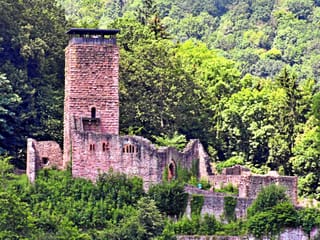
Hinterburg (Alt-Schadeck)
Darmstadt
8.1km
castle, chateau

Vorderburg (Neckarsteinach)
Darmstadt
8.6km
castle, chateau
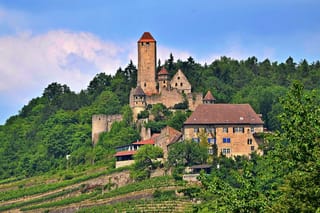
Dilsberg Castle
Karlsruhe
8.8km
castle, chateau
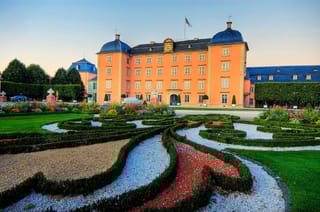
Schwetzingen Palace
Karlsruhe
11.0km
manor, mansion
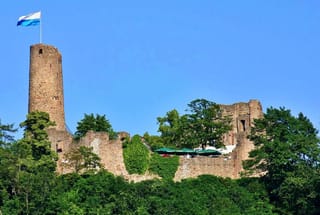
Windeck Castle (Weinheim)
Karlsruhe
15.4km
castle, chateau
Wachenburg
Karlsruhe
15.7km
castle, chateau
Schloss Rauenberg
Karlsruhe
16.0km
castle, chateau