Burg Are
Landkreis Ahrweiler Rheinland-Pfalz Germany
castle, chateau
Burg Are
Landkreis Ahrweiler Rheinland-Pfalz Germany
castle, chateau
Are Castle (pronounced "Ahr-er", German: Burg Are) is the ruin of a hill castle that stands at a height of 240 m above sea level (NHN) above the village of Altenahr in the German state of Rhineland-Palatinate
Die Burg Are ist die denkmalgeschützte Ruine einer Höhenburg auf 240 m ü
Previous names
Burg Are, Burg Are
Description
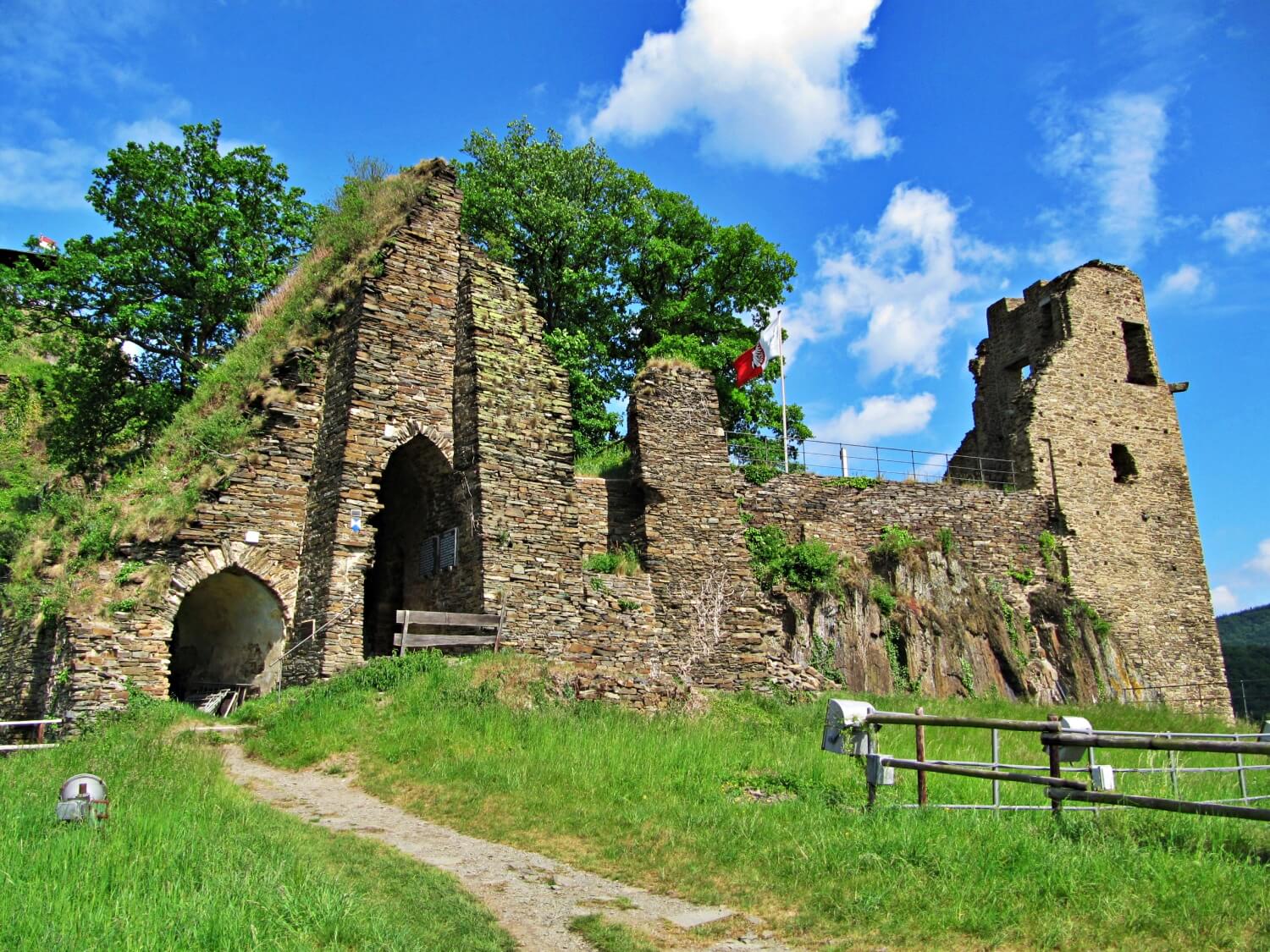
Are Castle (pronounced "Ahr-er", German: Burg Are) is the ruin of a hill castle that stands at a height of 240 m above sea level (NHN) above the village of Altenahr in the German state of Rhineland-Palatinate. It was built around 1100 by Count Dietrich I of Are and is first recorded in 1121.
Since 1965 the Are Gymnasium – a local grammar school – in Bad Neuenahr-Ahrweiler has borne the name which is derived from the castle and its eponymous noble family.
Design
The plan of the castle is rectangular. As well as parts of the outer ward and a gate – the so-called Gymnicher Porz – remains of the defensive wall have survived. In addition, on the southern side of the site, is an old gate tower (also called the Schellenturm), as well as the ruins of the palas, which once had a heated bishop’s chamber. The first bergfried probably stood on the pointed dome of rock in its northern corner. North of that are extensive remains of the Romanesque castle chapel dating to the 12th century.
History
In 1246 Count Frederick of Hochstaden, provost of Xanten, with the assent of his brother Conrad of Are-Hochstaden gifted the county and its castles - Are, Hardt and Hochstaden – to the Archbishopric of Cologne. Its expansion with a surrounding enceinte was carried out during the period of Electoral Cologne in the 14th and 15th centuries in order to protect the Electorate’s estates in the Ahr region. In the 16th and 17th centuries there were only minor changes to the castle in the form of repairs and replacement buildings. Periodically the castle was also used as a gaol in which the archbishops of Cologne incarcerated their enemies. For a long time Are Castle was a spiritual and cultural centre for the whole area.
Increasingly often, the archbishops of Cologne enfeoffed Are Castle with the district (Amt) of Altenahr. The liegemen were installed as Amtmännern and most of the also lived at the castle. Over a long time the castle fell into a poor state of repair because the vassals did not carry out the necessary work. One exception was the period of Henry of the Horst, who died in 1625.
In 1690 the castle was captured by French troops after a nine-month siege. The castle was badly damaged by shelling. In 1697 the French withdrew, but occupied the castle again during the War of the Spanish Succession that began in 1701. In 1706 the castle was taken over by Electoral Cologne forces and the area became unsafe. For this reason Prince Elector Joseph Clemens of Bavaria had the walls blown up in 1714 with the agreement of the villagers. Since then the castle has been a ruin. Reusable materials such as wood and stone were used as construction materials for the rebuilding of the district house (Amtshaus) at the foot of the castle hill.
Die Burg Are ist die denkmalgeschützte Ruine einer Höhenburg auf 240 m ü. NHN oberhalb der Gemeinde Altenahr in Rheinland-Pfalz. Sie wurde von 1095 bis 1105 von Graf Dietrich I. von Are erbaut und 1121 erstmals urkundlich erwähnt.
Seit 1965 trägt das Are Gymnasium Bad Neuenahr-Ahrweiler den Namen in Anlehnung an die Burg und das gleichnamige Adelsgeschlecht.
Baubeschreibung
Der Grundriss der Burg ist ein Viereck. Neben Teilen der Vorburg und eines Tores – die sogenannten Gymnicher Porz – sind auch Reste der Wehrmauer erhalten. Außerdem steht an der Südseite der Anlage ein alter Torturm (auch Schellenturm genannt), daneben die Ruine des Palas, der einst eine beheizbare Bischofskammer besaß. Auf der spitzen Felskuppe in der Nordecke stand vermutlich der erste Bergfried. Nördlich davon sind umfangreiche Reste der romanischen Burgkapelle aus dem 12. Jahrhundert erhalten.
Geschichte
1246 schenkte Graf Friedrich von Hochstaden, Propst zu Xanten, unter Zustimmung seines Bruders Konrad von Are-Hochstaden die Grafschaft mit den Burgen Are, Hardt und Hochstaden dem Erzstift Köln. Die Erweiterungsbauten mit umfassender Wehrmauer wurden in kurkölnischer Zeit während des 14. und 15. Jahrhunderts zum Schutz der kurkölnischen Besitzungen im Ahrgebiet errichtet. Im 16. und 17. Jahrhundert gab es nur geringe Veränderungen der Bausubstanz durch Reparaturen und Ersatzbauten. Zeitweise diente die Burg auch als Gefängnis, in dem die Kölner Erzbischöfe unliebsame Gegner einkerkern ließen, um sie gefügig zu machen. Lange Zeit war Burg Are geistiges und kulturelles Zentrum für das gesamte Gebiet.
Die Erzbischöfe von Köln verpfändeten die Burg Are mit dem Amt Altenahr häufiger. Die Pfandnehmer wurden jeweils als Amtmännern eingesetzt und bewohnten auch vielfach die Burg. Über größere Zeiträume war der bauliche Zustand der Burganlage schlecht, da die Pfandnehmer die notwendigen Reparaturen nicht durchführen ließen. Eine Ausnahme mit einem baulich sehr guten Zustand war die Zeit von Heinrich von der Horst, der 1625 verstarb.
1690 wurde die Burg nach neunmonatiger Belagerung durch französische Truppen erstmals erobert. Durch den Beschuss war die Burg stark beschädigt worden. 1697 zogen die Franzosen ab, besetzen die Burg aber ab dem 1701 einsetzenden Spanischen Erbfolgekrieg erneut. 1706 übernahmen kurkölnische Truppen die Burg und machten die Gegend unsicher. Aus diesem Grunde ließ Kurfürst Joseph Clemens von Bayern 1714 die Mauern im Einvernehmen mit den Dorfbewohnern sprengen. Seither ist die Burg eine Ruine. Noch verwertbare Materialien, wie Holz und Steine, dienten als Baustoff für den Neubau des Amtshauses am Fuße des Burgberges.
Useful information
Gratis
Gratis
- Einzigartige Ansicht
- Aussichtspunkt
Ruinen der Burg
-
External links
Nearby castles
Burg Kreuzberg
Landkreis Ahrweiler
1.7km
castle, chateau
Saffenburg
Cologne
2.0km
castle, chateau
Schloss Vischel
Landkreis Ahrweiler
3.5km
castle, chateau
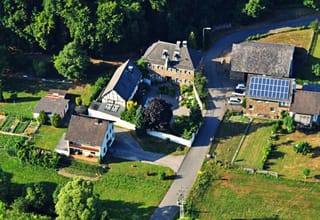
Burghaus Burgsahr
Landkreis Ahrweiler
6.4km
castle, chateau
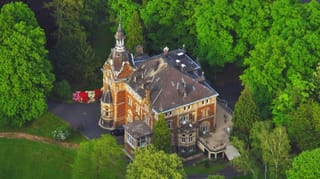
Schloss Vettelhoven
Landkreis Ahrweiler
7.4km
castle, chateau
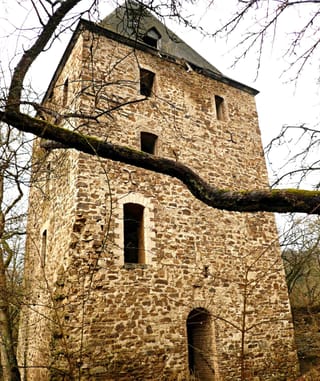
Wensburg
Ahrweiler
7.5km
castle, chateau
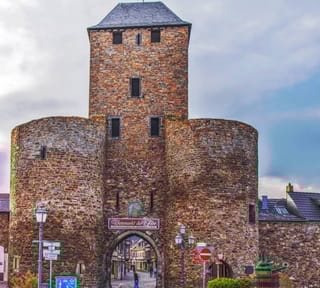
Stadtbefestigung Ahrweiler
Landkreis Ahrweiler
7.6km
castle, chateau