Rožmberk Castle
Český Krumlov Jihočeský kraj Czech Republic
castle, chateau
Hrad Rožmberk
Český Krumlov Jihočeský kraj Czech Republic
castle, chateau
The Rožmberk castle was founded in the first half of the 13th century either by Vítek the Younger of Prčice, or by his son Vok of Prčice, a member of the powerful Vítkovci family (Witikonides in Latin; Witigonen in German) who later styled himself Vok of Rožmberk (Vok de Rosenberch) after this castle
Hrad i jeho zakladatel, Vok I
Previous names
Rožmberk Castle, Hrad Rožmberk
Description
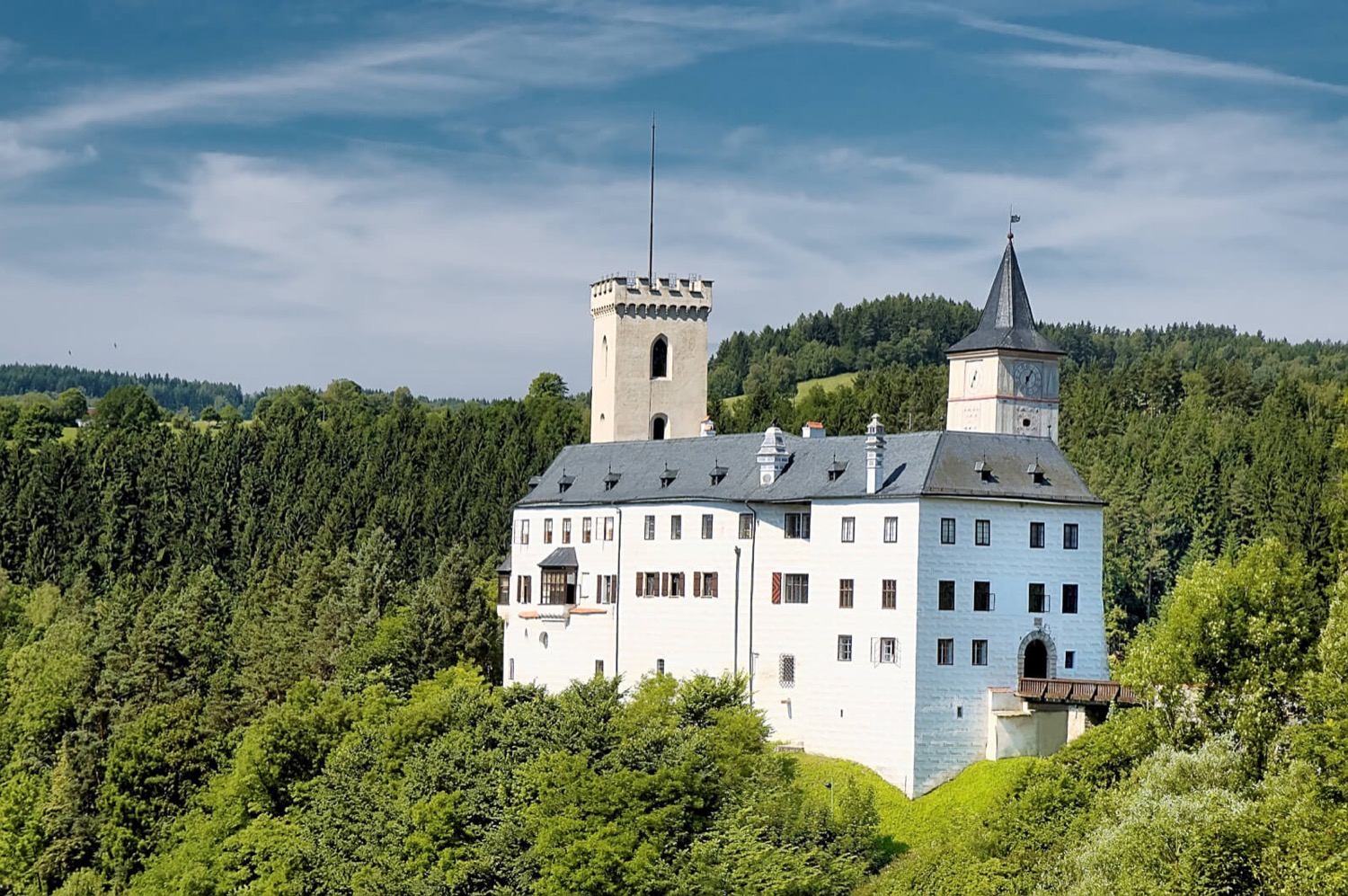
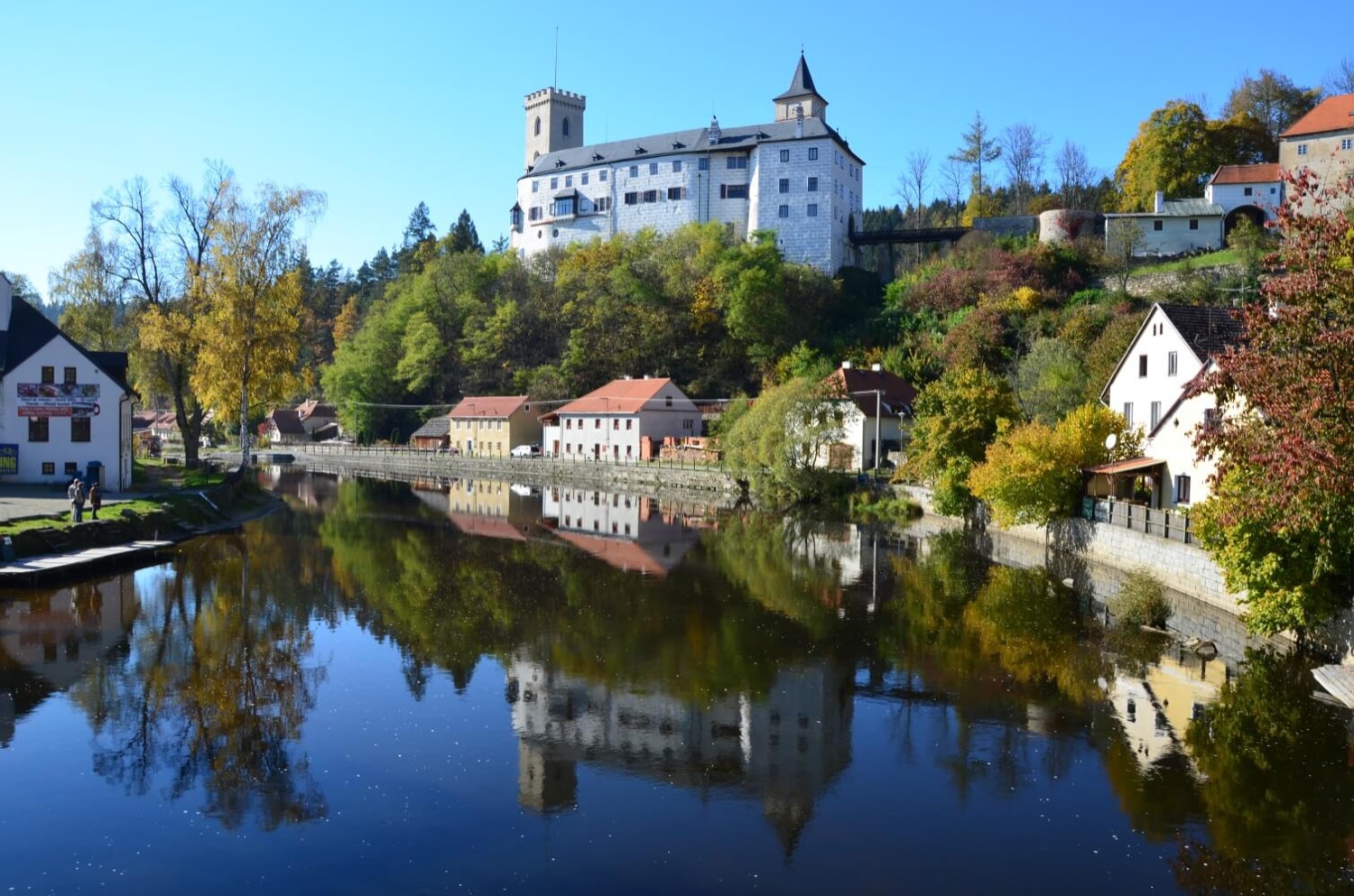
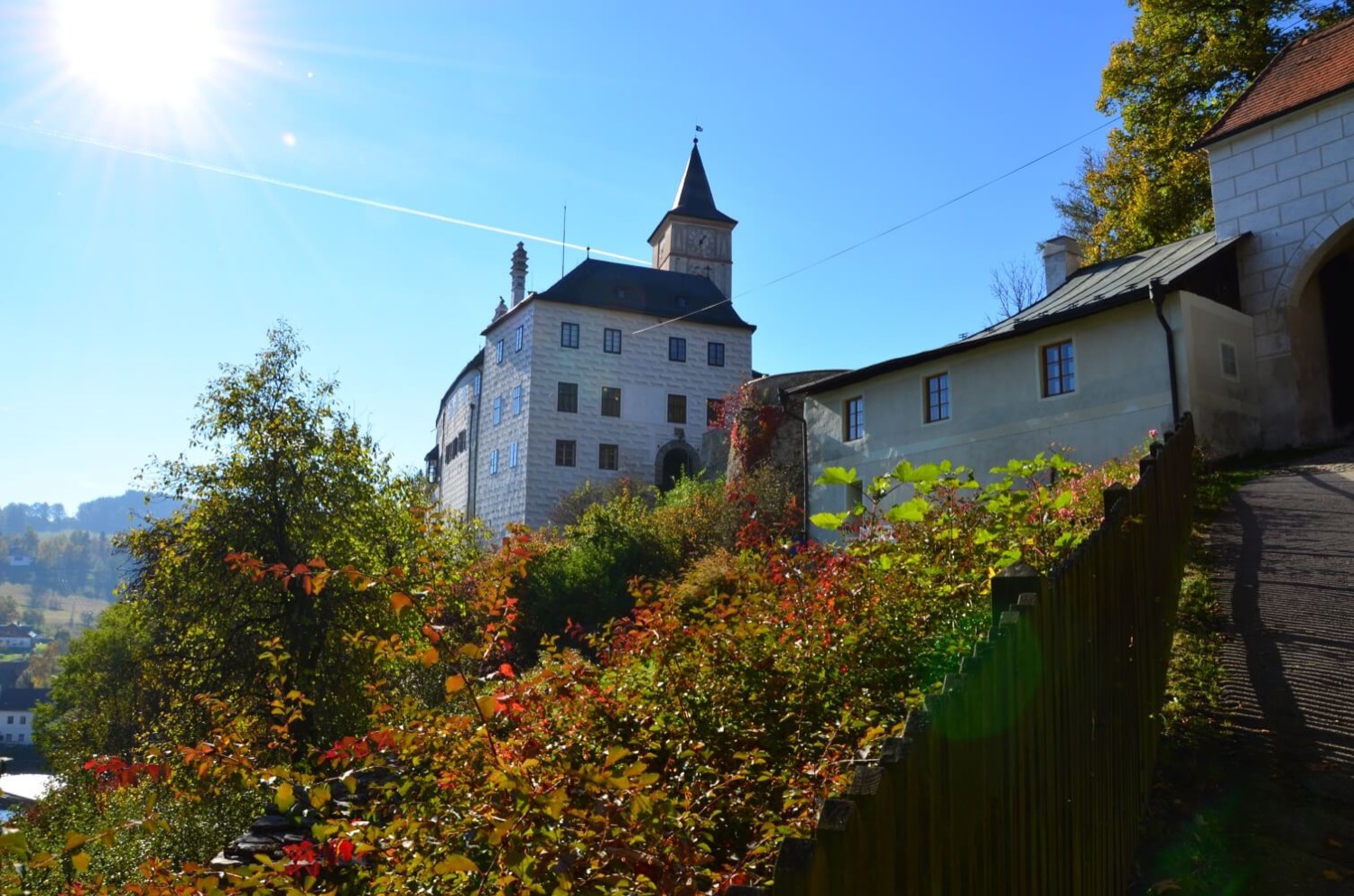
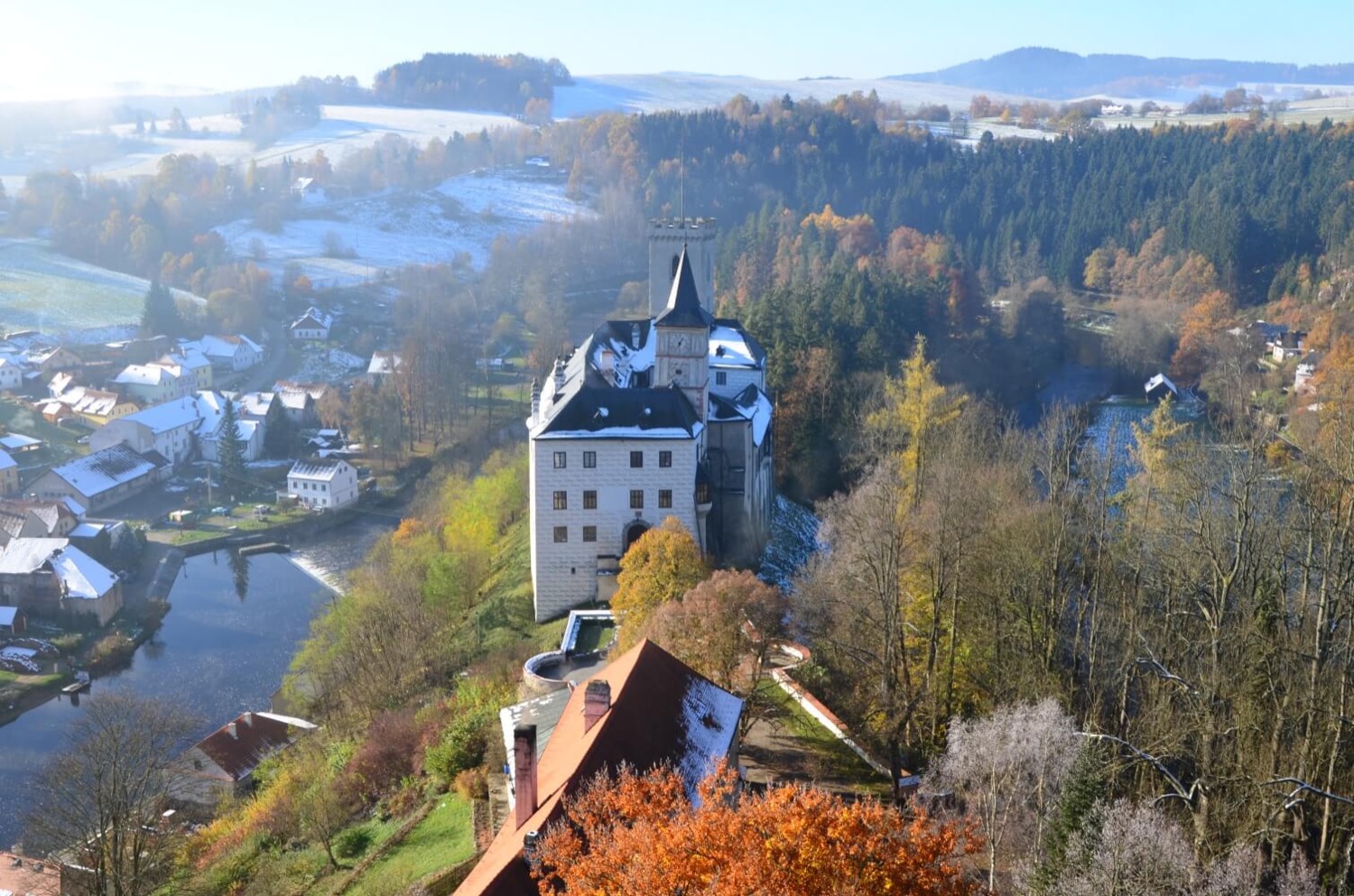
The Rožmberk castle was founded in the first half of the 13th century either by Vítek the Younger of Prčice, or by his son Vok of Prčice, a member of the powerful Vítkovci family (Witikonides in Latin; Witigonen in German) who later styled himself Vok of Rožmberk (Vok de Rosenberch) after this castle. The original castle, known as Horní hrad (Upper Castle), consisted of a high tower known as the Jakobínka, 9.6 metres (31 ft) in diameter, with corbelled ramparts and a palace. The structure was completely surrounded by castle walls with a moat. Within a short time, a tributary town grew in the barbican. The castle became the administrative and economic centre of the family's lands, a part of which Vok gave to the newly established Cistercian monastery in Vyšší Brod. In 1302, when the cadet Krumlov branch of the Vítkovci died out, Vok's offspring inherited Český Krumlov and they settled there permanently. After 1330 Jindřich of Rožmberk built the Dolní hrad (Lower Castle), which was defended by ramparts placed above the moat, which was cut through the neck of the rock.
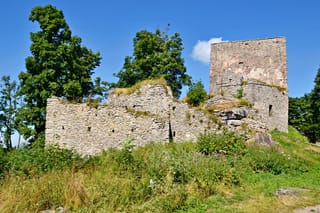
In 1420 Oldřich II of Rožmberk (1403–1462), father of Perchta of Rožmberk, the White Lady, was forced to pawn the castle to the Lords of Walsee from Austria to get money to finance the army he was fielding against the Hussites. The loan was paid off, but in 1465 the castle was pawned again to the Lobkovic family. This loan too was paid off. The Starý (Horní) hrad (Old or Upper castle) burned down in 1522 and was never rebuilt.
In 1600 Petr Vok of Rožmberk bequeathed the castle and its estates to his nephew Johann Zrinski of Seryn (1565–1612), son to Nikola Šubić Zrinski. Zrinski rebuilt the Lower castle in Renaissance style. When he died in 1612, the estates were inherited by the Švamberks, relatives of the Rožmberks. But they soon lost the castle because all their estates were confiscated after the Battle of White Mountain by Emperor Ferdinand II, who gave it to the commander of the Imperial army, Charles Bonaventure de Longueval, Count of Bucquoy, who played an important role in the suppression of the rebellion of the Czech Estates. The Buquoys, whose main residence was in Nové Hrady, repaired and altered their family seat (1840–57), remodelling the building in the style of Romantic Neo-Gothic, and keeping it until 1945 when it was nationalised after the end of World War II.
Hrad i jeho zakladatel, Vok I. z Rožmberka (+ 1262), jsou poprvé písemně uváděni v roce 1250. V roce 1259 založil Vok I. také nedaleký cisterciácký klášter ve Vyšším Brodě. Až do roku 1302 byl Rožmberk hlavním sídlem předního českého šlechtického rodu Rožmberků. I poté, co přesídlili do Krumlova, který získali po pánech z Krumlova, Rožmberkové tento hrad stavebně rozvíjeli. V roce 1522 vyhořela část města a Horní hrad, dodnes se z něho zachovala pouze věž Jakobínka. V roce 1597/1598 postoupil Petr Vok z Rožmberka (1539-1611) hrad svému synovci Janu Zrinskému ze Serynu (1565/1566-1612). Po jeho smrti v roce 1612 získali hrad a panství podle rožmbersko-švamberské dohody z roku 1484 Švamberkové. Petr ze Švamberka (+ 1620) se v roce 1618 stal jedním z třiceti členů stavovského direktoria, proto byl jeho majetek zkonfiskován. Už v roce 1619 byl hrad obléhán a dobyt císařským generálem Karlem Bonaventurou Buquoyem (1571-1621), kterému císař Ferdinand II. hrad a panství daroval jako náhradu za financování vojska a kterého proslavila bitva na Bílé hoře (1620). Přípisem z února 1620 mu také připadlo Novohradské a libějovické panství a dále Žumberk a Cuknštejn. Karla Bonaventuru a jeho manželku Marii Magdalenu z Biglia (1573–1653) připomíná erb nad bránou Dolního hradu, který byl osazen v roce 1621. K dalším zásadním změnám na hradě došlo za Jiřího Jana Buquoye (1814-1882), který hrad nechal opravit a novogoticky přestavět na rodové muzeum v letech 1851-1857. Hrad zůstal v buquoyských rukou až do roku 1945, kdy byl na základě Benešových dekretů znárodněn.
Useful information
parking 400 m
https://www.hrad-rozmberk.cz/cs/informace-pro-navstevniky/vstupne
https://www.hrad-rozmberk.cz/cs/informace-pro-navstevniky/vstupne
https://www.hrad-rozmberk.cz/cs/informace-pro-navstevniky/vstupne
-
External links
Nearby castles